


Advanced Connectivity: Transforming Logistics in 2026

Managing a logistics fleet in the Mid-Atlantic United States means juggling route adjustments, compliance hurdles, and the constant drive for operational visibility. The complexity only grows as fleets stretch across state lines and supply chain demands accelerate. Advanced connectivity now stands as the backbone for logistics resilience, giving IT Directors the integrated tools to propel accuracy, real-time coordination, and smarter decisions across every vehicle and warehouse.
Table of Contents
- Defining Advanced Connectivity in Logistics
- Types of Connectivity Solutions for Fleet Operations
- How Next-Gen Networks Enable Real-Time Data
- IoT Integration for Logistics Efficiency
- Security and Compliance in Connected Fleets
- Risks, Costs, and Mistakes to Avoid
Key Takeaways
| Point | Details |
|---|---|
| Advanced Connectivity Transforms Logistics | Leveraging technologies like IoT and AI changes logistics from reactive to proactive operations. |
| Invest in Hybrid Connectivity Solutions | Combining multiple network types ensures robust communication and minimizes disruptions. |
| Prioritize Security and Compliance | Implement zero-trust security models to protect against cyber threats and ensure data integrity. |
| Conduct Regular Technology Audits | Frequent assessments of connectivity infrastructure allow organizations to adapt to emerging technologies effectively. |
Defining Advanced Connectivity in Logistics
Advanced connectivity in logistics represents a transformative technological ecosystem that goes far beyond traditional communication infrastructure. At its core, global logistics connectivity encompasses integrated systems designed to enhance information flow, operational visibility, and strategic coordination across complex supply chains.
The technological landscape of advanced connectivity includes several critical components:
- Real-time tracking systems that provide instantaneous location and condition data
- IoT-enabled sensor networks monitoring vehicle performance and cargo conditions
- Cloud-based communication platforms enabling seamless information exchange
- Artificial intelligence algorithms predicting potential logistical disruptions
- 5G and edge computing technologies supporting ultra-fast data transmission
Understanding connectivity requires recognizing its multidimensional nature. Shipping connectivity indexes demonstrate that modern logistics networks are not just about physical infrastructure, but about creating intelligent, responsive systems that can adapt to rapidly changing global trade environments.
The strategic implementation of advanced connectivity transforms traditional logistics from a linear, reactive process into a dynamic, predictive operation. Companies leveraging these technologies can dramatically reduce operational inefficiencies, minimize risk, and create more resilient supply chain networks.
Pro tip: Invest in modular connectivity solutions that can scale and integrate with existing technological ecosystems to maximize your logistical transformation potential.
Here’s a comparison of advanced connectivity technologies and their impact on logistics operations:
| Technology Type | Main Benefit | Key Business Impact |
|---|---|---|
| 5G Networks | Ultra-fast data transfer | Enables instant decision-making |
| IoT Sensor Networks | Detailed asset visibility | Reduces losses, boosts uptime |
| Cloud Platforms | Centralized collaboration | Streamlines global operations |
| AI Analytics | Predictive insights | Minimizes disruptions |
| V2X Communication | Real-time vehicle alerts | Improves driver and cargo safety |
Types of Connectivity Solutions for Fleet Operations
Fleet operations today require sophisticated connectivity solutions that extend far beyond traditional communication methods. Network topology strategies play a critical role in determining how fleet managers optimize communication, tracking, and operational efficiency across complex transportation networks.
The primary types of connectivity solutions for modern fleet operations include:
-
Cellular Network Connectivity
- Widespread coverage
- Cost-effective for basic communication
- Supports real-time data transmission
-
Satellite Communication Systems
- Global coverage
- Reliable in remote areas
- High-bandwidth data transmission
-
5G Private Network Solutions
- Ultra-low latency
- High-speed data processing
- Enhanced security protocols
Vehicle-to-everything (V2X) technologies represent a groundbreaking advancement in fleet connectivity. Vehicle communication technologies enable seamless interactions between vehicles, infrastructure, and central management systems, creating intelligent transportation ecosystems that dramatically improve safety and operational efficiency.

These connectivity solutions are not just technological upgrades but strategic investments that transform fleet management from reactive monitoring to proactive, data-driven decision-making. By integrating multiple communication technologies, fleet managers can create robust, adaptive networks that respond dynamically to changing operational demands.
Pro tip: Develop a hybrid connectivity strategy that combines multiple network types to ensure consistent communication and minimize operational disruptions.
How Next-Gen Networks Enable Real-Time Data
Next-generation networks are revolutionizing logistics by transforming how businesses capture, process, and utilize real-time data. Intelligent logistics systems leverage advanced communication technologies to create unprecedented levels of operational visibility and responsiveness across complex supply chains.
The key technological components enabling real-time data flow include:
-
High-Bandwidth Network Infrastructure
- 5G and emerging wireless technologies
- Reduced latency for instant data transmission
- Support for massive IoT device connectivity
-
Advanced Data Processing Systems
- Edge computing capabilities
- AI-powered analytics engines
- Real-time decision support algorithms
-
Integrated Sensor Networks
- Continuous asset tracking
- Environmental condition monitoring
- Predictive maintenance insights
Predictive analytics have become a game-changer in logistics, with data-driven logistics planning demonstrating how advanced networks can transform operational strategies. By processing vast streams of real-time information, organizations can anticipate challenges, optimize resource allocation, and make proactive decisions that were impossible just a few years ago.
The convergence of high-speed networks, artificial intelligence, and sophisticated sensor technologies is creating an ecosystem where data becomes a strategic asset. Fleet managers and logistics professionals can now access instantaneous insights, enabling them to respond to operational challenges with unprecedented speed and accuracy.
Pro tip: Invest in scalable network infrastructure that supports multiple data integration protocols to maximize your real-time operational intelligence.
IoT Integration for Logistics Efficiency
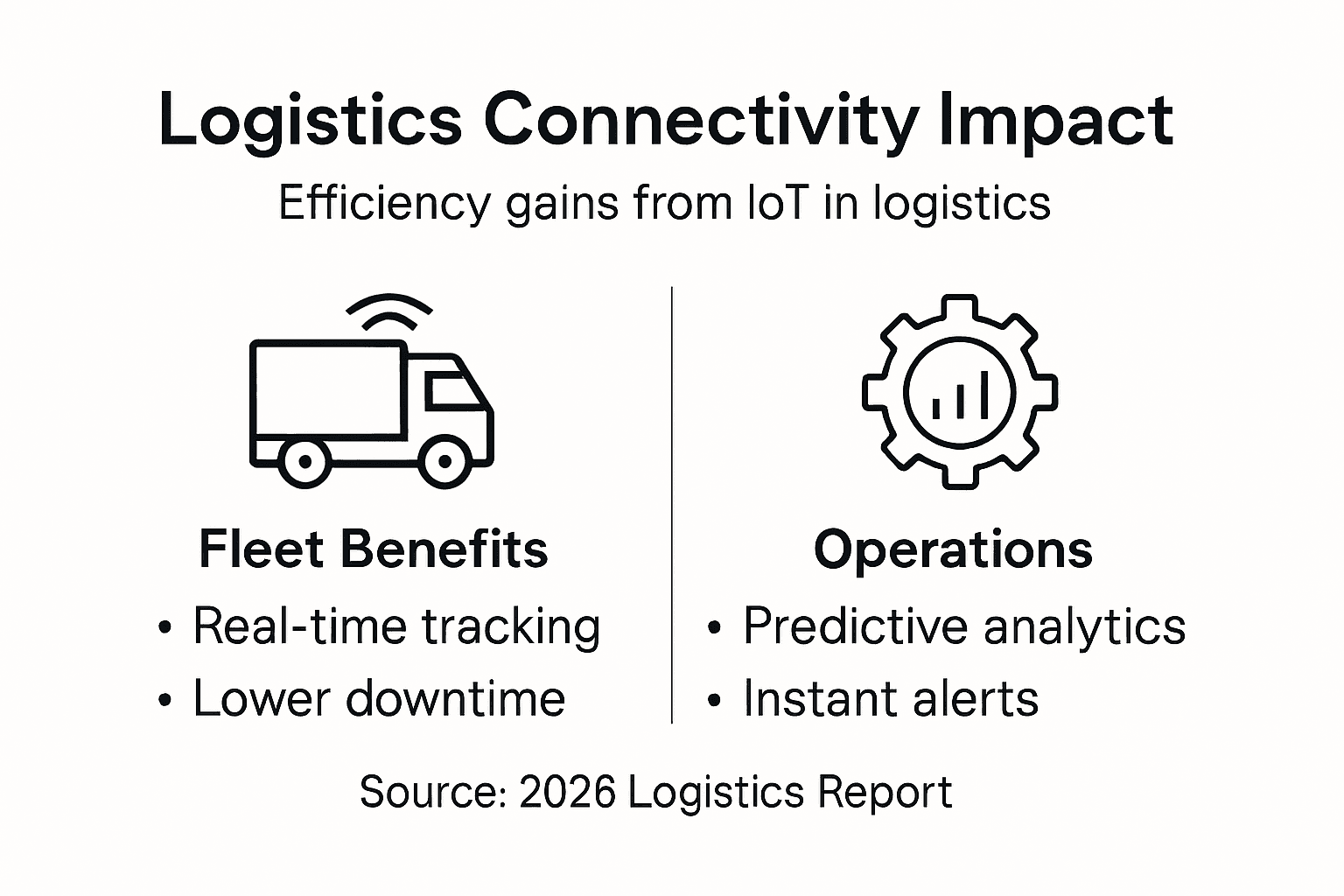
The Internet of Things (IoT) is fundamentally reshaping logistics by creating an interconnected ecosystem of intelligent devices and systems. IoT tracking technologies enable unprecedented levels of visibility, transforming how businesses monitor, manage, and optimize their supply chain operations.
Key IoT integration strategies for logistics efficiency include:
-
Asset Tracking Systems
- Real-time location monitoring
- Precise inventory management
- Automated condition reporting
-
Predictive Maintenance Solutions
- Continuous equipment health monitoring
- Automated fault detection
- Reduced unexpected downtime
-
Environmental Sensing Networks
- Temperature and humidity tracking
- Cargo condition monitoring
- Quality preservation insights
Advanced analytics are revolutionizing logistics through intelligent logistics systems that combine IoT data with artificial intelligence. By processing massive streams of sensor-generated information, companies can develop sophisticated predictive models that anticipate operational challenges, optimize routing, and enhance overall supply chain resilience.
The convergence of IoT technologies creates a dynamic ecosystem where data becomes a strategic asset. Fleet managers can now access granular insights about vehicle performance, cargo conditions, and operational efficiency, enabling them to make data-driven decisions that were previously impossible.
Pro tip: Implement a phased IoT integration approach, starting with critical operational areas to minimize disruption and maximize strategic value.
Security and Compliance in Connected Fleets
The landscape of fleet connectivity demands robust security frameworks that protect against increasingly sophisticated cyber threats. Cybersecurity for connected vehicles has become a critical consideration, transforming how logistics organizations approach digital infrastructure and data protection.
Key security and compliance strategies include:
-
Network Protection Mechanisms
- Advanced encryption protocols
- Multi-factor authentication
- Continuous threat monitoring
-
Data Governance Frameworks
- Strict access control policies
- Comprehensive data anonymization
- Regular compliance audits
-
Threat Detection Systems
- AI-powered anomaly recognition
- Real-time intrusion prevention
- Automated security response protocols
Regulatory compliance is now integral to connected fleet operations, with intelligent vehicle security standards establishing comprehensive guidelines for data protection and communication security. These standards address the complex challenges of IoT connectivity, ensuring that logistics organizations can leverage advanced technologies while maintaining rigorous security protocols.
The convergence of advanced cybersecurity technologies and regulatory frameworks creates a holistic approach to fleet security. Organizations must view security not as a standalone function, but as an integrated aspect of their overall operational strategy, continuously adapting to emerging technological and regulatory landscapes.
Pro tip: Implement a zero-trust security model that verifies every digital interaction within your fleet’s communication ecosystem.
Risks, Costs, and Mistakes to Avoid
Advanced connectivity in logistics brings transformative potential, but also introduces complex challenges that require strategic navigation. Global connectivity risks represent a multifaceted landscape of technological, financial, and operational considerations that demand careful assessment.
Critical risks and potential pitfalls include:
-
Technological Obsolescence
- Rapid infrastructure evolution
- Significant investment requirements
- Potential stranded technology assets
-
Cybersecurity Vulnerabilities
- Exposure to sophisticated cyber threats
- Potential data breach consequences
- Complex security management
-
Financial Miscalculations
- Underestimating implementation costs
- Inadequate ROI projection
- Unexpected infrastructure expenses
Connectivity investment strategies must account for emerging technological challenges that extend beyond immediate operational needs. Organizations must develop comprehensive, forward-looking approaches that balance technological innovation with financial prudence and risk mitigation.
Successful logistics organizations recognize that connectivity is not just a technological upgrade but a strategic transformation requiring holistic planning. They approach connectivity as an integrated ecosystem, anticipating potential disruptions and building flexible, resilient infrastructure that can adapt to rapidly changing technological landscapes.
Pro tip: Conduct comprehensive technology audits every 18 months to assess connectivity infrastructure alignment with emerging industry standards and operational requirements.
The following table summarizes risks and mitigation strategies for connected logistics investments:
| Risk Type | Mitigation Strategy | Long-term Benefit |
|---|---|---|
| Technology Obsolescence | Invest in modular, scalable systems | Easier upgrades, future-proofing |
| Cybersecurity Threats | Enforce zero-trust security models | Stronger data protection |
| Financial Overruns | Conduct regular technology audits | Optimized spending, fewer losses |
Unlock Next-Level Logistics Connectivity with SabertoothPro
The challenge of transforming logistics through advanced connectivity requires solutions that deliver real-time data, seamless network integration, and resilient security. If you want to overcome the pain points of operational inefficiencies, outdated infrastructure, and connectivity risks discussed in “Advanced Connectivity Transforming Logistics in 2026,” SabertoothPro is your trusted partner. Our Titan WiFi devices and Titan WiFi Hotspot Plans provide ultra-fast, reliable 4G LTE and 5G mobile internet tailored to keep your fleet connected everywhere.

Experience the power of high-speed, secure connectivity that supports IoT integration, predictive analytics, and zero-trust security frameworks right now. Don’t let outdated networks hold back your fleet’s efficiency. Visit SabertoothPro today to explore our full range of scalable solutions designed to future-proof your logistics operations and maintain continuous, secure communication on the move.
Frequently Asked Questions
What is advanced connectivity in logistics?
Advanced connectivity in logistics refers to the integration of modern technological systems that enhance information flow, operational visibility, and coordination throughout supply chains, transforming logistics from a reactive to a predictive process.
How do IoT technologies improve logistics operations?
IoT technologies improve logistics operations by enabling real-time tracking, predictive maintenance, and environmental monitoring, which help businesses optimize their supply chains and enhance asset visibility.
What are the benefits of using 5G networks in logistics?
5G networks offer ultra-fast data transfer and low latency, allowing for instant decision-making, enhanced safety through real-time vehicle alerts, and improved collaboration across global operations.
What key security measures are essential for connected fleets?
Essential security measures for connected fleets include advanced encryption protocols, multi-factor authentication, continuous threat monitoring, and a zero-trust security model to protect against cyber threats.