


Business-Grade Internet: Transforming Connectivity for Mid-Atlantic Enterprises

Every minute of downtime can cost an American business thousands in lost productivity, yet many mid-sized organizations still rely on internet solutions built for consumers. In the Mid-Atlantic region, IT managers need connectivity that withstands heavy data loads, powers cloud operations, and protects sensitive information without compromise. This article breaks down the essentials of business-grade internet—from performance guarantees to advanced security features—to help your team make informed decisions that drive digital transformation forward.
Table of Contents
- Defining Business-Grade Internet Solutions
- Types of Business Internet Connections Explained
- Essential Features: Speed, Uptime, Security
- Service Level Agreements and Support Commitments
- Cost, Risks, and Choosing the Best Solution
Key Takeaways
| Point | Details |
|---|---|
| Business-Grade Internet Solutions | These solutions provide superior performance with guaranteed uptime, enhanced security, and dedicated infrastructure, essential for complex business operations. |
| Types of Business Internet Connections | Evaluating connection types like Fiber Optic and Wireless Broadband is crucial for aligning with organizational needs and ensuring reliability. |
| Service Level Agreements (SLAs) | Comprehensive SLAs are vital for understanding performance guarantees, technical support, and remediation clauses that protect connectivity. |
| Cost and Risk Evaluation | A strategic selection process that considers installation costs, scalability, and potential risks is key to choosing the best internet solution for long-term success. |
Defining Business-Grade Internet Solutions
Business-grade internet solutions represent a sophisticated network infrastructure designed specifically for organizational performance and reliability. Unlike consumer internet services, these solutions prioritize consistent bandwidth, low latency, and robust security features that directly support complex enterprise operations. Internet governance principles underscore the critical nature of these specialized connectivity frameworks, emphasizing the collaborative ecosystem required to maintain high-performance digital networks.
Key characteristics of business-grade internet solutions include:
- Guaranteed uptime percentages (typically 99.99%)
- Symmetrical upload and download speeds
- Dedicated network infrastructure
- Advanced security protocols
- Priority technical support
- Scalable bandwidth options
Enterprise connectivity goes beyond simple internet access. Managed network services integrate multiple technologies to create comprehensive communication platforms that enable seamless digital workflow. These solutions incorporate redundant connections, advanced routing protocols, and enterprise-class equipment to ensure continuous operational capabilities.

Businesses in the Mid-Atlantic region require internet solutions that can handle complex digital ecosystems, supporting everything from cloud-based applications to real-time collaboration tools. The right business-grade internet solution transforms technological infrastructure from a basic utility into a strategic competitive advantage.
Pro tip: When evaluating business-grade internet providers, request detailed service level agreements that specify exact uptime guarantees, response times for technical support, and compensation terms for network interruptions.
Types of Business Internet Connections Explained
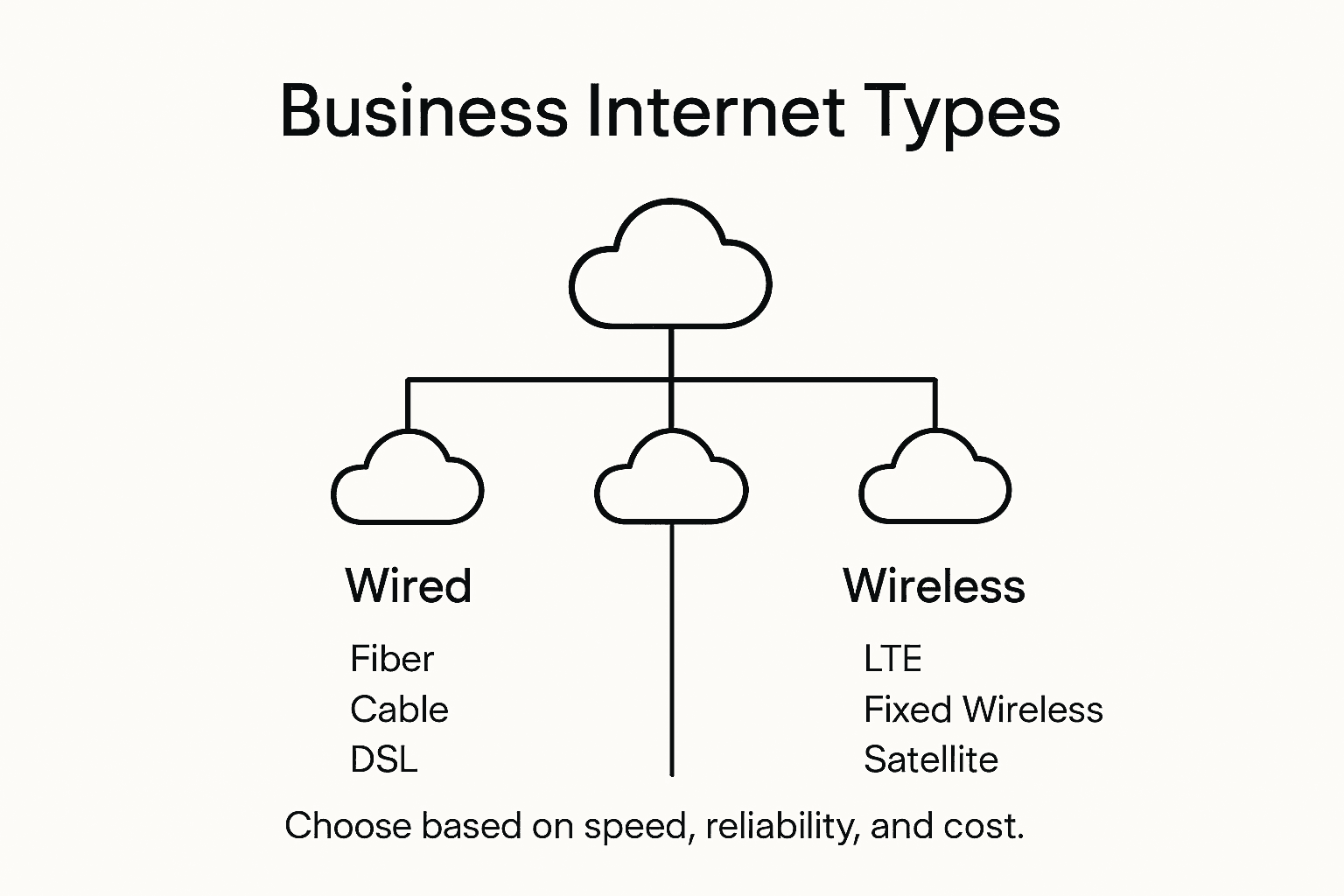
Businesses in the Mid-Atlantic region have multiple internet connection technologies available, each offering unique performance characteristics tailored to specific operational requirements. Various internet connection types provide enterprises with flexible options to meet their digital infrastructure needs, ranging from high-speed fiber networks to adaptable wireless solutions.
The primary business internet connection types include:
-
Fiber Optic: Highest speed and reliability
- Symmetrical upload and download speeds
- Supports massive data transfer
- Ideal for cloud-based operations
-
Cable Internet: Cost-effective, widely available
- Shared bandwidth
- Moderate speeds
- Good for small to medium businesses
-
DSL: Traditional landline-based connectivity
- Consistent performance
- Lower cost
- Limited bandwidth
-
Wireless Broadband: Flexible mobile solution
- 4G/5G cellular networks
- Rapid deployment
- Backup connectivity option
Enterprise connectivity demands go beyond simple internet access. Businesses must evaluate connection types based on critical factors such as bandwidth requirements, reliability, scalability, and total cost of ownership. Some organizations opt for hybrid approaches, combining multiple connection types to ensure continuous operational capabilities and minimize potential network interruptions.
Here is a comparison of primary business internet connection types and their typical business use cases:
| Connection Type | Typical Use Case | Main Advantage | Common Limitation |
|---|---|---|---|
| Fiber Optic | Large enterprises, data centers | Fastest speeds, highest uptime | Higher cost, limited areas |
| Cable Internet | Small to medium businesses | Wide availability, affordability | Shared bandwidth reduces speed |
| DSL | Rural offices, basic connectivity | Low cost, easy installation | Limited speed, less scalable |
| Wireless Broadband | Remote sites, backup connections | Quick setup, mobility | Dependent on signal quality |
The Mid-Atlantic business landscape requires robust, adaptable internet solutions that can support complex digital ecosystems. From cloud-based applications to real-time collaboration tools, selecting the right internet connection becomes a strategic decision that directly impacts organizational productivity and competitive positioning.
Pro tip: When selecting a business internet connection, request comprehensive service level agreements that detail exact performance metrics, guaranteed uptime, and technical support response times.
Essential Features: Speed, Uptime, Security
Business-grade internet solutions demand a sophisticated approach to performance and protection, balancing critical operational requirements across three fundamental domains: speed, reliability, and cybersecurity. Comprehensive security controls have become essential for Mid-Atlantic enterprises seeking to protect their digital infrastructure and maintain continuous operational capabilities.
Key performance metrics for business internet solutions include:
-
Internet Speed:
- Symmetrical bandwidth
- Minimum 100 Mbps for small businesses
- 1 Gbps+ for medium to large enterprises
- Low latency for real-time applications
-
Uptime Guarantees:
- 99.99% network availability
- Redundant connection paths
- Rapid failover mechanisms
- Proactive network monitoring
-
Security Protocols:
- Advanced threat protection
- Encrypted data transmission
- Multi-factor authentication
- Regular security audits
Enterprise internet solutions require a holistic approach that transcends traditional connectivity models. Businesses must strategically integrate performance, reliability, and security to create robust digital ecosystems that support complex operational requirements and protect sensitive organizational data.
The following table summarizes how speed, uptime, and security each impact business operations:
| Feature | Direct Business Impact | Reason for Importance |
|---|---|---|
| Speed | Enables real-time collaboration | Supports cloud use, video calls |
| Uptime | Minimizes costly downtime | Ensures 24/7 operational access |
| Security | Protects sensitive data | Fends off cyber threats, compliance |
The Mid-Atlantic business landscape demands internet solutions that can dynamically adapt to evolving technological challenges. Sophisticated connectivity strategies now represent more than technical infrastructure—they are critical competitive differentiators that enable organizations to respond quickly, securely, and efficiently in a rapidly changing digital environment.
Pro tip: Conduct quarterly comprehensive network assessments to ensure your internet solution continues to meet your organization’s evolving performance, reliability, and security requirements.
Service Level Agreements and Support Commitments
For Mid-Atlantic enterprises, understanding the nuanced details of service level agreements represents a critical component of selecting business-grade internet solutions. These comprehensive contracts define the precise performance expectations, support protocols, and remediation strategies that protect organizational connectivity and operational continuity.
Key components of robust Service Level Agreements (SLAs) typically include:
-
Performance Guarantees:
- Minimum uptime percentages
- Maximum network latency
- Bandwidth consistency
- Response time commitments
-
Technical Support:
- 24/7 monitoring
- Escalation procedures
- Priority support tiers
- Dedicated account management
-
Remediation Clauses:
- Financial credits for service interruptions
- Specific resolution timelines
- Transparent reporting mechanisms
- Clear performance measurement standards
Enterprise internet solutions require more than standard contractual language. Businesses must carefully evaluate SLA terms to ensure they align with specific operational requirements, technological infrastructure, and potential financial impacts of service disruptions. A well-constructed SLA transforms from a legal document into a strategic operational safeguard.
The Mid-Atlantic business ecosystem demands internet service providers who understand the complex connectivity needs of modern organizations. Effective SLAs demonstrate a provider’s commitment to reliability, transparency, and proactive support—moving beyond basic connectivity to become true technological partners.
Pro tip: Negotiate SLA terms that include specific, measurable penalties for service interruptions and detailed reporting mechanisms to ensure maximum accountability.
Cost, Risks, and Choosing the Best Solution
Navigating the complex landscape of business internet solutions requires a strategic approach that balances financial considerations with operational requirements. Business internet selection involves carefully weighing multiple critical factors beyond simple pricing, including performance reliability, scalability, and long-term technological compatibility.
Key risk assessment and cost evaluation criteria include:
-
Financial Considerations:
- Initial installation costs
- Monthly service fees
- Equipment investment
- Potential upgrade expenses
-
Performance Risks:
- Bandwidth limitations
- Network reliability
- Scalability constraints
- Potential service interruptions
-
Strategic Selection Factors:
- Alignment with business objectives
- Future technological adaptability
- Support infrastructure
- Comprehensive service level agreements
Mid-Atlantic enterprises must adopt a holistic perspective when selecting internet solutions. Cost should never be the sole determining factor. Smart organizations evaluate potential providers through a multifaceted lens that considers technological capabilities, support responsiveness, security protocols, and potential business impact of connectivity challenges.
Successful internet solution selection transcends traditional procurement models. It represents a strategic investment in organizational digital infrastructure, demanding careful analysis of current operational needs and anticipated future technological transformations. Businesses that approach connectivity as a critical strategic asset will consistently outperform competitors relying on reactive, price-driven decision making.
Pro tip: Conduct a comprehensive total cost of ownership analysis that includes potential productivity losses from network interruptions, not just monthly service fees.
Elevate Your Mid-Atlantic Business Connectivity with SabertoothPro
The challenges of securing business-grade internet that guarantees speed, uptime, and security are critical for Mid-Atlantic enterprises aiming to thrive in today’s digital economy. If unreliable connections or limited bandwidth are holding your organization back, it is time to explore solutions designed specifically to overcome these pain points. SabertoothPro understands that enterprises need scalable, resilient, and secure internet infrastructure that supports cloud applications, real-time collaboration, and data-intensive operations.
Discover our curated Titan WiFi hotspot plans and advanced wireless devices that empower businesses with dependable 4G LTE and 5G connectivity. Whether you require failover internet, rural broadband alternatives, or secure enterprise networking, SabertoothPro integrates cutting-edge technology with expert IT services. This ensures your digital infrastructure is a strategic asset—not a risk.

Take control of your enterprise connectivity today by visiting SabertoothPro.com. Explore our full range of business solutions and schedule a consultation to tailor your network architecture. Your enterprise deserves uninterrupted communication, robust security, and scalable performance that transforms connectivity into a competitive advantage. Don’t wait for the next outage start building a smarter network now.
Frequently Asked Questions
What are business-grade internet solutions?
Business-grade internet solutions are specifically designed to provide organizations with reliable connectivity, featuring guaranteed uptime, symmetrical speeds, advanced security, and dedicated support tailored for complex enterprise needs.
What types of internet connections are available for businesses?
Businesses can choose from various connection types including fiber optic, cable internet, DSL, and wireless broadband, each offering unique advantages in terms of speed, cost, and reliability.
How can I evaluate the performance of a business internet solution?
Key performance metrics to evaluate include internet speed (minimum 100 Mbps for small businesses), uptime guarantees (typically 99.99%), and security protocols such as encrypted data transmission and multi-factor authentication.
What should I look for in a service level agreement (SLA) for business internet?
A robust SLA should include performance guarantees like minimum uptime percentages, maximum latency, detailed technical support commitments, and remediation clauses for service interruptions, ensuring accountability and transparency.