


Why Choose Managed Internet for Healthcare IT

More than 80 percent of American healthcare organizations face ongoing cybersecurity risks that threaten patient data and daily operations. For IT decision-makers at mid-sized facilities in the Mid-Atlantic region, finding fully managed internet services can be the difference between ongoing disruption and seamless care delivery. This overview shines a light on how expertly managed internet solutions strengthen security and streamline workflows, offering practical benefits for healthcare teams navigating complex digital demands.
Table of Contents
- Managed Internet Services Explained
- Types Of Managed Internet Solutions
- How Managed Internet Enhances Security
- Operational Advantages For Healthcare IT
- Comparing Managed Vs. Unmanaged Internet
Key Takeaways
| Point | Details |
|---|---|
| Managed Internet Services Enhance Healthcare | By outsourcing network management, healthcare organizations can focus on patient care while ensuring reliable and secure digital infrastructures. |
| Key Advantages Include Security and Compliance | Managed services provide proactive security measures and ensure adherence to healthcare regulations, reducing risks associated with data breaches. |
| Operational Efficiency is Increased | Managed internet services streamline access to patient data and reduce administrative burdens, improving overall healthcare delivery. |
| Choose Providers Wisely | Evaluate managed internet solutions based on security certifications and tailored healthcare technology experience to ensure optimal service levels. |
Managed internet services explained
Managed internet services represent a comprehensive solution for healthcare organizations seeking reliable, secure, and efficient network infrastructure. Healthcare’s digital infrastructure critically depends on managed services that provide high-speed connectivity essential for modern medical operations like telehealth and electronic health records management.
These specialized services involve outsourcing network management responsibilities to expert providers who actively monitor and maintain complex IT systems. By anticipating technological needs and managing network infrastructure, managed internet services enable healthcare organizations to focus on patient care rather than technical complexities. The key benefits include continuous network monitoring, proactive security protocols, and predictable monthly technology expenses.
Healthcare organizations gain significant advantages through managed internet services, including:
- Reduced in-house IT staffing requirements
- Enhanced cybersecurity protection
- Guaranteed network reliability and performance
- Scalable infrastructure supporting telemedicine platforms
- Compliance with strict healthcare data regulations
Pro tip: When evaluating managed internet services, request detailed Service Level Agreements (SLAs) that specifically address healthcare technology requirements and outline precise uptime guarantees.
Types of managed internet solutions
Healthcare organizations have access to multiple managed internet solutions designed to address complex technological needs. Managed services encompass a wide range of network and infrastructure management platforms, strategically addressing the unique challenges of digital healthcare environments. These solutions go beyond traditional internet connectivity, offering comprehensive support for critical medical technology infrastructure.
Key types of managed internet solutions for healthcare include:
- Network Infrastructure Management: Ensuring stable, high-performance network connections across medical facilities
- Cybersecurity Services: Implementing advanced security protocols to protect sensitive patient data
- Cloud-Based Management Platforms: Facilitating secure data storage and seamless information exchange
- Mobile Device Management: Supporting secure access to medical records and telemedicine platforms
Interoperable clinical data exchange networks represent a sophisticated category of managed internet solutions that enable healthcare providers to share patient information securely and efficiently. These systems support critical functions like e-prescribing, electronic public health reporting, and patient portal access, transforming how medical professionals collaborate and deliver patient care.
Healthcare technology teams can select from multiple managed internet solutions tailored to their specific operational requirements. The goal is to create a robust, secure, and flexible digital infrastructure that supports modern medical practices while maintaining strict compliance with healthcare data regulations.
Here’s a summary of how different managed internet solutions support key healthcare needs:
| Solution Type | Main Use Case | Impact on Healthcare |
|---|---|---|
| Network Infrastructure Management | Reliable facility connectivity | Uninterrupted operations |
| Cybersecurity Services | Protecting patient information | Reduces data breach risk |
| Cloud-Based Management | Secure data storage | Enables fast data access |
| Mobile Device Management | Managing mobile access | Supports telemedicine workflows |
| Clinical Data Exchange Networks | Secure sharing of records | Enhances provider collaboration |
Pro tip: When evaluating managed internet solutions, prioritize providers offering comprehensive security certifications and demonstrable experience in healthcare technology integration.
How managed internet enhances security
Cybersecurity has become a critical concern for healthcare organizations, with digital threats growing increasingly sophisticated. Managed internet services provide continuous monitoring and advanced threat detection capabilities that protect sensitive patient information and critical medical infrastructure from potential cyber risks.
The comprehensive security approach of managed internet services includes several key defensive strategies:
- Real-time Threat Monitoring: Continuous scanning and immediate response to potential security breaches
- Advanced Vulnerability Management: Proactively identifying and addressing potential system weaknesses
- AI-Powered Defense Mechanisms: Utilizing artificial intelligence to predict and prevent sophisticated cyber attacks
- Comprehensive Network Protection: Securing both digital systems and networked medical devices
Cybersecurity initiatives integrated directly into healthcare IT frameworks help mitigate risks of data theft and system disruptions, ensuring patient safety and maintaining critical care continuity. This approach goes beyond traditional security measures, creating a robust digital environment that adapts to emerging technological challenges.

Healthcare organizations benefit from managed internet security services that offer multi-layered protection, addressing everything from network infrastructure to individual device security. By partnering with specialized managed service providers, medical facilities can focus on patient care while ensuring their digital ecosystem remains secure and resilient against evolving cyber threats.
Pro tip: Conduct quarterly comprehensive security audits and maintain up-to-date incident response protocols to maximize the effectiveness of your managed internet security strategy.
Operational advantages for healthcare IT
Digital transformation in healthcare demands sophisticated technological solutions that streamline operations and enhance patient care. Managed internet services contribute significantly to operational efficiency by enabling seamless interoperability of electronic health records, reducing administrative complexities and supporting integrated care coordination.
The key operational advantages of managed internet services for healthcare IT include:
- Real-time Information Access: Instant retrieval of patient data across multiple platforms
- Reduced Administrative Overhead: Minimizing manual data entry and coordination tasks
- Enhanced Care Coordination: Supporting collaborative healthcare delivery models
- Scalable Infrastructure: Flexible technological solutions that adapt to changing healthcare needs
Sustained broadband connectivity provides critical support for telehealth and virtual care platforms, particularly in underserved regions where medical resources are limited. By implementing robust managed internet services, healthcare organizations can optimize workforce productivity, improve patient access, and create more efficient technological ecosystems.
Healthcare technology teams can leverage these operational advantages to transform traditional medical service delivery. The integration of advanced managed internet solutions allows medical professionals to focus more on patient care and less on technological management, ultimately improving overall healthcare outcomes and organizational efficiency.
Pro tip: Develop a comprehensive digital transformation roadmap that aligns managed internet services with your specific organizational healthcare delivery goals.
Comparing managed vs. unmanaged internet
Internet infrastructure represents a critical technological backbone for healthcare organizations, with significant differences emerging between managed and unmanaged solutions. Unmanaged internet solutions pose substantial risks through unauthorized network access and potential data breaches, creating vulnerable environments that compromise patient information security.
Key comparative aspects between managed and unmanaged internet services include:
-
Security Monitoring:
- Managed: Continuous, proactive threat detection
- Unmanaged: Reactive, sporadic security responses
-
Compliance Management:
- Managed: Strict adherence to healthcare regulations
- Unmanaged: Higher risk of regulatory violations
-
Operational Reliability:
- Managed: Predictable performance and minimal downtime
- Unmanaged: Unpredictable system interruptions
-
Cost Structure:
- Managed: Predictable monthly expenses
- Unmanaged: Potentially higher unexpected repair costs
Managed internet services fundamentally differ from traditional break/fix models by providing proactive, continuous support that anticipates and resolves potential technological challenges before they disrupt healthcare operations. This approach ensures that medical facilities maintain consistent, secure, and efficient digital infrastructures.
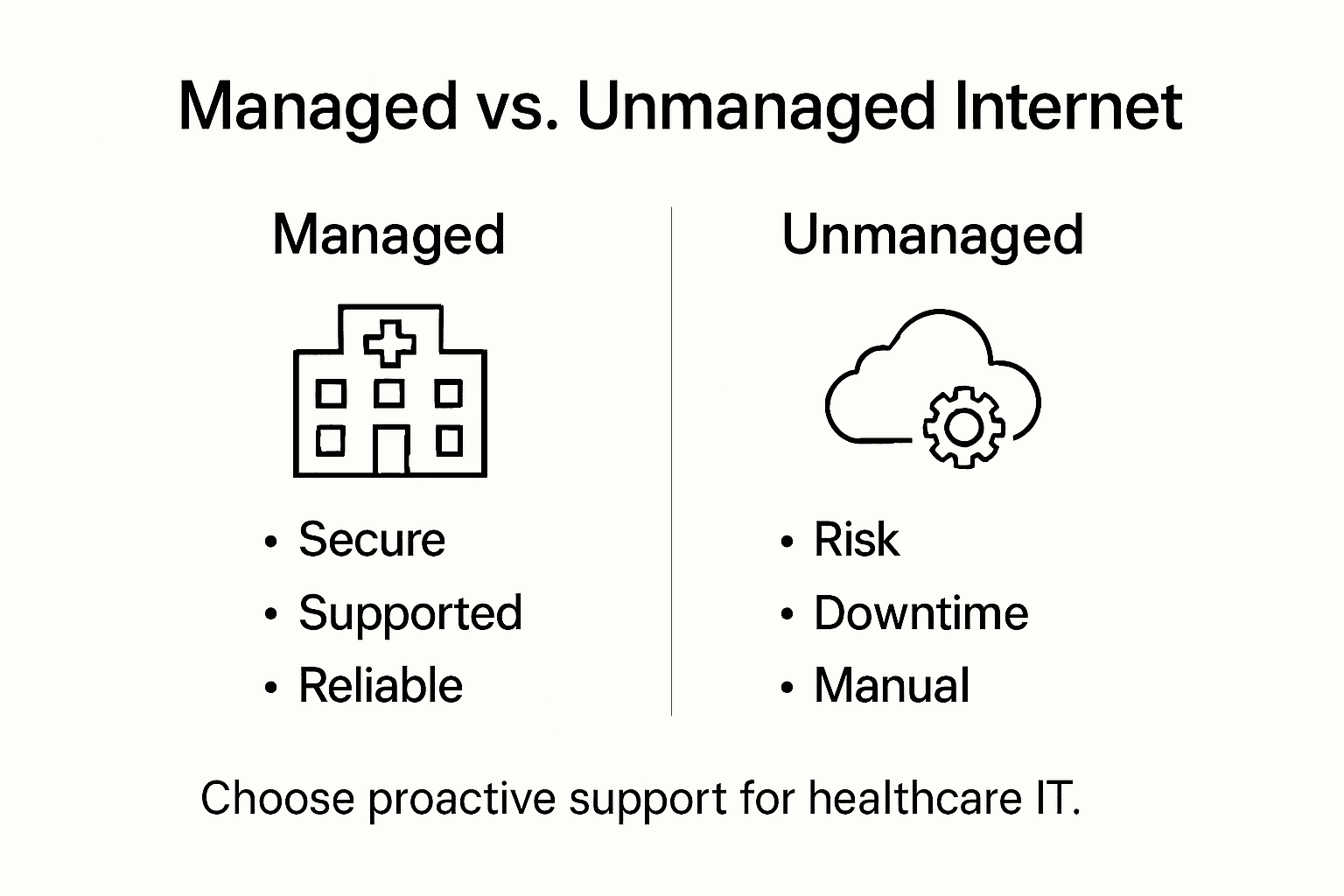
Healthcare technology leaders must recognize that unmanaged internet solutions create shadow IT environments that complicate compliance and expose sensitive medical data to unnecessary risks. By transitioning to managed internet services, organizations can develop more robust, secure, and reliable technological ecosystems that support modern healthcare delivery.
Here’s a direct comparison of managed and unmanaged internet approaches for healthcare organizations:
| Aspect | Managed Internet | Unmanaged Internet |
|---|---|---|
| Security | Active, layered defense | Minimal defense, reactive |
| Compliance | Regularly monitored | Rarely assessed |
| Reliability | Service guarantees | Performance varies |
| Cost Predictability | Fixed monthly billing | Fluctuating expenses |
Pro tip: Conduct a comprehensive risk assessment comparing your current internet infrastructure against managed service benchmarks to identify potential vulnerabilities and optimization opportunities.
Strengthen Your Healthcare IT with SabertoothPro Managed Internet Solutions
Healthcare organizations face critical challenges such as safeguarding sensitive patient data, maintaining reliable network connectivity, and ensuring scalable infrastructure to support telemedicine and digital record systems. This article highlights how managed internet services provide continuous monitoring, proactive security, and regulatory compliance that are essential for smooth healthcare operations and protecting patient safety. If you want to minimize downtime, reduce cybersecurity risks, and streamline your digital infrastructure, SabertoothPro offers tailored solutions designed for these exact needs.
Explore our comprehensive range of Titan WiFi hotspot plans engineered for high-speed, reliable internet access. Combine these with advanced networking devices like those in our Titan WiFi collection to create a secure and robust connection across your healthcare facilities. Whether you need scalable solutions for mobile telemedicine or dependable rural connectivity, our offerings help you build a resilient, compliant, and efficient IT environment.
Seize the opportunity to upgrade your healthcare network infrastructure today and overcome common challenges such as unpredictable performance and security vulnerabilities.

Visit SabertoothPro.com now to secure the future of your healthcare IT with industry-leading managed internet services built to keep your patients and data protected. Act now to ensure your operations never face avoidable interruptions or compliance risks again.
Frequently Asked Questions
What are managed internet services?
Managed internet services are comprehensive solutions that outsource network management to expert providers, ensuring reliable, secure, and efficient internet infrastructure for healthcare organizations.
How do managed internet services enhance cybersecurity for healthcare?
Managed internet services enhance cybersecurity by providing continuous monitoring, advanced threat detection, and proactive vulnerability management to protect sensitive patient data from potential cyber threats.
What operational advantages do managed internet services offer to healthcare IT?
Managed internet services provide operational advantages such as real-time information access, reduced administrative overhead, enhanced care coordination, and scalable infrastructure, allowing healthcare organizations to optimize patient care.
How do managed and unmanaged internet services differ in terms of compliance and security?
Managed internet services maintain strict compliance with healthcare regulations and provide active security measures, while unmanaged internet services often lack these protections, posing a higher risk of regulatory violations and data breaches.