


Mobile Internet for Enterprises: Complete Guide

More than 80 percent of enterprises worldwide now rely on mobile internet to power their operations. Staying connected is no longer limited to a single office or a static location. In today’s fast-paced business world, mobile internet gives companies the freedom to work from anywhere, scale quickly, and react in real time. This guide breaks down how mobile internet works for enterprises, highlights key technologies, and explains what makes it essential for modern business success.
Table of Contents
- Defining Mobile Internet For Enterprises
- Types: 4G Lte, 5G, Iot, And Sd-Wan
- Key Features And Real-World Applications
- Security, Compliance, And Reliability Needs
- Cost Structure And Common Pitfalls
- Comparing Mobile And Fixed-Site Connectivity
Key Takeaways
| Point | Details |
|---|---|
| Dynamic Connectivity | Mobile internet transforms enterprise connectivity by providing portable and scalable solutions, enhancing operational flexibility beyond traditional wired infrastructure. |
| Advanced Technologies | Technologies such as 4G, 5G, IoT, and SD-WAN offer unique capabilities that drive digital transformation and facilitate real-time data connectivity for enterprises. |
| Robust Security & Compliance | With increased connectivity, enterprises must prioritize security measures and compliance with regulatory standards to protect sensitive data and network integrity. |
| Cost Considerations | Implementing mobile internet solutions involves a complex cost structure, requiring strategic planning to balance initial investments with long-term operational efficiency. |
Defining Mobile Internet for Enterprises
Mobile internet for enterprises represents a dynamic connectivity solution that enables businesses to access high-speed wireless networks through cellular, Wi-Fi, and other wireless technologies. According to Network Technology Alliance, these networks encompass advanced wireless technologies like Wi-Fi 6, 4G, and 5G, providing unprecedented flexibility compared to traditional wired infrastructure.
Mobile internet fundamentally transforms how organizations approach connectivity by offering portable, scalable, and adaptable network solutions. These technologies allow businesses to establish internet connections beyond physical office spaces, supporting remote work, field operations, and distributed team environments. The United Nations Statistics highlights that an increasing percentage of global enterprises now rely on mobile and broadband internet connections to drive productivity and operational efficiency.
Key characteristics of enterprise mobile internet include:
- Rapid deployment capabilities
- Secure network infrastructure
- High-bandwidth transmission
- Geographical flexibility
- Support for multiple device connections
Businesses leverage mobile internet solutions to create robust, responsive digital ecosystems that can adapt quickly to changing technological landscapes and operational requirements. Whether supporting temporary project sites, enabling field technicians, or maintaining continuous connectivity during travel, mobile internet has become an indispensable tool for modern enterprises seeking agile and reliable communication platforms.
Types: 4G LTE, 5G, IoT, and SD-WAN
Enterprises today have multiple wireless network technologies available, each offering unique capabilities for connectivity and digital transformation. According to Preprints, wireless network technologies like 4G, and 5G represent a critical evolution in enterprise communication infrastructure, supporting high-volume data transmission and advanced applications.
Here’s a breakdown of key enterprise mobile internet technologies:
4G LTE: A robust wireless technology providing reliable high-speed internet with widespread coverage. Ideal for businesses requiring consistent connectivity across multiple locations.
5G: The latest cellular network technology offering unprecedented speed, minimal latency, and massive device connectivity. PMC Research highlights its potential in smart city applications and enterprise connectivity solutions.
IoT (Internet of Things): A network of interconnected devices that collect and exchange data, enabling smart monitoring, automation, and real-time insights across various business operations. When integrated with 5G, IoT can provide more sophisticated and responsive enterprise ecosystems.
SD-WAN (Software-Defined Wide Area Network): A sophisticated network management approach that uses software to control connectivity, ensuring optimal routing, enhanced security, and improved performance across distributed enterprise environments.
By understanding and strategically implementing these technologies, businesses can create flexible, scalable, and efficient digital infrastructures that adapt to evolving technological landscapes and operational demands.
Key Features and Real-World Applications
Mobile internet technologies have revolutionized enterprise connectivity, offering transformative solutions across multiple industries. PMC Research highlights the emergence of private 5G networks as a game-changing technology, enabling advanced deployment models that support mission-critical enterprise applications with enhanced security and connectivity.
Key features of enterprise mobile internet technologies include:
- Ultra-Low Latency: Enabling real-time data transmission and immediate response capabilities
- High Bandwidth: Supporting massive data transfers and complex computational tasks
- Ubiquitous Connectivity: Providing seamless network access across diverse geographical locations
- Robust Security Protocols: Implementing advanced encryption and network protection mechanisms
Real-world applications demonstrate the profound impact of these technologies. According to IJERT, industries like smart manufacturing, healthcare, and logistics are leveraging IoT and 5G to create intelligent, responsive ecosystems. For instance, manufacturers can now implement predictive maintenance systems that use real-time sensor data to anticipate equipment failures, while healthcare providers can conduct remote diagnostics with unprecedented precision.

Enterprise sectors are experiencing significant transformations through these mobile internet technologies. Logistics companies utilize IoT-enabled tracking systems for real-time shipment monitoring, retail businesses implement smart inventory management, and agricultural enterprises deploy precision farming techniques using advanced wireless networks. These technologies are not just improving operational efficiency but fundamentally redesigning how businesses interact with data, technology, and their operational environments.
Security, Compliance, and Reliability Needs
Enterprise mobile internet technologies demand rigorous security and reliability standards to protect critical business infrastructure. PMC Research emphasizes the complex security challenges inherent in integrating advanced wireless technologies like 5G and IoT into enterprise networks, highlighting the critical need for comprehensive protective measures.
Security Challenges in enterprise mobile internet include:
- Sophisticated cyber threat landscapes
- Potential network vulnerability points
- Data privacy and protection requirements
- Complex authentication mechanisms
- Regulatory compliance standards
Reliability is paramount for enterprise connectivity. Private 5G Network Research underscores the importance of developing robust deployment models that ensure consistent network performance, minimal downtime, and seamless operational continuity. Enterprises must implement multi-layered security protocols that include end-to-end encryption, advanced threat detection systems, and regular security audits to maintain the integrity of their mobile internet infrastructure.
Compliancy represents another crucial dimension of enterprise mobile internet strategy. Different industries have unique regulatory requirements, ranging from healthcare’s HIPAA standards to financial services’ stringent data protection regulations. Businesses must design their mobile internet architectures to not only meet but exceed these compliance mandates, ensuring data privacy, secure transmission, and comprehensive risk management across all operational contexts.
Successful enterprise mobile internet strategies integrate security, reliability, and compliance as interconnected components of a holistic technological approach. By prioritizing these elements, organizations can leverage advanced wireless technologies while maintaining the highest standards of operational protection and performance.
Cost Structure and Common Pitfalls
Enterprises exploring mobile internet technologies must navigate complex financial landscapes and potential implementation challenges. Preprints Research highlights the critical importance of strategic planning when considering wireless network deployments, emphasizing that cost structures extend far beyond initial infrastructure investments.
Common Cost Components in enterprise mobile internet implementation include:
- Initial hardware and infrastructure expenses
- Network equipment procurement
- Ongoing maintenance and upgrade costs
- Licensing and compliance fees
- Staff training and technical support
- Potential network optimization investments
Private 5G Network Research reveals that enterprises frequently encounter significant pitfalls during mobile internet technology adoption. These challenges often stem from misalignment between technological capabilities and specific business objectives, inadequate technical expertise, and underestimating the complexity of integrated network systems.
Strategic cost management requires businesses to conduct comprehensive total cost of ownership (TCO) analyses, evaluating not just immediate expenses but long-term technological scalability and potential return on investment. Successful implementations demand a holistic approach that balances cutting-edge technological capabilities with fiscal responsibility, ensuring that mobile internet investments genuinely enhance operational efficiency and competitive advantage.
By anticipating potential financial and technical challenges, enterprises can develop more resilient mobile internet strategies that minimize risks, optimize resource allocation, and create sustainable technological ecosystems tailored to their unique operational requirements.
Comparing Mobile and Fixed-Site Connectivity
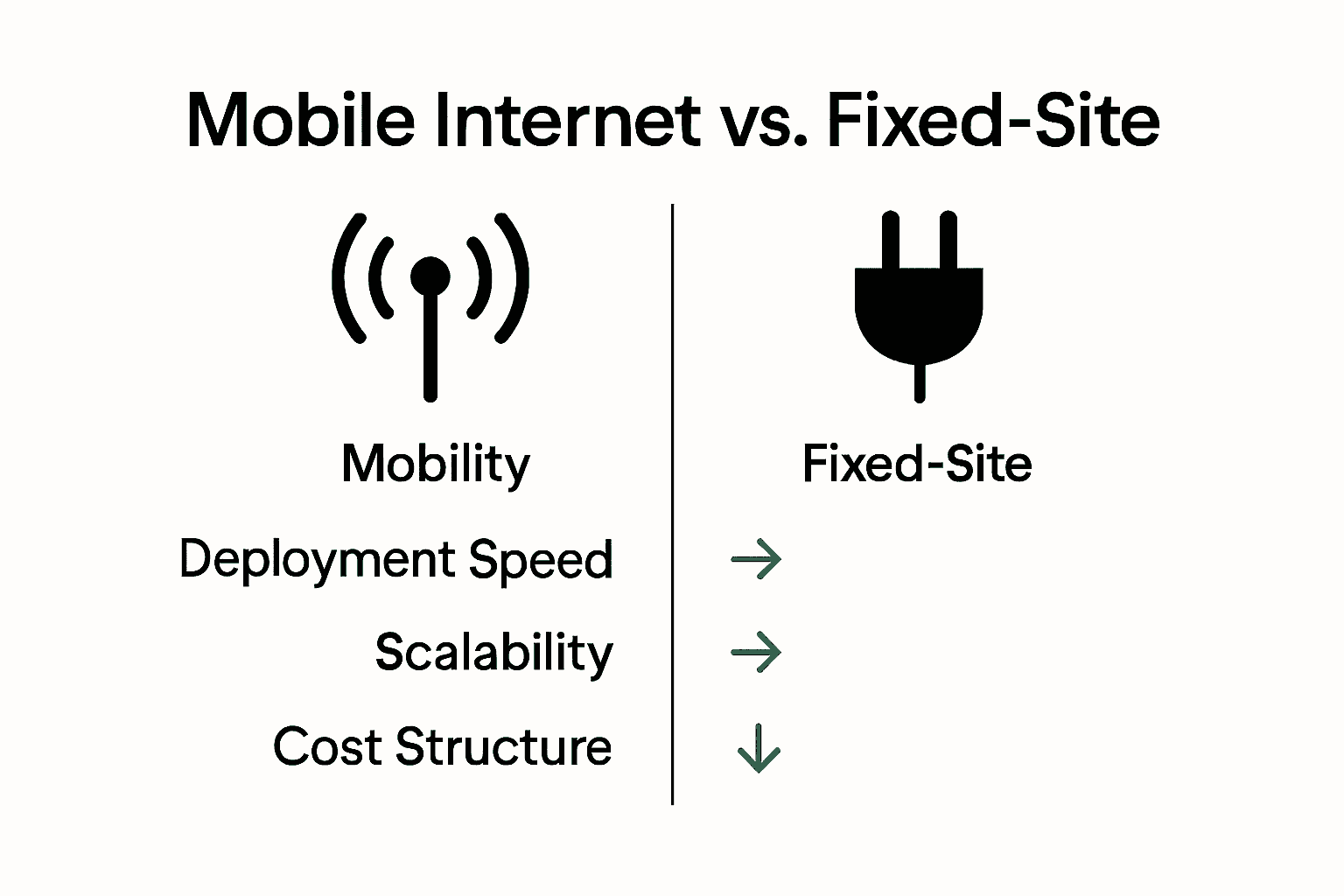
Network Technology Alliance highlights the transformative shift from traditional fixed-site connectivity to more dynamic mobile internet solutions for enterprises. This evolution represents a fundamental reimagining of how businesses approach network infrastructure, prioritizing flexibility, scalability, and adaptability over static, location-dependent connectivity models.
Key Comparative Dimensions:
- Mobility: Mobile networks provide unrestricted geographical access
- Deployment Speed: Rapid implementation compared to fixed infrastructure
- Scalability: Easier to expand and modify mobile network configurations
- Cost Structure: Lower initial investment and more flexible pricing models
- Technological Adaptability: Quicker integration of emerging technologies
According to Preprints Research, the transition from fixed-site to mobile connectivity isn’t just a technological upgrade but a strategic business transformation. Mobile networks offer enterprises unprecedented advantages, including the ability to support remote work, distributed team operations, and real-time data transmission across multiple locations.
While fixed-site connectivity traditionally provided stable, predictable performance, modern mobile internet technologies have dramatically narrowed this performance gap. Enterprises can now leverage mobile networks that deliver comparable—and often superior—reliability, security, and bandwidth, with the added benefits of flexibility and rapid deployment.
The choice between mobile and fixed-site connectivity ultimately depends on specific organizational needs, operational contexts, and strategic objectives. Businesses must carefully evaluate their unique requirements, considering factors like geographical distribution, workforce mobility, budget constraints, and technological ecosystem to make informed connectivity decisions.
Empower Your Enterprise with Reliable Mobile Internet Solutions
Mobile internet is no longer just a convenience it is a critical business lifeline. If your organization struggles with connectivity challenges like slow deployments insecure networks or inflexible infrastructure you are not alone. Enterprises today demand high-bandwidth ultra-low latency networks that support IoT integration SD-WAN management and seamless remote operations. These goals require solutions built for agility security and scalability—exactly what SabertoothPro delivers.
Experience the power of advanced 4G LTE and 5G hotspots combined with enterprise-class routers designed to keep your teams connected anywhere anytime increasing productivity and reducing downtime. Our specialized Titan WiFi devices and flexible Titan WiFi hotspot plans help you navigate the complexity of wireless infrastructure without compromising security or cost efficiency.

Get ahead of connectivity bottlenecks now with SabertoothPro’s cutting-edge solutions tailored for modern enterprises. Visit SabertoothPro.com to explore our full range of products and book a consultation to start modernizing your network infrastructure today.
Frequently Asked Questions
What is mobile internet for enterprises?
Mobile internet for enterprises refers to high-speed wireless connectivity solutions that allow businesses to access internet services through cellular, Wi-Fi, and other wireless technologies, enabling flexibility and support for remote operations.
What are the key features of mobile internet technologies for businesses?
Key features include ultra-low latency for real-time data transmission, high bandwidth for massive data transfers, ubiquitous connectivity across locations, and robust security protocols to protect sensitive data.
How do 4G LTE and 5G technologies differ in enterprise applications?
4G LTE provides reliable high-speed internet with widespread coverage, making it suitable for businesses needing consistent connectivity. In contrast, 5G offers unprecedented speed, minimal latency, and the ability to connect a massive number of devices, supporting advanced applications such as IoT and smart city solutions.
What are some common challenges enterprises face when implementing mobile internet solutions?
Common challenges include the complexity of integrating new network technologies, ensuring data security, meeting compliance standards, and managing costs related to infrastructure and maintenance.
Recommended
- 7 Types de connectivité internationale à maîtriser Nov-2025 | SimCornerUSA 7 Types de connectivité internationale à maîtriser Nov-2025 | SimCornerUSA
- Comment utiliser internet mobile en Amérique : Guide Pratique Oct-2025 | SimCornerUSA Comment utiliser internet mobile en Amérique : Guide Pratique Oct-2025 | SimCornerUSA