


Mobile Internet Guide 2025: Optimize Fleet Connectivity Fast

Nearly 60 percent of American logistics fleets struggle with intermittent connectivity when operating outside dense East Coast urban areas. For mid-sized firms in the Mid-Atlantic, every data gap across your fleet means lost time and inefficiency. Understanding how to assess connectivity requirements and choose the right mobile internet technologies gives you the power to keep vehicles connected in real time, maintain compliance, and drive better operational decisions no matter where your American fleet travels.
Table of Contents
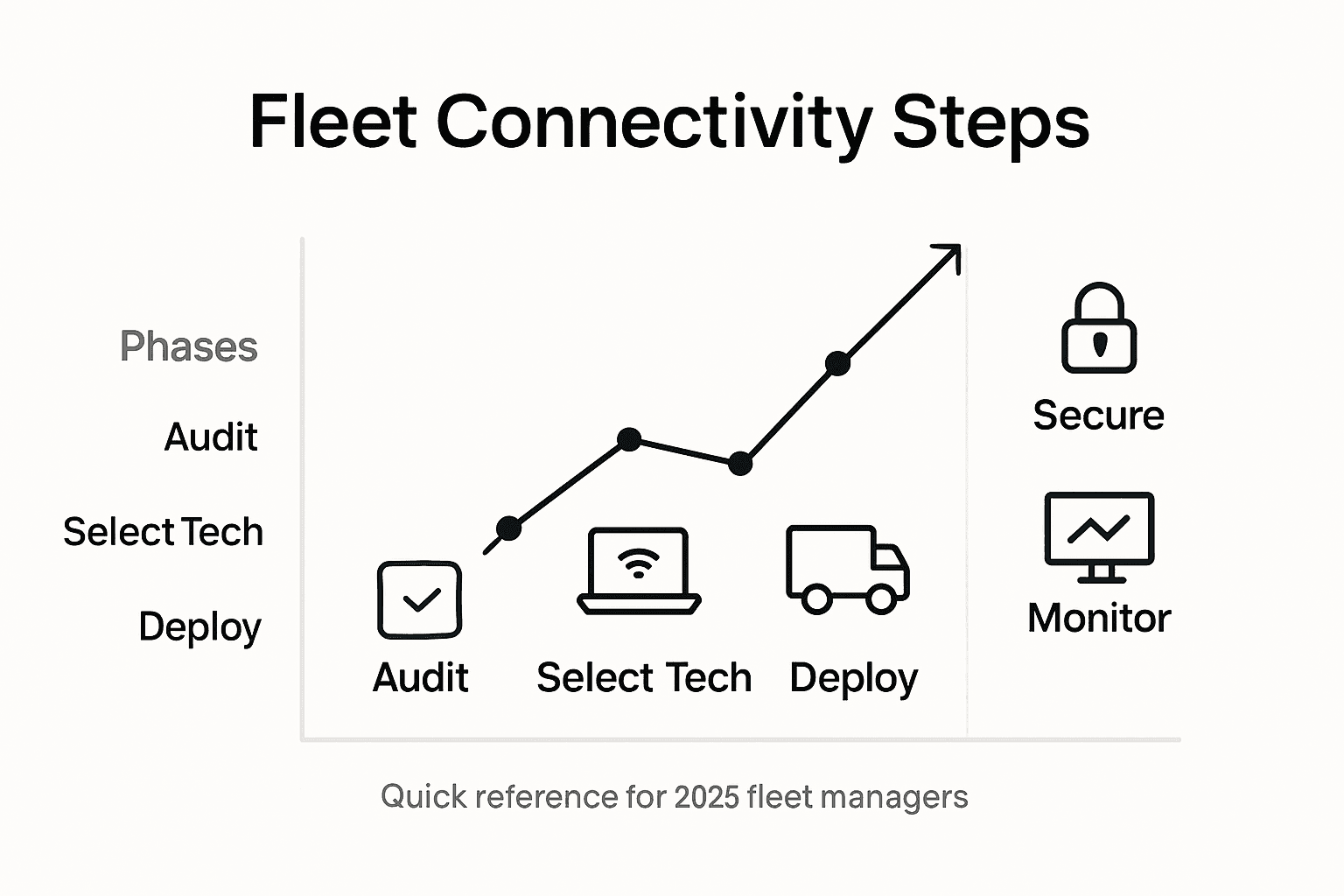
- Step 1: Evaluate Fleet Connectivity Requirements
- Step 2: Select the Best Mobile Internet Technologies
- Step 3: Deploy Devices and Optimize Installations
- Step 4: Implement Robust Security and Management
- Step 5: Test Connectivity and Ensure Ongoing Performance
Quick Summary
| Key Insight | Explanation |
|---|---|
| 1. Evaluate Connectivity Needs | Conduct a thorough audit of current fleet technologies to identify gaps and specific connectivity challenges for effective planning. |
| 2. Select Optimal Mobile Technologies | Focus on reliable wireless solutions such as 4G LTE and 5G that meet performance specifications and integrate with existing fleet infrastructure. |
| 3. Implement Systematic Device Deployment | Use standardized installation techniques and a centralized device management system for seamless integration and maximum network performance. |
| 4. Establish Comprehensive Security Framework | Develop multi-layered security measures to protect fleet communications and ensure continuous monitoring of potential threats. |
| 5. Continuous Connectivity Testing | Implement robust testing and monitoring protocols to validate network reliability and quickly identify potential connectivity issues. |
Step 1: Evaluate Fleet Connectivity Requirements
Evaluating fleet connectivity requirements demands a strategic approach that combines technology assessment, operational needs analysis, and compliance verification. Your goal is to create a comprehensive connectivity blueprint that supports seamless communication, data transmission, and operational efficiency across your entire fleet.
Start by conducting a detailed audit of your current fleet infrastructure. This involves mapping out your existing communication technologies, identifying performance gaps, and understanding specific connectivity challenges unique to your operational environment. Federal fleet requirements guidance recommends using systematic evaluation frameworks that consider vehicle type, geographic coverage, data transmission needs, and technological compatibility. Focus on critical metrics like bandwidth requirements, network reliability, real time tracking capabilities, and potential zones of limited connectivity.
Next, assess your specific operational demands by examining your fleet’s communication patterns, data transfer volumes, and mission critical communication needs. Consider factors such as geographic routes, frequency of long distance travel, urban versus rural operational zones, and the specific types of data your vehicles need to transmit. The National Renewable Energy Laboratory’s fleet analysis tools provide advanced analytics that can help you quantify these requirements with precision.
Pro tip: Create a detailed connectivity matrix that maps each vehicle type against specific communication and data transmission requirements to identify potential gaps before full implementation.
Step 2: Select the Best Mobile Internet Technologies
Selecting the optimal mobile internet technologies for your fleet requires a comprehensive understanding of available wireless solutions and their specific performance characteristics. Your primary objective is to identify technologies that provide robust connectivity, reliable data transmission, and scalable infrastructure to support your operational needs.
Fleet technology trends research indicates that modern fleet connectivity relies on a strategic combination of technologies including 4G LTE, emerging 5G networks, and integrated telematics systems. Evaluate potential technologies by examining critical factors such as network coverage, data transmission speeds, latency, reliability, and cost effectiveness. Pay special attention to the compatibility of these technologies with your existing fleet infrastructure and the specific communication requirements of different vehicle types and operational zones.
Carefully analyze the technological landscape by comparing various wireless standards and their unique advantages. The GSMA mobile internet connectivity report suggests prioritizing technologies that offer comprehensive IoT integration, advanced network performance, and future scalability. Consider factors like geographic coverage, device compatibility, bandwidth requirements, and the potential for seamless upgrades as technology evolves.
Here’s a summary of key factors to evaluate when selecting mobile internet technologies for your fleet:
| Technology Type | Network Coverage | Data Speed & Latency | Scalability |
|---|---|---|---|
| 4G LTE | Nationwide, urban focus | Moderate speed, low latency | Suitable for most fleets |
| 5G | Expanding, urban hotspots | High speed, ultra-low latency | Future-ready, supports IoT expansion |
| Telematics Systems | Variable, depends on provider | Reliable for operational data | Integrates easily with fleet apps |
Pro tip: Develop a comprehensive technology comparison matrix that ranks potential mobile internet solutions across multiple performance metrics to facilitate data driven decision making.
Step 3: Deploy Devices and Optimize Installations
Deploying mobile internet devices across your fleet demands a systematic approach that ensures seamless integration, maximum performance, and consistent connectivity. Your goal is to implement a robust installation strategy that minimizes disruption and maximizes technological effectiveness across your entire vehicle network.

Microsoft’s reference architecture for connected fleets provides a comprehensive framework for device deployment that emphasizes modular installation techniques and strategic positioning. When installing devices, focus on creating standardized mounting protocols that ensure optimal signal reception, power connectivity, and minimal interference with vehicle operations. Carefully evaluate each vehicle’s unique characteristics such as interior layout, power sources, and existing communication infrastructure to develop a tailored installation approach that supports consistent performance across different vehicle types and operational environments.
The cloud-based telematics deployment research highlights the importance of integrating device management systems that enable remote configuration, real time monitoring, and proactive maintenance. Implement a centralized device management platform that allows for remote diagnostics, firmware updates, and performance tracking. This approach enables your team to quickly identify and resolve potential connectivity issues, ensure uniform device performance, and maintain a comprehensive overview of your fleet’s technological ecosystem.
Pro tip: Create a standardized device installation checklist that includes precise mounting guidelines, power requirements, and initial configuration steps to ensure consistency across all fleet vehicles.
Step 4: Implement Robust Security and Management
Securing your fleet’s mobile internet infrastructure requires a comprehensive approach that addresses technological vulnerabilities, operational risks, and potential cybersecurity threats. Your objective is to develop a multi layered security strategy that protects your communication networks, device infrastructure, and sensitive operational data.
NIST federal guidelines for mobile device security recommend implementing a holistic security framework that encompasses device authentication, data encryption, and continuous monitoring protocols. Establish rigorous access control mechanisms that verify user identities, limit administrative privileges, and create segmented network environments to prevent unauthorized system penetration. Develop comprehensive mobile device policies that mandate regular software updates, enforce strong password requirements, and create automated protocols for remotely wiping or disabling devices in case of potential security breaches.
The General Services Administration IT security procedural guide emphasizes the importance of integrating advanced threat detection systems and maintaining real time visibility across your entire fleet communication infrastructure. Implement sophisticated monitoring tools that can detect anomalous network behaviors, track device performance metrics, and generate immediate alerts for potential security incidents. Develop a proactive security management approach that includes regular vulnerability assessments, penetration testing, and continuous employee training to ensure your team remains prepared against evolving cybersecurity challenges.
Pro tip: Create a comprehensive security incident response plan that outlines specific procedures for detecting, containing, and mitigating potential mobile network security threats.
Step 5: Test Connectivity and Ensure Ongoing Performance
Testing and maintaining fleet connectivity requires a systematic approach that combines continuous monitoring, performance analytics, and proactive diagnostic strategies. Your objective is to develop a robust testing framework that validates network reliability, identifies potential issues early, and ensures consistent operational connectivity across your entire fleet.
Systematic connectivity monitoring research demonstrates the critical importance of implementing advanced data analytics and machine learning techniques to track network performance. Establish comprehensive testing protocols that include regular bandwidth measurements, latency assessments, signal strength evaluations, and real time performance tracking. Develop automated diagnostic workflows that can quickly identify and isolate connectivity anomalies, enabling your team to respond rapidly to potential network disruptions and maintain optimal communication infrastructure.
Microsoft’s connected fleet reference architecture recommends creating a multilayered performance validation strategy that goes beyond basic connectivity testing. Implement continuous monitoring systems that not only measure network performance but also predict potential future challenges. Utilize advanced analytics tools to generate detailed performance reports, track historical connectivity trends, and create predictive models that can help you anticipate and mitigate potential network issues before they impact your operational efficiency.
Use this quick-reference table to identify crucial steps for robust fleet connectivity testing and monitoring:
| Step | Main Objective | Tools & Methods |
|---|---|---|
| Initial Testing | Validate installation | Speed tests, signal analysis |
| Continuous Monitoring | Track ongoing health | Automated dashboards, alerts |
| Predictive Analytics | Anticipate future issues | Machine learning models, trend reporting |
Pro tip: Create a standardized connectivity performance dashboard that provides real time insights into network health, with automated alerts for any performance degradation or potential connectivity risks.
Optimize Your Fleet Connectivity with SabertoothPro Today
Managing fleet connectivity involves navigating complex challenges such as ensuring reliable 4G LTE or 5G coverage, seamless device integration, and robust security protocols. The “Mobile Internet Guide 2025” highlights the importance of real time monitoring, multi layered security, and scalable mobile internet technologies for maintaining operational efficiency across diverse vehicle types. If you want to close connectivity gaps and upgrade your fleet’s wireless infrastructure with advanced IoT integration and telematics solutions, SabertoothPro offers tailored high speed internet devices and plans built for these exact needs.
Explore our cutting edge Titan WiFi devices collection that deliver reliable mobile internet suited for varied fleet environments.

Ready to transform your fleet’s connectivity performance? Visit SabertoothPro.com now to browse specialized Titan WiFi hotspot plans that provide scalable coverage and data options. Take control of your fleet communication infrastructure with our expert solutions and implement secure, flexible wireless networks designed to keep your vehicles connected and your operations running smoothly.
Frequently Asked Questions
How can I evaluate my fleet’s connectivity requirements?
To evaluate your fleet’s connectivity requirements, conduct a detailed audit of your current communication technologies and identify performance gaps. Create a connectivity matrix that maps each vehicle type against its specific communication and data transmission needs to pinpoint potential gaps.
What mobile internet technologies should I consider for my fleet?
For your fleet, consider technologies such as 4G LTE and 5G networks. Evaluate these options based on factors like network coverage, data speeds, and compatibility with existing fleet technology to identify the best fit for your operational needs.
What steps should I follow to deploy mobile internet devices in my fleet?
Start by developing standardized mounting protocols for device installation and assess each vehicle’s unique characteristics. Create a checklist that includes specific mounting guidelines, power requirements, and initial configuration steps to ensure consistency across your fleet.
How can I establish robust security for my fleet’s mobile internet infrastructure?
To establish security, implement a multi-layered security strategy that includes device authentication and data encryption. Regularly update software and create protocols for remote wiping devices to protect sensitive data from potential breaches.
What methods can I use to test connectivity and ensure ongoing performance?
Implement continuous monitoring systems to track network health and performance, including bandwidth measurements and latency assessments. Develop predictive analytics to anticipate future connectivity issues and maintain optimal operational efficiency across your fleet.