


Why Use SIM Card Routers for Fleet Connectivity

Managing fleets across Pennsylvania, Maryland, and Virginia means reliable communication is non-negotiable as every minute of downtime can disrupt your operations. With the rapid growth of smart logistics systems, IT managers face the challenge of keeping vehicles and assets connected no matter where the road leads. SIM card routers have emerged as the go-to solution for mobile connectivity, seamlessly linking fleet assets to cellular networks for secure, real-time data and vehicle management.
Table of Contents
- What Are SIM Card Routers in Logistics?
- Types and Key Functions for Fleet Management
- How SIM Routers Enable Reliable Connectivity
- Security, Compliance, and Cost Implications
- Comparing SIM Routers to Alternative Solutions
Key Takeaways
| Point | Details |
|---|---|
| Reliable Connectivity | SIM card routers enable robust internet access for vehicle tracking and fleet management, ensuring ongoing communication in varying environments. |
| Security and Compliance | Implementing advanced security measures like data encryption and authentication protocols is essential for protecting sensitive operational data. |
| Cost-Effective Solutions | Utilizing SIM card routers can lower infrastructure and maintenance costs while enhancing operational efficiency through real-time data capabilities. |
| Integration with Fleet Management | SIM card routers are critical for smart fleet management systems, facilitating better data transmission for optimized logistics operations. |
What Are SIM Card Routers in Logistics?
SIM card routers are specialized networking devices designed to provide reliable wireless internet connectivity for fleet management and logistics operations. These innovative devices utilize mobile network authentication technology to enable continuous communication and data transfer across mobile assets.
At their core, SIM card routers are cellular-enabled networking devices that leverage subscriber identity module (SIM) technology to connect vehicles, equipment, and tracking systems to cellular data networks. Unlike traditional wifi routers, these specialized devices are engineered specifically for mobile and remote environments, offering robust connectivity solutions for transportation and logistics companies.
The key features of SIM card routers in logistics include:
- Instant cellular network access through embedded SIM cards
- Secure device authentication across multiple cellular networks
- Ability to maintain internet connectivity in remote or mobile locations
- Real-time data transmission for vehicle tracking and fleet management
- Flexible network switching capabilities between different cellular providers
Cellular connectivity transforms how logistics companies manage their fleets. These routers enable continuous communication between vehicles, dispatch centers, and central management systems, providing critical data about location, performance, and operational status. SIM technology enables seamless wireless connectivity across various cellular network infrastructures.
Pro tip: When selecting a SIM card router for your logistics fleet, prioritize devices with multi-carrier support and robust signal reception capabilities.
Types and Key Functions for Fleet Management
Fleet management technologies have dramatically evolved, with SIM card routers emerging as critical infrastructure for modern transportation operations. Smart fleet management systems integrate multiple technological components to streamline vehicle tracking, communication, and operational efficiency.
Fleet management routers come in several specialized types designed to meet diverse logistical needs:
- Vehicle Tracking Routers: Dedicated devices for continuous GPS and location monitoring
- Telematics Routers: Advanced systems that collect and transmit vehicle performance data
- Multi-Network Routers: Devices capable of switching between cellular networks for consistent connectivity
- Ruggedized Routers: Industrial-grade equipment designed for extreme environmental conditions
- Security-Enhanced Routers: Systems with advanced encryption and network protection features
The key functions of these routers extend far beyond simple internet connectivity. IoT-enabled fleet management systems provide comprehensive operational insights by enabling:
- Real-time vehicle location tracking
- Continuous driver behavior monitoring
- Automated route optimization
- Remote vehicle diagnostic reporting
- Fuel consumption analysis
- Predictive maintenance scheduling
Cellular connectivity transforms fleet management from reactive to proactive strategies. These intelligent routers create a continuous data flow that allows logistics companies to make informed decisions, reduce operational costs, and improve overall fleet performance.

Pro tip: Invest in multi-carrier SIM card routers that offer seamless network switching to ensure uninterrupted connectivity across different geographic regions.
How SIM Routers Enable Reliable Connectivity
Cellular network technology has transformed connectivity for mobile operations, with SIM card routers providing a robust solution for maintaining consistent internet access. Cellular network standards enable these routers to authenticate and connect devices across multiple network infrastructures, ensuring uninterrupted communication for fleet management teams.
The key mechanisms that enable reliable connectivity include:
- Automatic Network Switching: Routers can seamlessly transition between different cellular carriers
- Multi-SIM Capabilities: Dual SIM slots provide immediate backup network options
- Signal Strength Optimization: Intelligent routing algorithms select the strongest available network
- Advanced Authentication Protocols: Secure device identification across cellular networks
- Adaptive Bandwidth Management: Dynamic allocation of network resources
Network redundancy is crucial for fleet operations. SIM-based routers with multi-carrier support offer critical failover mechanisms that prevent communication disruptions. These devices continuously monitor network quality, automatically switching to the most stable connection to maintain consistent data transmission.
Modern SIM card routers go beyond simple internet access. They provide intelligent connectivity solutions that adapt to challenging environments, ensuring logistics companies can track vehicles, monitor performance, and maintain real-time communication regardless of geographic location or network challenges.
Pro tip: Select SIM routers with dual-SIM capabilities and support for multiple cellular bands to maximize connectivity reliability across different regions.
Security, Compliance, and Cost Implications
Fleet management technologies demand robust security frameworks that protect sensitive operational data while maintaining cost-effectiveness. Cybersecurity requirements for telematics systems emphasize comprehensive protection strategies that go beyond simple network access.
Key security and compliance considerations for SIM card routers include:
- Data Encryption: Protecting transmission of sensitive fleet information
- Authentication Protocols: Preventing unauthorized device access
- Regulatory Compliance: Meeting industry-specific security standards
- Threat Detection: Continuous monitoring for potential network vulnerabilities
- Secure Communication Channels: Ensuring end-to-end data protection
Cost implications are equally critical for logistics companies. SIM and USIM security standards provide cost-effective solutions by integrating advanced cryptographic features directly into cellular network infrastructure. This approach reduces the need for additional expensive security hardware and minimizes potential breach-related expenses.
Companies can achieve significant operational savings by implementing intelligent SIM card router solutions that balance security, compliance, and network efficiency. These devices not only protect against cyber threats but also optimize connectivity expenses through smart network management and reduced downtime.
The following table summarizes the business impact of key SIM router functions in logistics:
| Function | Business Impact | Example Benefit |
|---|---|---|
| Real-time Data Transmission | Faster decision-making and responsiveness | Quicker rerouting during traffic |
| Automated Route Optimization | Lower fuel and time costs | Reduced delivery delays |
| Predictive Maintenance | Fewer breakdowns and lower repair spending | Early alerts for engine issues |
| Secure Communication | Protection of sensitive company data | Preventing unauthorized system access |
Pro tip: Conduct regular security audits of your SIM router configurations and prioritize solutions with built-in encryption and multi-layered authentication mechanisms.
Comparing SIM Routers to Alternative Solutions
Fleet connectivity technologies present multiple options, but cellular SIM routers offer unique advantages that distinguish them from traditional communication methods. Unlike satellite or fixed broadband solutions, these routers provide mobile, scalable, and adaptable internet access across diverse operational environments.
Key comparative advantages of SIM card routers include:
- Geographic Coverage: Broader network reach compared to Wi-Fi or short-range technologies
- Mobile Connectivity: Continuous internet access while vehicles are in motion
- Cost-Effectiveness: Lower infrastructure and maintenance expenses
- Scalability: Easy deployment across large and distributed fleet operations
- Real-Time Data Transmission: Immediate communication and tracking capabilities
Wireless communication alternatives each have distinct limitations. Vehicle connectivity technologies like Bluetooth and Wi-Fi offer limited range and cannot match cellular SIM routers’ comprehensive coverage and reliability. Satellite communications, while useful in remote areas, typically involve higher latency and significantly greater costs.
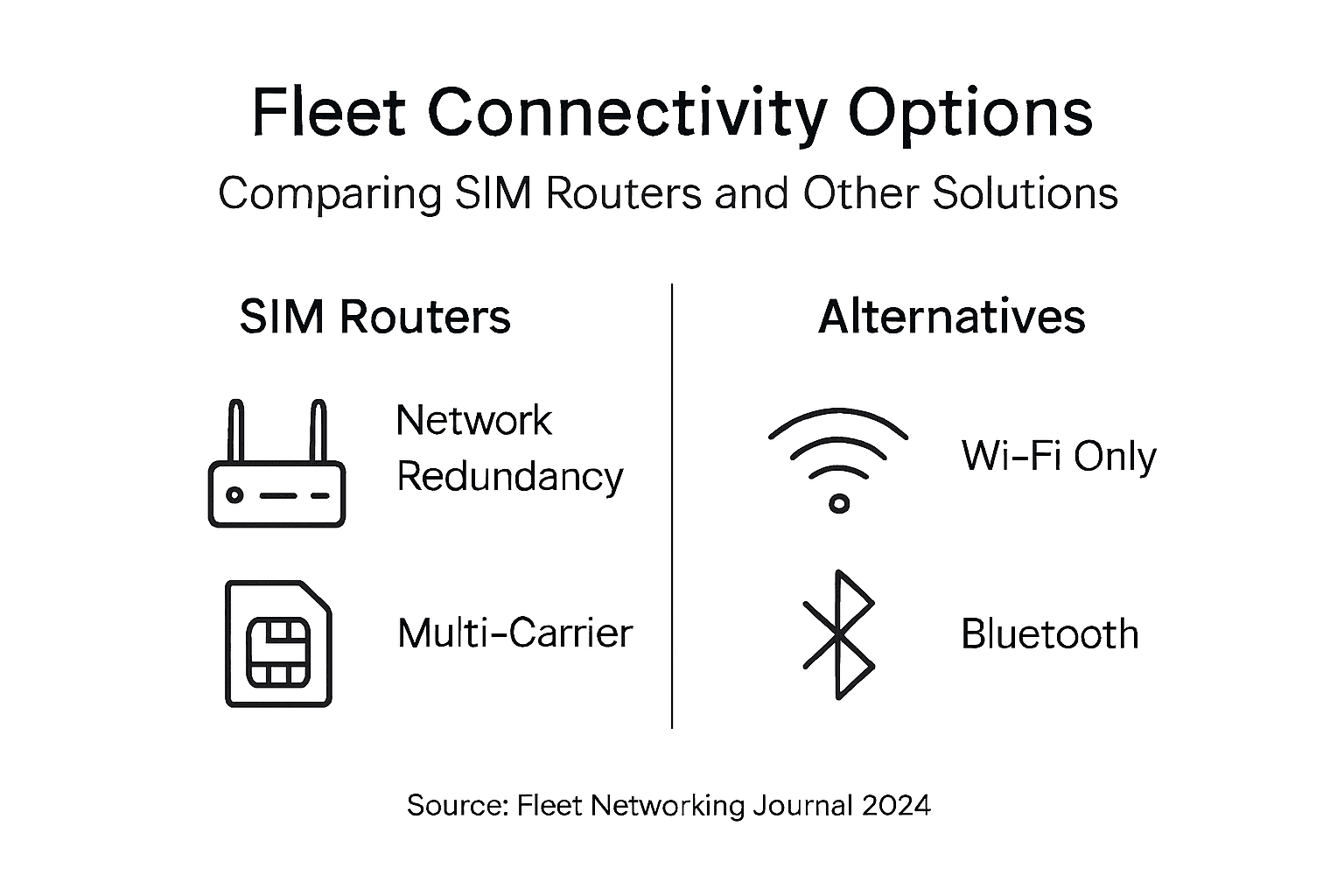
Here’s a quick comparison of SIM card routers and other fleet connectivity solutions:
| Connectivity Solution | Mobility Support | Coverage Scope | Typical Operational Cost |
|---|---|---|---|
| SIM Card Router | Full mobility (moving vehicles) | Nationwide cellular networks | Moderate, scalable monthly fees |
| Satellite Communication | Mobile with latency | Remote/global, even offshore | High equipment and usage costs |
| Fixed Broadband | Stationary only | Limited to fixed locations | Low for fixed locations |
| Wi-Fi/Bluetooth | Short-range, fixed/mobile | Local or depot-specific | Low, high setup for large areas |
Modern logistics require flexible, reliable connectivity solutions that can adapt to changing operational demands. SIM card routers represent a comprehensive approach, integrating advanced networking capabilities with the mobility and resilience required by dynamic transportation industries.
Pro tip: Evaluate your fleet’s specific connectivity requirements, considering factors like geographic coverage, data volume, and budget before selecting a communication solution.
Unlock Seamless Fleet Connectivity with SabertoothPro Solutions
Managing a logistics fleet requires reliable and secure internet connectivity to enable real-time vehicle tracking, automated route optimization, and remote diagnostics as emphasized in the article. The challenges of maintaining uninterrupted cellular access, network security, and multi-carrier support can strain your operations. SabertoothPro addresses these pain points by offering advanced SIM card router technologies that ensure consistent high-speed internet for your mobile assets across diverse environments.
Our range includes top-tier Titan WiFi routers built for rugged mobile use and designed to support multi-SIM capabilities with seamless network switching. Pair these devices with flexible Titan WiFi Hotspot Plans to keep your fleet connected nationwide without interruption. We prioritize security and scalability so your company can focus on operational efficiency instead of connectivity concerns.

Experience the difference that expertly engineered SIM card routers bring to fleet management. Visit SabertoothPro.com today to explore our solutions and take the first step toward transforming your logistics operation with reliable, secure, and cost-effective mobile internet. Don’t let connectivity gaps slow your fleet down act now to gain the advantage in seamless fleet communication.
Frequently Asked Questions
What are the key benefits of using SIM card routers for fleet connectivity?
SIM card routers provide reliable mobile internet access, real-time data transmission, multi-carrier support, and secure device authentication, making them ideal for fleet management in logistics.
How do SIM card routers compare to traditional Wi-Fi connections for fleets?
SIM card routers offer broader geographic coverage, mobile connectivity while vehicles are in motion, and lower infrastructure costs compared to traditional Wi-Fi solutions, which are limited to fixed locations.
What types of SIM card routers are available for fleet management?
There are various types of SIM card routers, including vehicle tracking routers, telematics routers, multi-network routers, ruggedized routers, and security-enhanced routers, each designed to meet specific logistical needs.
How can SIM card routers improve the security of fleet operations?
SIM card routers enhance security through data encryption, secure authentication protocols, and compliance with regulatory standards, protecting sensitive information and preventing unauthorized access.