


Step-by-Step Guide to 5G Hotspots Rural Deployment
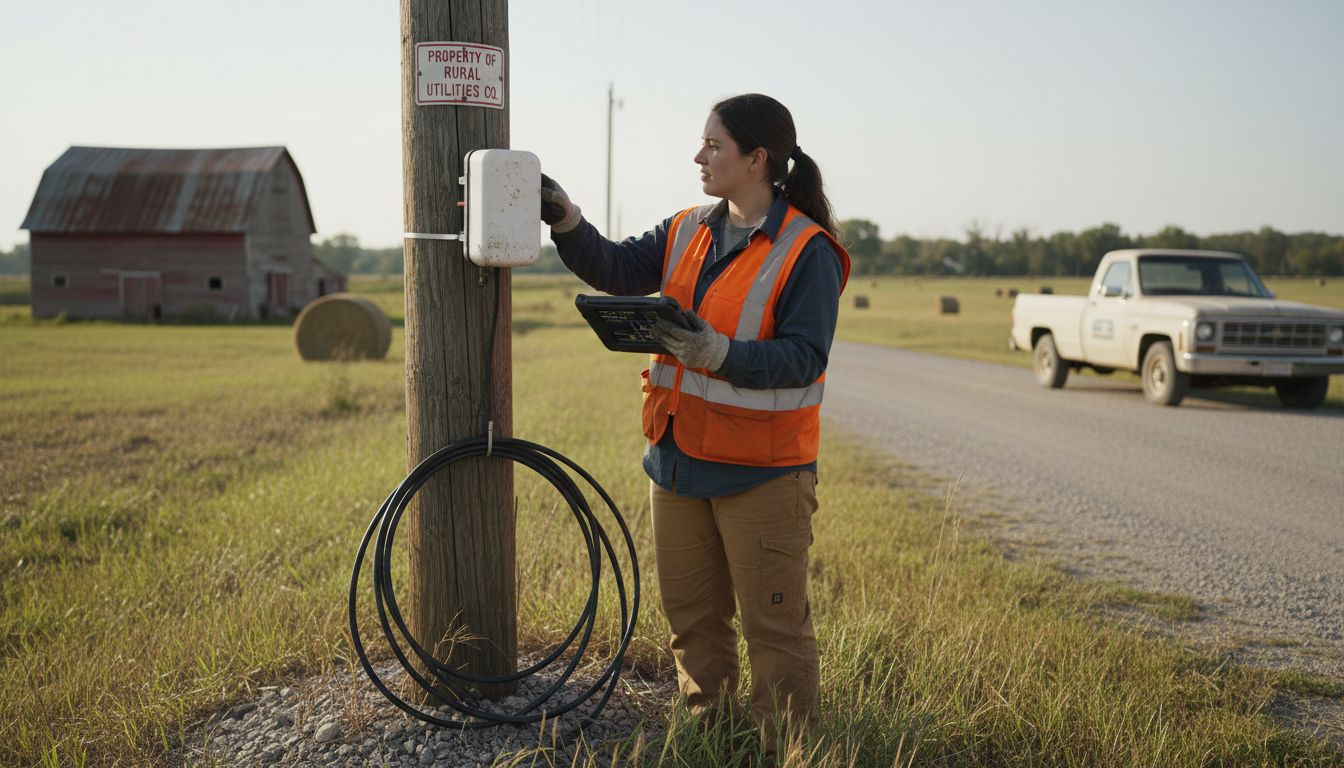
Most American rural businesses lose valuable time each week to unreliable internet interruptions. For small business owners across states like Pennsylvania, Maryland, and Virginia, weak connectivity is more than an inconvenience—it can stall operations and limit growth. Understanding how to assess and improve your 5G hotspot setup allows you to keep American businesses running smoothly even where coverage is often unpredictable.
Table of Contents
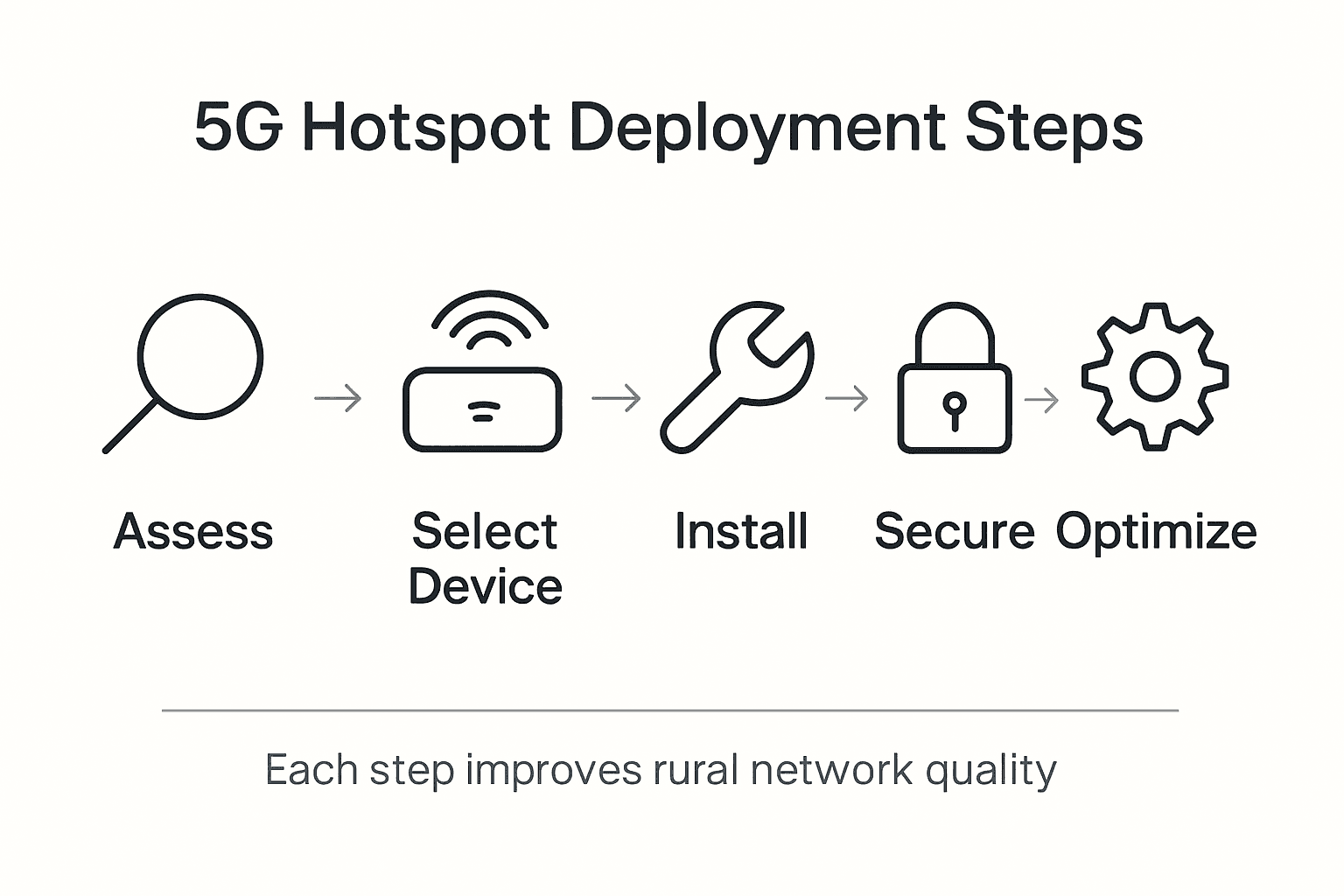
- Step 1: Assess Network Coverage and Site Needs
- Step 2: Select the Right 5G Hotspot Device
- Step 3: Install and Position the Hotspot for Maximum Signal
- Step 4: Configure Security and Access Settings
- Step 5: Test Connectivity and Optimize Performance
Quick Summary
| Key Point | Explanation |
|---|---|
| 1. Conduct a thorough site survey | Analyze terrain and existing infrastructure to optimize wireless coverage. |
| 2. Choose durable 5G hotspot devices | Select devices that meet environmental challenges and support future upgrades. |
| 3. Position hotspots for optimal signal | Install devices in high or clear locations to minimize obstructions and boost coverage. |
| 4. Implement strong security measures | Use advanced encryption and access controls to safeguard your 5G network. |
| 5. Regularly test and optimize performance | Conduct performance benchmarks and make adjustments for the best connectivity. |
Step 1: Assess Network Coverage and Site Needs
Successfully deploying 5G hotspots in rural areas starts with a comprehensive network coverage assessment. This critical first step determines the viability and performance of your wireless infrastructure by analyzing signal strength, terrain challenges, and potential connectivity obstacles.
To begin, conduct a detailed wireless site survey that evaluates terrain characteristics, potential signal interference, and optimal installation locations. Professional RF planning tools like Atoll can generate precise coverage predictions by analyzing link budgets and signal footprints. These tools help you understand how geographic features might impact your network performance. Pay special attention to terrain elevation, vegetation density, and potential obstructions that could weaken signal transmission.
Your survey should map out existing infrastructure and identify strategic points for new 5G hotspot deployment. Consider co-locating new 5G New Radio (NR) equipment with existing LTE base stations to maximize coverage efficiency. This approach reduces installation costs and leverages current telecommunications infrastructure. Analyze signal-to-noise ratios and use advanced techniques like beamforming or adjusting antenna parameters to compensate for coverage limitations.
Pro tip: Always conduct both passive and active wireless surveys to ensure comprehensive understanding of potential network performance before final installation.
Step 2: Select the Right 5G Hotspot Device
Selecting the optimal 5G hotspot device is crucial for ensuring reliable rural internet connectivity. Your chosen device will determine network performance, signal strength, and overall internet experience across challenging rural landscapes.
When evaluating 5G hotspot devices, focus on critical device capabilities that match deployment scenarios. Consider factors such as reliable communication, low latency, high throughput, and ability to withstand environmental challenges. Industrial grade devices should demonstrate electromagnetic compatibility and resilience to harsh conditions like rain, dust, and temperature variations. Pay attention to chipset modules, battery operation, and form factor standards that align with your specific rural deployment requirements.
Your selection process should include assessing network architecture compatibility. Look for devices supporting multiple radio access technologies and capable of interoperating with existing LTE infrastructure. Evaluate spectrum availability in your target geographic area, ensuring the device supports appropriate frequency bands. Consider long term upgrade potential, network core compatibility, and multi band support to future proof your investment. Some devices offer more flexible configuration options that can adapt to changing rural connectivity needs.
Pro tip: Request device specification sheets and conduct hands on testing in your specific rural environment before making a final purchase decision.
Step 3: Install and Position the Hotspot for Maximum Signal
Precise hotspot installation and positioning are critical for achieving optimal rural internet connectivity. Your goal is to maximize signal strength and minimize potential interference across challenging terrain.
High-accuracy 5G positioning techniques play a crucial role in determining the most effective placement for your hotspot. Focus on creating a clear line of sight between your device and potential signal sources. Antenna height is particularly important evaluate the surrounding landscape and identify elevated positions that minimize obstructions from trees buildings or terrain features. Consider using external antenna extensions to improve signal reception in areas with significant geographic challenges.
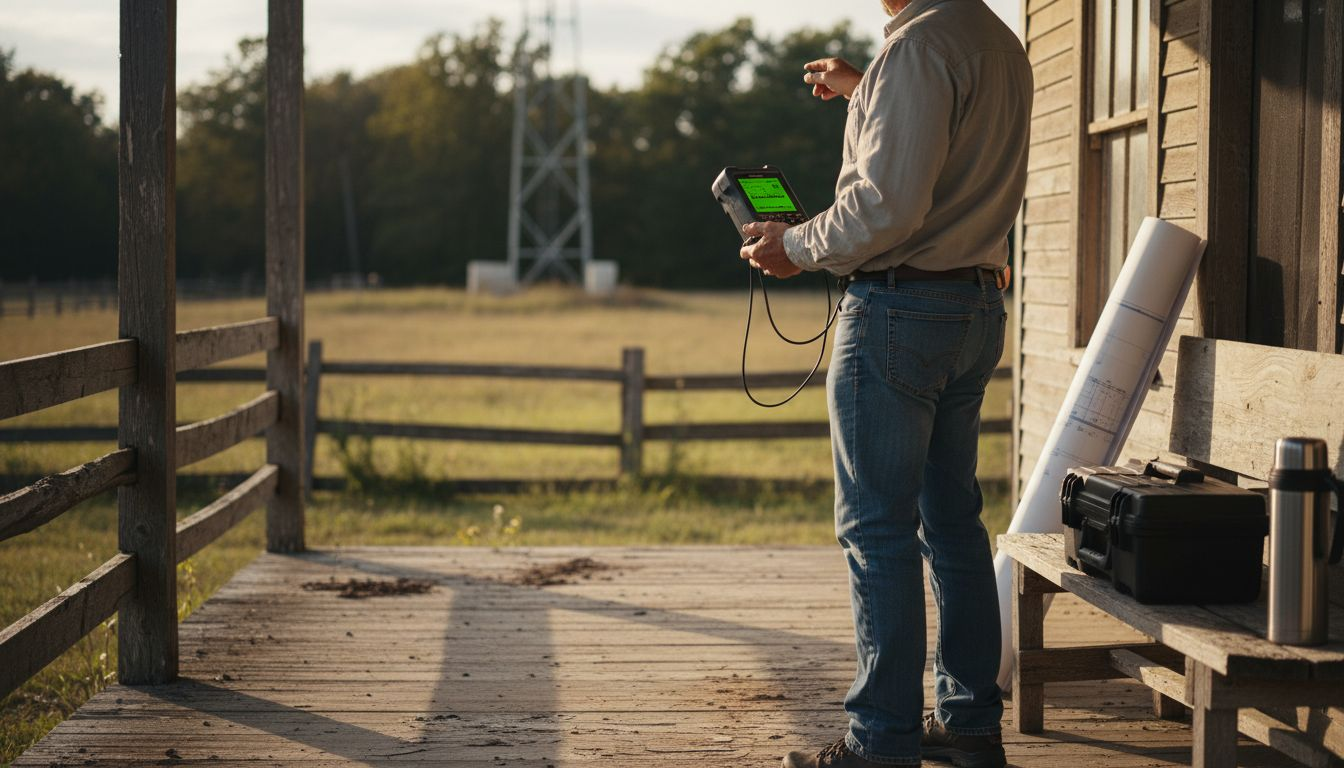
When setting up your hotspot carefully analyze environmental factors that might impact signal transmission. Avoid placing the device near large metal objects electronic interference sources or areas with dense physical obstructions. Utilize advanced beamforming technologies if your device supports them which can help concentrate signal strength and improve overall coverage. Take time to experiment with different positioning angles and heights to find the optimal configuration for your specific rural location.
Pro tip: Use a signal strength mapping app to precisely identify the best installation location before permanently mounting your hotspot.
Compare 5G hotspot positioning strategies for challenging rural environments:
| Strategy | Main Benefit | Common Use Case |
|---|---|---|
| High-Elevation Mount | Reduces signal obstructions | Hilly or forested terrain |
| External Antenna | Boosts signal in remote locations | Areas with poor coverage |
| Beamforming Adjustment | Focuses signal toward user devices | Farms or wide, open landscapes |
Step 4: Configure Security and Access Settings
Securing your 5G hotspot is critical to protecting your network and preventing unauthorized access. Your configuration will serve as the first line of defense against potential cyber threats in rural internet environments.
Advanced authentication and key management protocols form the foundation of 5G network security. Implement robust security measures by activating comprehensive encryption settings that protect both your radio access network and core network infrastructure. Configure mutual authentication protocols that verify both device and network identity using secure methods like 5G-AKA and EAP-AKA’. This ensures only authorized devices can connect to your network while maintaining encrypted communication channels.
Establish a multi-layered security approach by configuring network access controls, creating strong passwords, and enabling advanced encryption features. Regularly update your firmware to patch potential vulnerabilities and maintain the latest security standards. Pay special attention to configuring network segmentation settings that isolate potential security risks and limit unauthorized access points. Use complex passwords that combine uppercase and lowercase letters, numbers, and special characters to create a strong initial defense against potential intrusions.
Pro tip: Enable two factor authentication and set up automatic security updates to maintain ongoing protection for your rural 5G hotspot network.
Step 5: Test Connectivity and Optimize Performance
Testing and optimizing your rural 5G hotspot network is crucial to ensuring reliable and high-quality internet connectivity. Your goal is to validate network performance and make strategic adjustments that maximize signal strength and user experience.
Comprehensive end-to-end network testing platforms provide essential tools for evaluating your 5G hotspot deployment. Begin by conducting thorough performance benchmarks that measure key metrics like throughput, latency, and signal reliability. Utilize network diagnostic tools to assess signal coverage and identify potential dead zones or interference sources. Pay close attention to performance indicators such as download and upload speeds, ping times, and connection stability across different areas of your rural location.
Implement advanced optimization techniques to enhance network performance. Leverage beamforming and massive MIMO technologies to improve signal coverage and network capacity. Consider network slicing strategies that allow dynamic resource allocation based on specific service requirements. Explore AI-driven network optimization algorithms that can automatically adjust network parameters in real time. These adaptive techniques are particularly valuable in rural environments where network conditions can vary significantly. Regularly monitor your network performance and be prepared to make incremental adjustments to maintain optimal connectivity.
Pro tip: Use mobile network testing apps and conduct periodic speed tests at different times of day to continuously track and optimize your rural 5G hotspot performance.
Here’s a summary of critical considerations for rural 5G hotspot deployment:
| Aspect | Importance | Impact on Deployment |
|---|---|---|
| Terrain Assessment | Determines optimal device placement | Maximizes signal and minimizes interference |
| Device Durability | Ensures sustained performance in rural settings | Reduces maintenance and replacement needs |
| Security Configuration | Protects against unauthorized access | Safeguards network integrity |
| Performance Testing | Validates coverage and reliability | Maintains consistent Internet quality |
Unlock Reliable Rural Connectivity with SabertoothPro’s 5G Solutions
Deploying 5G hotspots in rural areas involves overcoming unique challenges like terrain obstructions and network security. If your goal is to achieve strong signal coverage, durable device performance, and secure access as outlined in the step-by-step guide, SabertoothPro is here to support your journey. We offer specialized high-speed internet devices designed for challenging environments along with flexible 5G hotspot plans tailored for rural deployment.

Explore our selection of advanced devices on the Titan WiFi collection and secure your connectivity with plans crafted to meet rural needs at Titan WiFi Hotspot Plans. Act now to experience dependable, high-performance 5G solutions that bring your rural internet vision to life. Visit SabertoothPro today and take the first step toward seamless rural connectivity.
Frequently Asked Questions
How do I assess network coverage before deploying a 5G hotspot in a rural area?
To assess network coverage, conduct a detailed wireless site survey that evaluates terrain characteristics, signal interference, and installation locations. Focus on using professional RF planning tools to analyze factors affecting network performance, and be sure to map existing infrastructure to determine the best placement for your hotspot.
What should I consider when selecting a device for my rural 5G hotspot?
When selecting a device, focus on its capabilities such as reliability, low latency, and environmental resilience. Assess compatibility with existing network architecture, spectrum availability, and the device’s long-term upgrade potential to ensure optimal performance in your rural environment.
What is the best way to install and position my 5G hotspot for maximum signal?
For optimal signal strength, install your hotspot in a high-elevation location with a clear line of sight to potential signal sources. Use external antenna extensions if necessary and analyze environmental factors to minimize obstructions that can weaken the signal into your area.
How can I secure my 5G hotspot to prevent unauthorized access?
Secure your 5G hotspot by implementing robust encryption settings and configuring strong passwords. Utilize advanced authentication protocols and regularly update your firmware to address vulnerabilities, ensuring your network remains protected against potential cyber threats.
What steps should I take to test and optimize my rural 5G hotspot’s performance?
To test your hotspot’s performance, conduct thorough benchmarking of key metrics like throughput and latency. Use diagnostic tools to identify coverage issues, and implement optimization techniques such as beamforming and real-time adjustments to ensure consistent and reliable connectivity across your rural location.