


What Is 4G LTE and Why It Powers Modern Connectivity

More than 320 million American mobile users rely on fast and stable connections for work, entertainment, and emergencies. As digital habits shift and data-heavy apps become standard, understanding wireless technologies is crucial. This guide breaks down the essentials of 4G LTE, showing what makes it a cornerstone of the American mobile experience, how its core technology actually works, and why it’s still vital even as new advancements emerge.
Table of Contents
- Defining 4G LTE And Core Technology
- How 4G LTE Networks Deliver High Speeds
- Benefits For Businesses, Consumers, And Rural Users
- Device Compatibility And Coverage Explained
- Comparing 4G LTE With 3G, 5G, And Alternatives
Key Takeaways
| Point | Details |
|---|---|
| Advancement of 4G LTE Technology | 4G LTE revolutionizes mobile connectivity with faster data speeds and improved network performance compared to previous generations. |
| High-Speed Data Capability | 4G LTE offers download speeds up to 10 times faster than 3G, enhancing user experience for multimedia and cloud services. |
| Benefits to Diverse User Groups | Businesses and rural users particularly benefit from enhanced connectivity, facilitating seamless operations and access to essential services. |
| Compatibility and Coverage Importance | Device compatibility with carrier frequencies is essential for optimal performance; users should verify compatibility before purchasing devices. |
Defining 4G LTE and Core Technology
4G LTE represents a pivotal advancement in mobile network technology, revolutionizing how devices connect and communicate globally. At its core, 4G LTE (Long Term Evolution) is a wireless broadband standard designed to deliver significantly faster data speeds and improved network performance compared to previous generations.
The architecture of 4G LTE is fundamentally different from earlier mobile networks. System Architecture Evolution (SAE) introduces a simplified, all-IP network design that supports high-speed data transmission and seamless mobility across diverse network environments. This architectural approach enables faster internet speeds, reduced latency, and more efficient data packet routing, making mobile internet experiences smoother and more responsive.
Key technological innovations define 4G LTE’s capabilities. Advanced mobile communication systems leverage technologies like orthogonal frequency-division multiplexing (OFDM), software-defined radio, smart antenna configurations, and IPv6 protocols to optimize network performance. These sophisticated technologies work together to dramatically improve signal quality, increase data throughput, and provide more stable connections across urban and rural landscapes.
Pro Tip: Network Performance Check: Before selecting a mobile plan, run multiple speed tests at different times and locations to understand real-world 4G LTE performance in your specific area.
How 4G LTE Networks Deliver High Speeds
Mobile network performance hinges on sophisticated technological innovations that enable high-speed data transmission. 4G LTE networks represent a quantum leap in wireless communication, delivering unprecedented data speeds that transform how we connect and interact with digital technologies. Extensive measurement campaigns have demonstrated the remarkable performance capabilities of LTE networks in urban environments, showcasing their ability to provide robust and rapid connectivity.
The speed potential of 4G LTE is truly remarkable. Performance studies indicate that 4G LTE technologies can deliver download speeds up to 10 times faster than previous 3G networks, with theoretical maximum speeds reaching 100 Mbps. These high-speed capabilities are achieved through advanced signal processing techniques, including:
- Orthogonal Frequency Division Multiplexing (OFDM): Enables more efficient data transmission
- Multiple Input Multiple Output (MIMO) Technology: Increases network capacity and signal reliability
- Advanced Antenna Systems: Improves signal strength and coverage
These technological innovations work in concert to create a network infrastructure that can handle massive data volumes with minimal latency. By breaking down data into more efficient transmission packets and utilizing sophisticated signal processing, 4G LTE networks can maintain consistent high-speed performance even in congested urban areas.
Pro Tip: Speed Test Strategy: Run multiple speed tests at different times of day and in various locations to get a comprehensive understanding of your 4G LTE network’s real-world performance capabilities.
Benefits for Businesses, Consumers, and Rural Users
4G LTE technology has revolutionized connectivity across diverse user segments, delivering transformative benefits that extend far beyond traditional communication boundaries. LTE technology enhances broadband access, particularly empowering rural communities and businesses with improved connectivity solutions, bridging critical digital infrastructure gaps that have historically limited technological engagement.
For businesses, 4G LTE offers unprecedented operational advantages. The technology enables:
- Remote workforce management: Seamless communication across distributed teams
- Mobile productivity: High-speed internet access from virtually anywhere
- Cost-effective scaling: Reduced infrastructure investment requirements
- Real-time data transmission: Instant communication and cloud service integration
Consumers benefit equally from 4G LTE’s capabilities. Streaming high-definition video, participating in video conferences, downloading large files, and accessing cloud-based services become instantaneous experiences. Advanced network architectures now support fine-grained policies that improve device connectivity and network flexibility, ensuring personalized and responsive digital interactions.

Rural users experience the most significant transformation through 4G LTE. Previously isolated communities can now access educational resources, telemedicine services, online employment opportunities, and global communication channels. The technology effectively eliminates geographical barriers, providing rural residents with the same technological capabilities as their urban counterparts.
Pro Tip: Connectivity Optimization: Regularly update your device’s network settings and explore carrier-specific 4G LTE plans to maximize performance and coverage in your specific area.
Here is a concise summary of how 4G LTE impacts different user groups:
| User Group | Key Benefit | Typical Use Case |
|---|---|---|
| Businesses | Remote operations | Field workforce management |
| Consumers | High-speed multimedia | Mobile streaming and gaming |
| Rural Users | Expanded access | Telemedicine and online learning |
Device Compatibility and Coverage Explained
4G LTE compatibility represents a complex ecosystem of technological requirements that determine a device’s ability to connect and perform effectively across wireless networks. Open-source implementations like OpenLTE have significantly advanced our understanding of network specifications and device integration, providing critical insights into the technical infrastructure supporting modern mobile connectivity.
Device compatibility depends on several key factors:
- Frequency Band Support: Devices must match carrier-specific frequency ranges
- Radio Technology: Compatible with specific LTE categories (Cat 3, Cat 4, etc.)
- Hardware Specifications: Modem and antenna design supporting LTE protocols
- Carrier Network Configuration: Specific network authentication and provisioning requirements
Gateway routers like the Nexus Hawk demonstrate how modern devices can seamlessly integrate multiple network technologies, bridging cellular data and Wi-Fi networks with sophisticated access management. These advanced devices enable users to navigate complex connectivity landscapes, providing flexible and robust communication solutions across different network environments.
Coverage varies significantly based on geographic location, carrier infrastructure, and device capabilities. Urban areas typically enjoy extensive 4G LTE coverage with high-speed data transmission, while rural regions may experience more limited network availability. Consumers must carefully evaluate carrier coverage maps, understand their specific regional network performance, and select devices compatible with local network technologies.
Pro Tip: Compatibility Check: Before purchasing a new device, always verify its specific LTE band support and compare it against your preferred carrier’s network frequencies to ensure optimal connectivity.
Comparing 4G LTE With 3G, 5G, and Alternatives
Network technology has undergone remarkable transformations, with each generation bringing substantial improvements in speed, reliability, and capabilities. The evolutionary roadmap from 3G to 4G and emerging 5G networks demonstrates significant technological advancements in mobile communication, each representing a quantum leap in wireless connectivity.
Comparing network generations reveals dramatic performance differences:
3G Networks:
- Typical speeds: 0.2-5 Mbps
- Limited multimedia capabilities
- Higher latency
- Primarily voice and basic data transmission
4G LTE Networks:
- Speeds: 10-50 Mbps
- Advanced multimedia streaming
- Significantly reduced latency
- Support for high-bandwidth applications
- Robust mobile internet experience
5G Networks:
- Potential speeds: 100-1000 Mbps
- Ultra-low latency
- Massive device connectivity
- Support for emerging technologies like IoT and autonomous systems
Alternative connectivity options like satellite internet and fixed wireless provide interesting counterpoints to cellular technologies. While these alternatives can serve specific use cases, 4G LTE remains the most versatile and widely accessible solution for mobile and remote connectivity, offering a balanced approach between performance, availability, and cost-effectiveness.
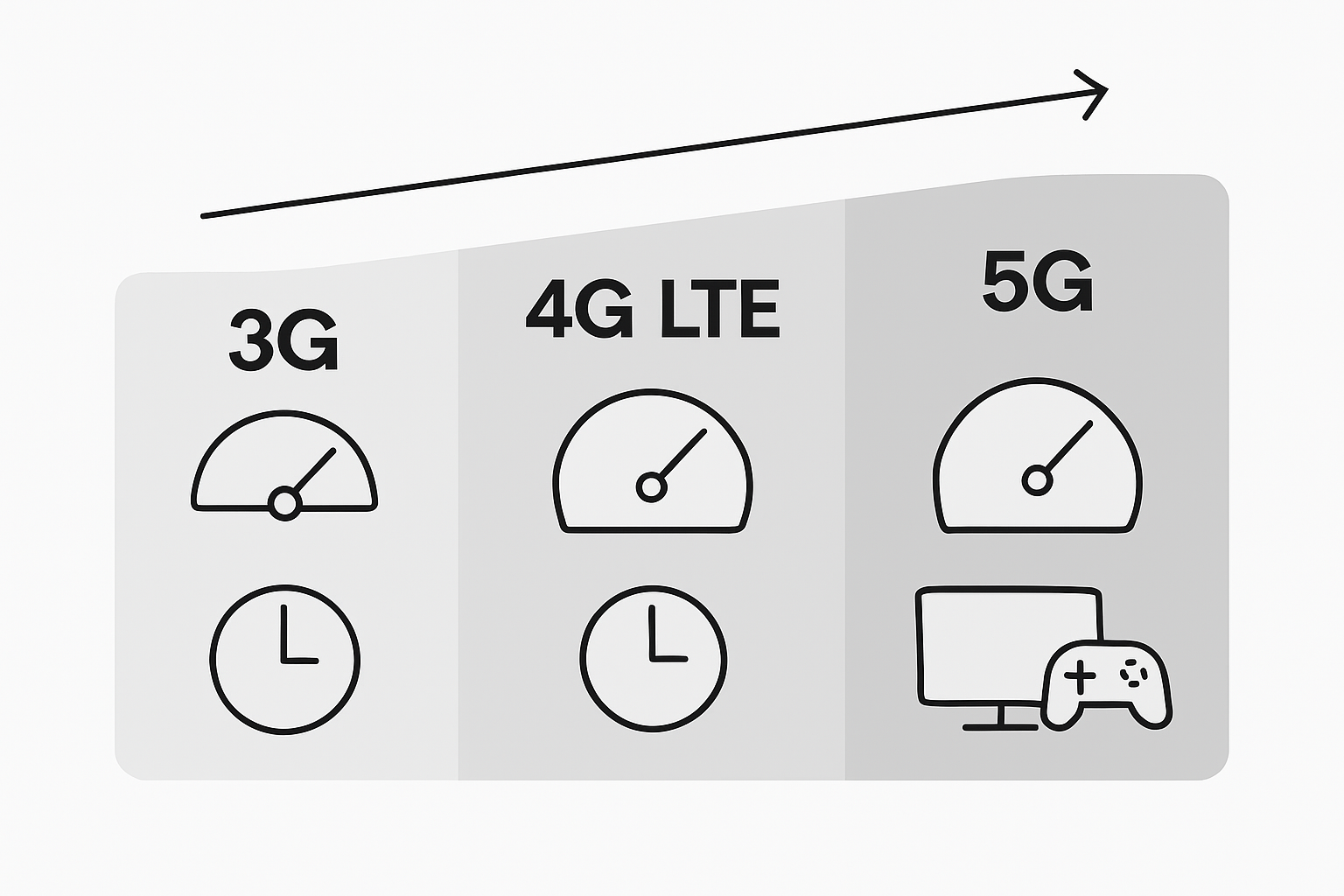
The table below compares core characteristics of 3G, 4G LTE, and 5G networks:
| Generation | Typical Speed Range | Latency | Best For |
|---|---|---|---|
| 3G | 0.2–5 Mbps | High | Voice, basic web browsing |
| 4G LTE | 10–50 Mbps | Low | Video, cloud, large files |
| 5G | 100–1000 Mbps | Ultra-low | IoT, AR/VR, smart vehicles |
Pro Tip: Network Selection Strategy: Always conduct speed tests and coverage checks in your specific area before committing to a particular network technology or carrier plan.
Experience the Full Power of 4G LTE Connectivity Today
If you rely on 4G LTE to stay connected for work, entertainment, or remote access, you understand how crucial fast and reliable service is. This article highlights the importance of technologies like orthogonal frequency division multiplexing and advanced antenna systems that power high-speed mobile internet. At SabertoothPro, we address the common challenges of coverage gaps, device compatibility, and network performance by offering trusted solutions tailored to your needs.
Explore our range of cutting-edge Titan WiFi hotspot plans to enjoy blazing fast speeds and dependable connectivity wherever you go.

Unlock seamless, secure, and scalable internet with our exclusive special offers designed for both consumers and businesses. Visit SabertoothPro.com now and discover how our solutions can empower your mobile lifestyle and business operations. Don’t settle for slow, unreliable networks when better 4G LTE options are just a click away.
Check out our latest device and internet bundles at Titan WiFi and take control of your connectivity with SabertoothPro’s advanced technology stack.
Frequently Asked Questions
What is 4G LTE?
4G LTE, or Long Term Evolution, is a wireless broadband standard that significantly improves data speeds and network performance compared to previous mobile generations, enabling faster and more efficient mobile connectivity.
How does 4G LTE compare to 3G and 5G networks?
4G LTE offers typical speeds of 10–50 Mbps and lower latency compared to 3G networks, which range from 0.2–5 Mbps. In contrast, 5G networks aim for speeds between 100–1000 Mbps and ultra-low latency, supporting advanced technologies like IoT and autonomous systems.
What are the main benefits of 4G LTE for consumers and businesses?
4G LTE provides high-speed internet for HD video streaming, downloads, and real-time data transmission for businesses, enhancing productivity, remote workforce management, and cost-effective scaling in operations.
How can I ensure my device is compatible with 4G LTE networks?
To ensure compatibility, check your device for frequency band support, LTE category compliance, and verify that the specifications align with your carrier’s network configurations for optimal connectivity.