


What Is LTE Backup and Why It Matters for Fleets

A sudden cellular outage on a New Jersey highway can send real-time tracking and dispatch communications into chaos for regional fleets. When trucks cross city lines and the primary network stalls, reliable LTE backup connectivity keeps data flowing and schedules on track. For IT managers, understanding how LTE backup supports continuous operations and protects against costly disruptions is crucial to keeping every delivery and route on target.
Table of Contents
- LTE Backup Defined For Fleet Connectivity
- Types Of LTE Backup Solutions Compared
- How LTE Backup Works In Logistics
- Essential Features And Configuration Steps
- Key Benefits And Real-World Use Cases
- Cost Considerations And Common Pitfalls
Key Takeaways
| Point | Details |
|---|---|
| Importance of LTE Backup | LTE backup ensures reliable secondary connectivity for fleets, preventing costly disruptions when primary networks fail. |
| Types of LTE Backup Solutions | Various LTE backup solutions, such as Standalone and Hybrid, provide unique advantages depending on operational needs. |
| Key Features for Success | Essential features include seamless handover, quality of service management, and secure connectivity for optimal fleet performance. |
| Cost Management Strategies | Careful evaluation of costs and potential pitfalls is necessary to ensure the successful implementation of LTE backup solutions. |
LTE Backup Defined for Fleet Connectivity
LTE backup represents a critical communication strategy for modern fleet operations, providing reliable secondary connectivity when primary networks fail. Long Term Evolution (LTE) networks offer robust wireless infrastructure that ensures continuous communication and operational continuity for transportation and logistics businesses.
At its core, LTE backup networks function as a failsafe communication channel designed to maintain seamless connectivity across mobile environments. These networks leverage 4G mobile communication standards developed by the 3rd Generation Partnership Project (3GPP), creating a resilient communication ecosystem for fleet management.
Key characteristics of effective LTE backup for fleet connectivity include:
- Rapid network switchover during primary connection interruptions
- Consistent bandwidth capable of supporting real-time data transmission
- Geographic coverage across multiple cellular infrastructure zones
- Minimal latency for time-sensitive operational communications
- Secure encrypted communication channels
Fleet managers rely on LTE backup to address potential network disruptions that could compromise tracking, routing, and operational communication. Mobile connectivity becomes mission-critical when vehicles operate across diverse geographical regions with varying network infrastructure.
LTE backup ensures that fleet operations maintain communication continuity, preventing costly downtime and operational interruptions.
Pro tip: Conduct regular network failover tests to verify your LTE backup system performs seamlessly during actual connectivity challenges.
Types of LTE Backup Solutions Compared
Modern fleet operations demand sophisticated LTE backup solutions that provide comprehensive connectivity across diverse operational environments. LTE deployment modes offer multiple strategies for ensuring uninterrupted communication and data transmission during network challenges.
The primary types of LTE backup solutions for fleet connectivity include:
- Standalone LTE Backup: Dedicated LTE network with independent infrastructure
- Hybrid LTE Networks: Combining multiple wireless technologies for enhanced reliability
- Fallback LTE Solutions: Automatic switching between primary and secondary networks
- Redundant Cellular Connectivity: Multiple carrier networks for comprehensive coverage
- Satellite-Cellular Hybrid Backup: Integrating satellite communication for remote areas
Each backup solution offers unique advantages depending on fleet operational requirements. Standalone LTE backup provides a dedicated communication channel that operates independently of existing network infrastructure, ensuring consistent connectivity across challenging geographical regions.
Here’s a concise comparison of LTE backup solution types for fleet connectivity:
| Solution Type | Infrastructure Needs | Coverage Strength | Deployment Complexity |
|---|---|---|---|
| Standalone LTE Backup | Dedicated hardware | Strong in defined areas | Moderate |
| Hybrid LTE Networks | Multiple technologies | Broad, adaptive | High |
| Fallback LTE Solutions | Basic redundancy | Variable, depends on carriers | Low |
| Redundant Cellular Connectivity | Multiple carrier contracts | Wide, multi-regional | Moderate |
| Satellite-Cellular Hybrid Backup | Satellite equipment | Excellent in remote regions | High |
Fleet managers must carefully evaluate backup solutions based on coverage, reliability, and operational complexity to select the most appropriate network strategy.
Enterprise-grade LTE backup solutions leverage advanced wireless technology deployment scenarios that support seamless communication across diverse operational environments. These solutions enable real-time tracking, operational communication, and data transmission even in areas with limited network infrastructure.
Pro tip: Conduct a comprehensive network assessment to determine the most suitable LTE backup solution tailored to your specific fleet operational requirements.
How LTE Backup Works in Logistics
LTE backup represents a sophisticated network strategy designed to ensure continuous communication for logistics operations. Network load balancing techniques enable automatic switching between communication channels, preventing interruptions in critical fleet management processes.
The operational mechanism of LTE backup in logistics involves several key technical components:
- Automatic network path switching
- Real-time connection monitoring
- Seamless carrier transition protocols
- Intelligent bandwidth allocation
- Prioritized data transmission routes
Modern LTE backup systems utilize advanced network architecture interfaces that allow rapid detection and response to network performance degradation. When a primary network experiences congestion or failure, these systems instantly reroute communication through alternative cellular networks or carriers, maintaining uninterrupted operational connectivity.
Effective LTE backup transforms potential communication disruptions into seamless, unnoticeable network transitions for logistics operations.
The technological sophistication of LTE backup goes beyond simple failover. Intelligent routing algorithms continuously assess network conditions, preemptively selecting the most stable and efficient communication path. This dynamic approach ensures that fleet managers receive real-time data, tracking information, and operational communications regardless of underlying network challenges.
Pro tip: Implement periodic network simulation tests to validate your LTE backup system’s performance and identify potential optimization opportunities.
Essential Features and Configuration Steps
LTE backup systems for fleet connectivity require comprehensive configuration and strategic feature implementation to ensure reliable communication. Network configuration guidelines provide critical standards for establishing robust wireless communication infrastructure.
Essential features of an effective LTE backup solution include:
-
Seamless Handover Support
- Automatic network transition
- Minimal connection interruption
-
Quality of Service (QoS) Management
- Prioritized data transmission
- Bandwidth optimization
-
Network Redundancy
- Multiple carrier integration
- Intelligent routing protocols
-
Secure Connectivity
- Encrypted communication channels
- Authentication and access control
Configuring an LTE backup system requires methodical device provisioning steps that address both technical and operational requirements. Fleet managers must carefully implement user equipment configuration, network authentication protocols, and establish reliable interfaces for primary and backup network switching.
Successful LTE backup configuration transforms potential communication vulnerabilities into a resilient, adaptive network infrastructure.
The configuration process demands a comprehensive approach that goes beyond basic technical setup. Intelligent network design involves creating a flexible communication ecosystem that can dynamically respond to changing operational environments and connectivity challenges.

Pro tip: Develop a comprehensive network testing protocol that simulates various connectivity scenarios to validate your LTE backup system’s performance and reliability.
Key Benefits and Real-World Use Cases
LTE backup solutions provide transformative advantages for fleet management, enabling unprecedented operational resilience and communication continuity. LTE deployment strategies demonstrate significant benefits across multiple industry sectors.
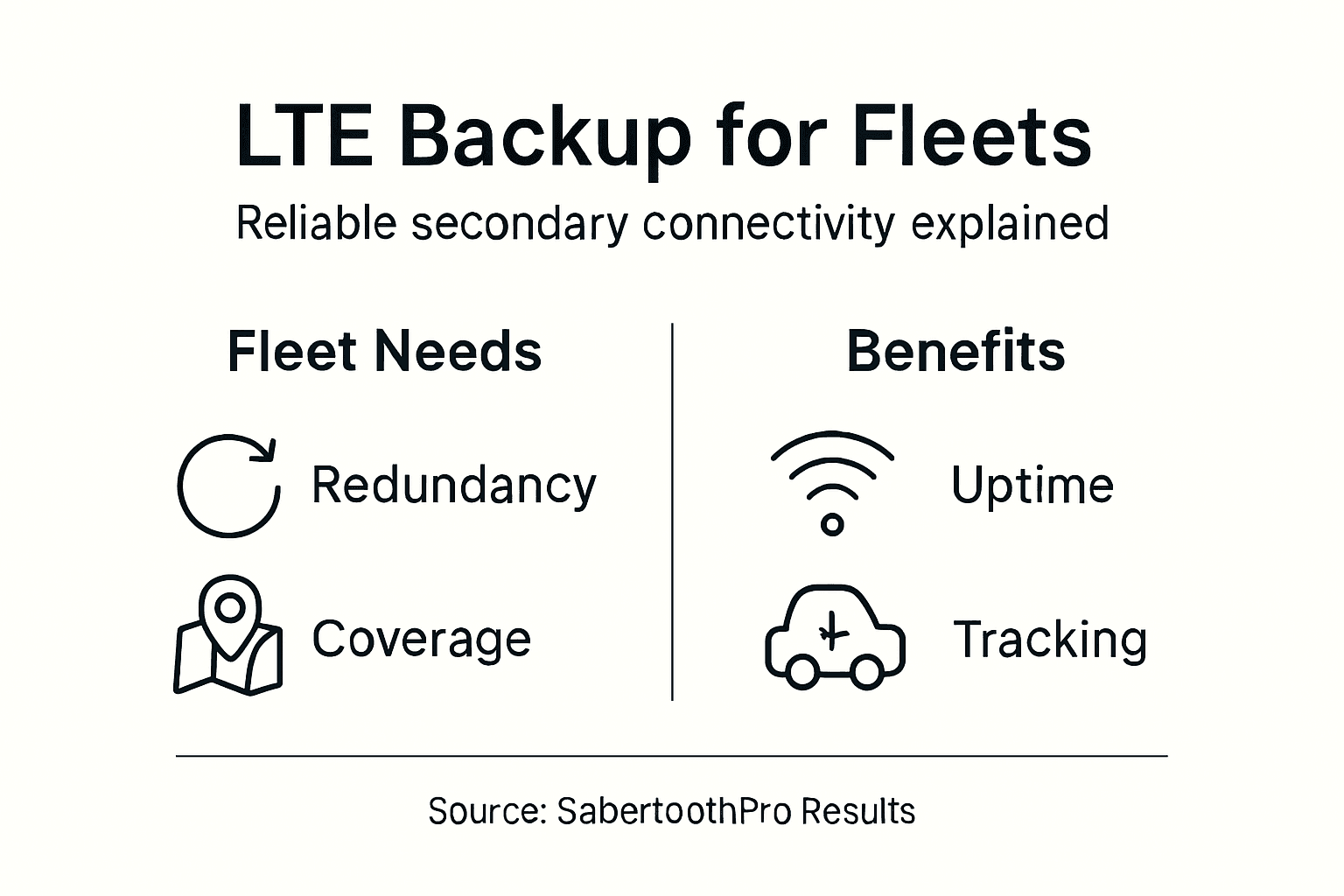
Key benefits of implementing LTE backup include:
-
Operational Reliability
- Continuous communication during network failures
- Minimal operational disruption
-
Cost Efficiency
- Reduced downtime expenses
- Optimized communication infrastructure
-
Enhanced Tracking Capabilities
- Real-time vehicle location monitoring
- Consistent data transmission
-
Geographical Flexibility
- Connectivity in remote areas
- Multiple carrier network support
Real-world use cases showcase the critical role of LTE backup across different industries. Public safety communication networks highlight how LTE backup ensures emergency responders maintain broadband and low-latency communications during disaster scenarios, demonstrating the technology’s life-saving potential.
LTE backup transforms communication challenges into opportunities for uninterrupted operational excellence.
Logistics companies leverage LTE backup to maintain real-time tracking and communication in regions with unstable primary network coverage. Intelligent network switching enables fleet managers to overcome traditional connectivity limitations, ensuring consistent operational insights regardless of geographical constraints.
Pro tip: Conduct comprehensive scenario testing to validate your LTE backup system’s performance across diverse operational environments and network conditions.
Cost Considerations and Common Pitfalls
LTE backup implementation demands strategic financial planning and comprehensive risk assessment for fleet operations. Network deployment costs involve multiple complex financial considerations that extend beyond initial hardware investments.
Key cost factors fleet managers must evaluate include:
-
Initial Hardware Investments
- LTE-compatible network equipment
- Redundant communication infrastructure
-
Operational Expenses
- Monthly carrier network fees
- Ongoing maintenance and upgrades
-
Implementation Complexity
- Network configuration costs
- Technical personnel training
-
Potential Hidden Expenses
- Software integration
- Compatibility testing
Network design challenges reveal common pitfalls that can significantly impact overall solution effectiveness. Fleet managers must carefully navigate potential complications such as insufficient capacity planning, interference management, and complex security configurations.
The table below summarizes major cost factors and typical pitfalls in planning LTE backup for fleets:
| Cost Factor | Common Challenge | Mitigation Strategy |
|---|---|---|
| Equipment Upgrades | High upfront investment | Evaluate scalable hardware options |
| Carrier Fees | Unexpected monthly increases | Negotiate fixed-rate contracts |
| Integration | Software compatibility issues | Perform pre-deployment testing |
| Staff Training | Insufficient network expertise | Schedule regular training sessions |
Effective LTE backup requires a holistic approach that balances technological capabilities with financial constraints.
Successful implementation demands more than technical expertise. Strategic cost management involves conducting thorough cost-benefit analyses, understanding long-term operational impacts, and developing flexible deployment strategies that maximize return on investment.
Pro tip: Create a comprehensive financial model that includes both direct and indirect costs, allowing for accurate budgeting and performance tracking of your LTE backup solution.
Unlock Reliable Fleet Connectivity with SabertoothPro
Managing fleet communications with LTE backup means combating network failures and disruption head-on. The article highlights the critical need for seamless network switchover, secure encrypted channels, and multi-carrier redundancy that keeps your logistics operations running without costly interruptions. If you want to eliminate downtime and achieve real-time tracking reliability across varied geographies, it is time to upgrade your connectivity solutions.

Explore our advanced Titan WiFi solutions designed specifically for mobile and rural connectivity. Our offerings include powerful 4G LTE and 5G routers plus enterprise-grade IoT and security integration. Act now to future-proof your fleet’s communication network with proven failover technology. Visit SabertoothPro.com to discover flexible plans and cutting-edge devices ready to meet the challenging demands of fleet operations. Take control of your mobile connectivity today and ensure your fleet is always connected, no matter the conditions.
Frequently Asked Questions
What is LTE backup?
LTE backup is a communication strategy that provides reliable secondary connectivity for fleet operations when primary networks fail, ensuring continuous communication and operational continuity.
How does LTE backup work in logistics?
LTE backup systems automatically switch between communication channels during network disruptions, utilizing real-time connection monitoring and intelligent bandwidth allocation to maintain uninterrupted operational communication.
What types of LTE backup solutions are available for fleets?
Common types of LTE backup solutions include standalone LTE backup, hybrid LTE networks, fallback LTE solutions, redundant cellular connectivity, and satellite-cellular hybrid backup, each offering unique advantages based on fleet requirements.
What are the key benefits of implementing LTE backup for fleet management?
Key benefits of LTE backup include operational reliability, cost efficiency, enhanced tracking capabilities, and geographical flexibility, allowing fleets to maintain communication continuity even in challenging operational environments.