


Business Broadband: Impact on Mid-Atlantic Companies

Most American companies underestimate just how much reliable business broadband drives growth and daily productivity. Many IT directors still assume residential plans are enough, only to face slowdowns and frustrated teams when demand peaks. In the Mid-Atlantic region, understanding the real strengths of professional broadband—like symmetrical speeds and guaranteed uptime—can make the difference between smooth workflow and lost revenue. This guide clears up common myths and highlights what truly matters for high-performance business internet.
Table of Contents
- Defining Business Broadband and Common Misconceptions
- Different Types of Business Broadband Connections
- Key Features and Network Security Considerations
- Essential Use Cases for Modern Enterprises
- Cost, Reliability, and Internet Alternatives
Key Takeaways
| Point | Details |
|---|---|
| Business Broadband vs. Residential Plans | Business broadband offers higher reliability, symmetrical bandwidth, and dedicated support, essential for professional needs. Avoid assumptions that residential internet plans can sustain operational demands. |
| Connection Types Matter | Select the appropriate broadband connection (Fiber-Optic, Cable, DSL, etc.) based on performance needs and business location to ensure optimal operational support. |
| Importance of Security | Implement multilayered cybersecurity protocols to safeguard data in transit, as robust security is critical to business operations and compliance. |
| Cost vs. Performance | Evaluate total cost of ownership and potential productivity impacts when choosing internet solutions, ensuring that the selected service aligns with business requirements. |
Defining Business Broadband and Common Misconceptions
Business broadband represents a sophisticated telecommunications service that goes far beyond simple internet connectivity. Unlike residential internet, business broadband delivers robust, reliable high-speed internet designed specifically to support professional operational needs. Broadband networks consist of multiple interconnected systems owned by various internet service providers, comprising three critical infrastructure components: the backbone, middle mile, and last mile networks.
At its core, business broadband distinguishes itself through several key characteristics. Performance reliability becomes paramount, with guaranteed upload and download speeds that remain consistent during peak business hours. Enterprises require symmetrical bandwidth, meaning upload speeds match download speeds, which supports critical functions like video conferencing, cloud computing, and real-time data transfers. Professional broadband services also offer superior service level agreements (SLAs), ensuring minimal downtime and rapid technical support compared to consumer-grade connections.
Common misconceptions about business broadband persist among mid-sized companies. Many business leaders incorrectly assume that residential internet plans can adequately serve their operational requirements. The broadband landscape involves complex technology, infrastructure, and policy elements that directly impact network performance. Businesses often underestimate the importance of dedicated connections, believing that cost savings from consumer plans outweigh potential productivity losses from inconsistent internet service. In reality, professional broadband offers significant advantages:
- Guaranteed uptime percentages
- Dedicated technical support
- Enhanced security protocols
- Scalable bandwidth options
- Priority network management
Pro tip: Before selecting a business broadband provider, conduct a comprehensive assessment of your company’s specific bandwidth requirements, projected growth, and critical network dependencies.
Different Types of Business Broadband Connections
Businesses today have multiple broadband connection options, each with unique characteristics designed to meet diverse operational requirements. Broadband technologies range from fixed infrastructure to wireless and satellite-based solutions, providing Mid-Atlantic companies with flexible connectivity strategies tailored to their specific needs. Understanding these connection types enables organizations to make informed decisions about their telecommunications infrastructure.
Wired Broadband Connections represent the most traditional and typically most reliable options. Fiber-optic networks offer the highest performance, delivering symmetrical upload and download speeds with minimal latency. Cable and DSL connections provide alternative wired solutions, with cable typically offering higher bandwidth and more consistent performance compared to traditional digital subscriber line technologies. These connections are particularly advantageous for businesses requiring stable, high-speed internet for cloud services, video conferencing, and large data transfers.
Wireless Broadband Technologies have rapidly evolved to provide compelling alternatives for businesses with mobile or distributed workforce needs. Municipal and business broadband networks now include mobile 3G, 4G, and 5G cellular options, enabling flexible connectivity across multiple locations. Fixed wireless and satellite connections offer additional options for businesses in rural or hard-to-reach areas. These technologies provide critical infrastructure for companies without direct access to fiber or cable networks:
- Fixed wireless: Line-of-sight transmission using radio signals
- Satellite broadband: High-orbit connections for remote locations
- Cellular data plans: 4G and 5G networks with expanding coverage
- Mobile hotspots: Portable internet access for traveling professionals
Pro tip: Conduct a comprehensive site survey and bandwidth assessment before selecting a broadband connection to ensure the chosen technology meets your specific performance, reliability, and scalability requirements.
Here’s a summary of the main types of business broadband connections and their typical advantages:
| Connection Type | Key Advantage | Best For |
|---|---|---|
| Fiber-Optic | Highest speed, lowest latency | Data-intensive offices |
| Cable | Widely available, good reliability | Small to mid-size businesses |
| DSL | Lower cost entry, easy install | Small offices, less usage |
| Fixed Wireless | Rapid deployment, flexible placement | Remote or temporary sites |
| Satellite | Connects rural locations | Businesses in remote areas |
| 5G Cellular | Mobile, high-speed, growing coverage | Traveling teams, backup internet |
Key Features and Network Security Considerations
Business broadband networks represent complex infrastructures designed to support critical organizational communication and data transfer needs. Key security considerations focus on safeguarding data transmission across multiple network levels, ensuring comprehensive protection against potential cyber threats and unauthorized access. Mid-Atlantic companies must implement robust security strategies that go beyond basic connectivity solutions.

Network Performance Features play a crucial role in business broadband effectiveness. High-speed connectivity demands symmetrical bandwidth, low latency, and consistent uptime to support mission-critical operations. Professional broadband services typically offer service level agreements (SLAs) guaranteeing specific performance metrics, including minimum speed thresholds, maximum downtime windows, and rapid technical support response times. These features ensure businesses maintain continuous, reliable internet connectivity essential for cloud services, video conferencing, and real-time data exchanges.
Cybersecurity Protocols represent the most critical aspect of modern business broadband infrastructure. Effective network security requires a multilayered approach incorporating advanced protective technologies, including:
- Next-generation firewalls
- Intrusion prevention systems
- Multi-factor authentication
- Endpoint protection software
- Regular security vulnerability assessments
- Encrypted communication channels
Pro tip: Implement a comprehensive network security audit every six months and maintain updated incident response protocols to proactively identify and mitigate potential cybersecurity vulnerabilities.
This table outlines the business impact of essential broadband features and security protocols:
| Feature/Protocol | Business Impact | Benefit to Organization |
|---|---|---|
| Symmetrical Bandwidth | Supports real-time collaboration | Smooth video and data transfer |
| Low Latency | Enhances cloud and VoIP quality | Reliable virtual meetings |
| SLAs | Reduces risk of downtime | Assured operational continuity |
| Intrusion Prevention | Blocks network threats | Protects sensitive business data |
| Encrypted Connections | Secures data in transit | Meets compliance requirements |
| Regular Security Audits | Identifies vulnerabilities early | Prevents costly breaches |
Essential Use Cases for Modern Enterprises
Business broadband has transformed how modern enterprises operate, enabling unprecedented levels of connectivity and digital collaboration. Broadband infrastructure supports critical enterprise operations across multiple strategic domains, ranging from remote work capabilities to advanced technological integration. Mid-Atlantic companies increasingly rely on robust internet infrastructure to maintain competitive advantage and operational efficiency.
Cloud Computing and Digital Collaboration represent foundational use cases for business broadband. Organizations now leverage high-speed internet to migrate critical systems to cloud platforms, enabling seamless data sharing, real-time project management, and distributed workforce coordination. Enterprise teams can simultaneously access shared documents, conduct video conferences, and manage complex workflows without geographical limitations. These capabilities have fundamentally reshaped traditional office communication paradigms, allowing businesses to optimize productivity and reduce infrastructure costs.
Digital Market Engagement has become another pivotal broadband use case for modern enterprises. Affordable and reliable internet connectivity allows small and medium businesses to compete effectively in digital marketplaces, supporting critical functions such as:
- E-commerce platform management
- Online customer relationship systems
- Digital marketing and social media engagement
- Real-time inventory tracking
- Virtual customer support channels
- Global supply chain coordination
Pro tip: Conduct a quarterly technology infrastructure audit to ensure your broadband capabilities align with emerging digital business requirements and support your organization’s strategic growth objectives.
Cost, Reliability, and Internet Alternatives
Business broadband pricing and reliability represent critical considerations for Mid-Atlantic companies seeking optimal connectivity solutions. Broadband affordability varies significantly based on technology, geographic location, and market competition, creating a complex landscape for enterprise decision makers. Understanding the nuanced factors influencing internet service costs and performance is essential for strategic technology investments.
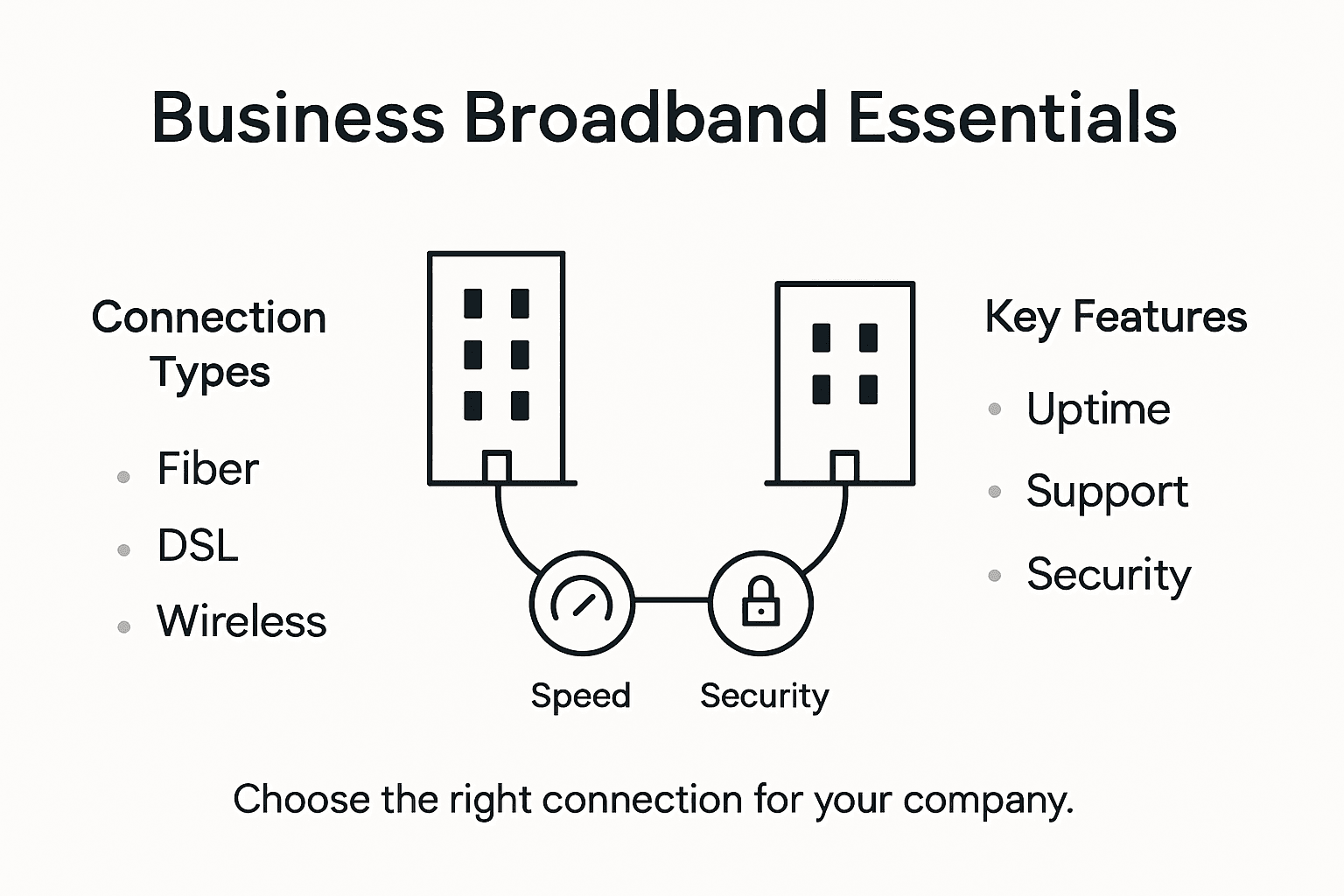
Cost Structures for business internet services involve multiple pricing components beyond basic monthly rates. Enterprise-grade connections typically include infrastructure fees, bandwidth allocation, service level agreements, and technical support packages. Fiber-optic networks generally command premium pricing but deliver superior performance and reliability compared to traditional cable or DSL technologies. Mid-sized businesses must carefully evaluate total cost of ownership, considering not just monthly expenses but potential productivity gains from higher-performance internet connections.
Internet Alternatives provide flexible options for organizations with diverse connectivity requirements. Strategic infrastructure investments enable businesses to diversify their internet access methods, mitigating potential service disruptions and addressing regional connectivity challenges. Alternative internet solutions include:
- Satellite broadband for rural locations
- Fixed wireless networks
- Cellular data plans with high-speed mobile hotspots
- Redundant multi-carrier connectivity
- Low-orbit satellite internet technologies
- Hybrid connectivity models
Pro tip: Negotiate comprehensive service level agreements and conduct periodic performance audits to ensure your internet infrastructure consistently meets your organization’s operational requirements.
Unlock Reliable Business Broadband with SabertoothPro for Mid-Atlantic Companies
Mid-Atlantic companies face the challenge of securing high-performance, secure broadband that supports symmetrical bandwidth, low latency, and guaranteed uptime. This article highlights that relying on residential plans risks productivity due to inconsistent speeds and limited service support. SabertoothPro understands these pain points and offers advanced solutions tailored to enterprises needing robust connectivity, dedicated technical support, and scalable infrastructure.
Explore our Titan WiFi collection for cutting-edge routers and high-speed 4G LTE and 5G hotspots. Enhance your network coverage with our proven WiFi extenders designed to eliminate dead zones and ensure seamless collaboration across all your business locations.

Don’t let unreliable broadband slow your business down. Visit SabertoothPro.com today to discover customized connectivity solutions that align perfectly with your company’s growth and security demands. Take the first step toward future-proofing your network and empowering your team with premium internet performance right now.
Frequently Asked Questions
What is business broadband, and how is it different from residential internet?
Business broadband is a sophisticated telecommunications service designed specifically for professional operational needs, offering reliable high-speed internet with guaranteed speeds during peak hours. Unlike residential internet, it provides symmetrical bandwidth and superior service level agreements (SLAs) for enhanced performance and support.
What are the key features that make business broadband essential for companies?
Key features of business broadband include symmetrical bandwidth, low latency, guaranteed uptime, dedicated technical support, enhanced security protocols, and scalable bandwidth options. These features ensure reliable connectivity for critical applications like video conferencing and cloud computing.
What types of business broadband connections are available, and what are their advantages?
The main types of business broadband connections include fiber-optic, cable, DSL, fixed wireless, satellite, and 5G cellular. Each offers unique advantages: fiber-optic provides the highest speed, cable offers reliability, DSL is a low-cost entry option, fixed wireless is flexible for remote sites, satellite connects rural locations, and 5G enables mobile, high-speed access.
How can companies assess their broadband needs before selecting a provider?
Companies should conduct a comprehensive assessment of their specific bandwidth requirements, projected growth, and critical network dependencies. This involves evaluating current internet usage, future needs, and possible scalability options to ensure the selected service meets operational demands.