


How to Boost Mobile Signal Rural for Reliable Connectivity
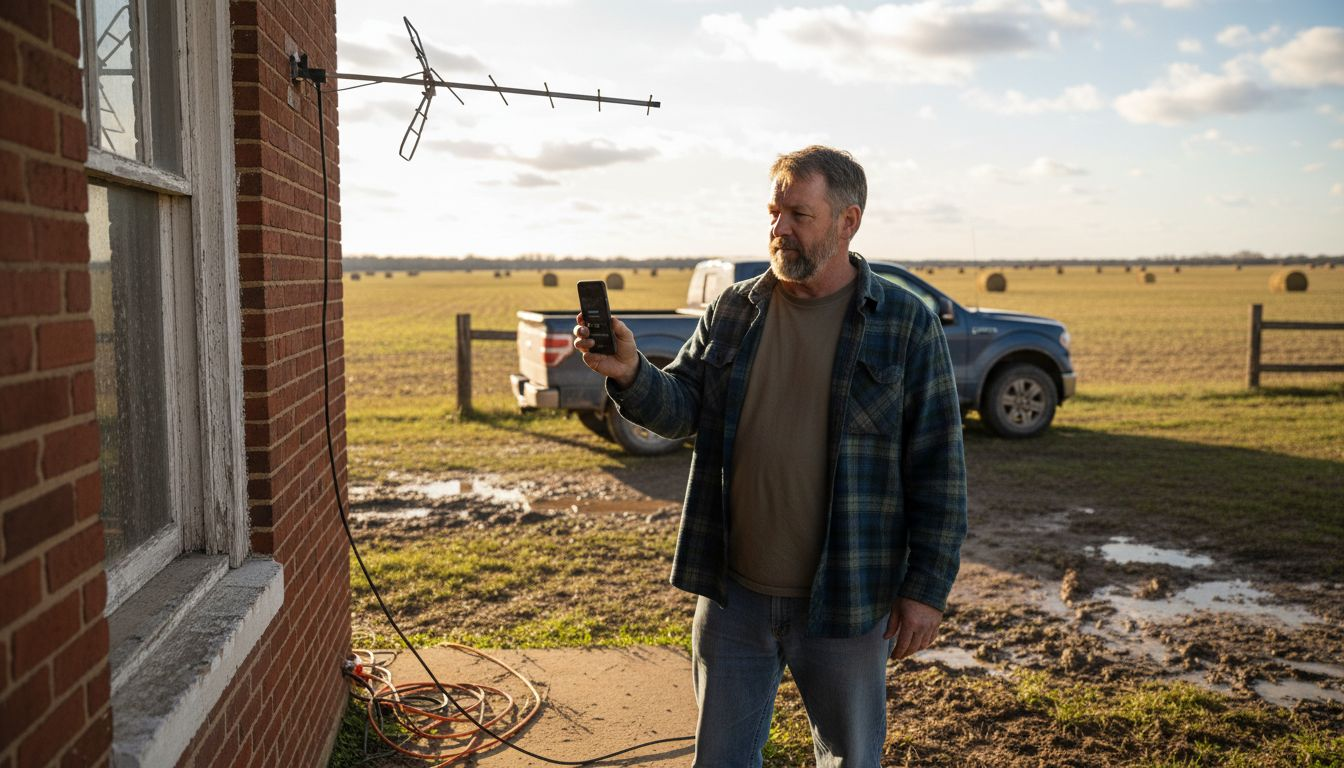
Many small business owners across the Mid-Atlantic face daily frustration with dropped calls and sluggish data while working or managing remote employees. These challenges threaten effective communication and hinder growth, especially for those located in rural areas where geography and population dispersion interrupt mobile signals. This guide simplifies the process of identifying coverage gaps, selecting the right technology, and optimizing installations so you can achieve reliable connectivity that keeps your operation moving forward.
Table of Contents
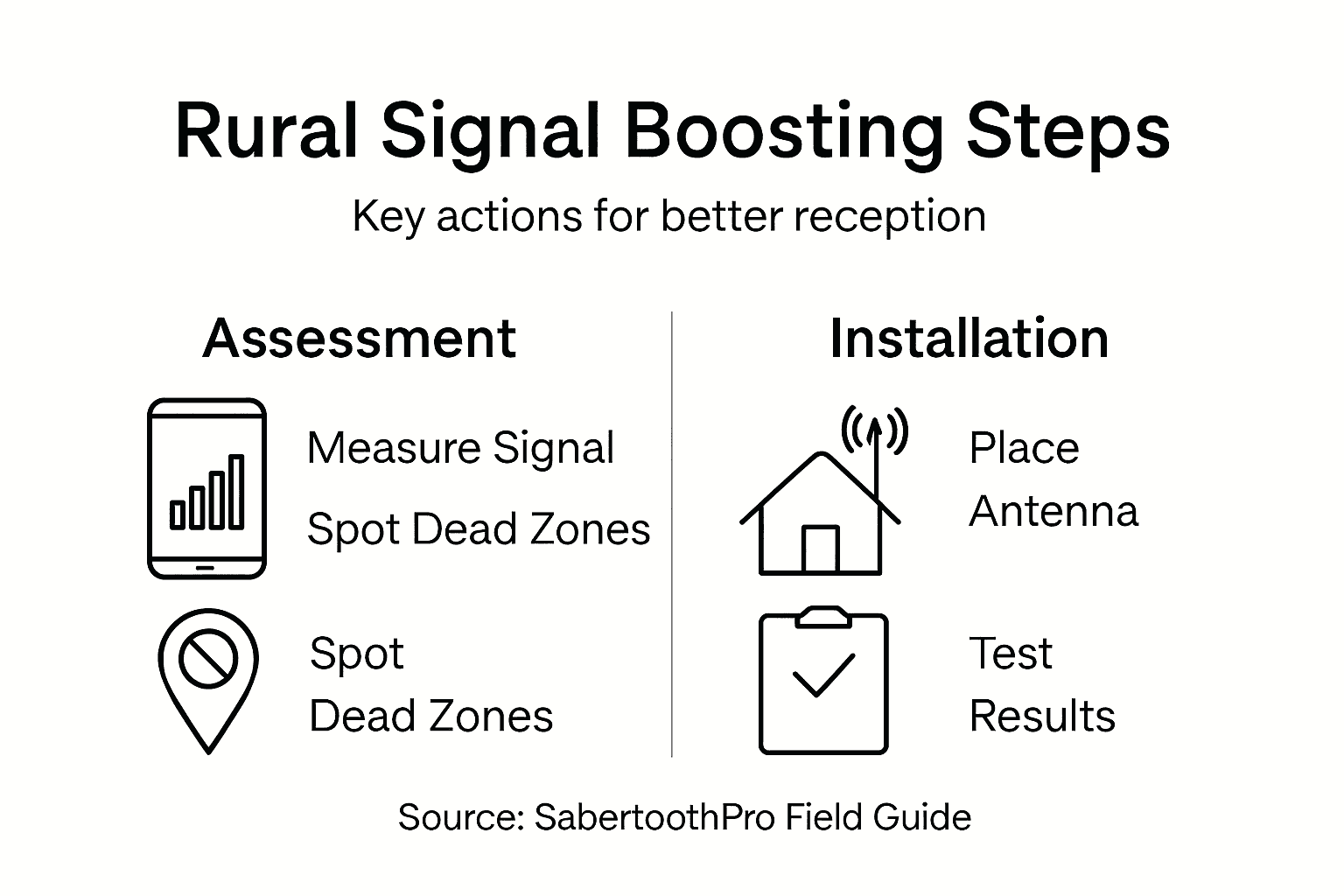
- Step 1: Assess Existing Signal And Coverage Gaps
- Step 2: Select The Right Signal Boosting Technology
- Step 3: Install Mobile Signal Booster System
- Step 4: Optimize Antenna Placement And Alignment
- Step 5: Test Mobile Signal Strength For Reliability
Quick Summary
| Key Takeaway | Explanation |
|---|---|
| 1. Conduct a signal strength assessment | Assess mobile signal strength using mapping apps and manual tests to identify weak coverage areas. |
| 2. Choose the right boosting technology | Select a signal boosting technology suitable for your specific connectivity challenges and budget. |
| 3. Install the signal booster correctly | Follow precise installation steps, ensuring optimal antenna placement for maximum signal enhancement. |
| 4. Optimize antenna placement | Position antennas strategically, considering elevation and direction for improved signal reception. |
| 5. Test signal strength consistently | Regularly measure signal performance using apps to ensure reliable connectivity and make adjustments as needed. |
Step 1: Assess existing signal and coverage gaps
Understanding your current mobile signal strength is the critical first step in improving rural connectivity. Before implementing any boosting solutions, you need a comprehensive assessment of your specific signal challenges.
To effectively map out your signal landscape, start by conducting a signal strength investigation. This process involves multiple strategic approaches:
- Use your mobile carrier’s coverage map to understand theoretical signal availability
- Download signal mapping apps like OpenSignal or CellMapper to get real-world data
- Conduct manual signal tests at different locations on your property
- Note areas with consistent weak or no signal coverage
Rural broadband access challenges often stem from geographic terrain and population dispersion. Rural landscapes present unique obstacles like mountains, dense forests, and widespread property distances that interrupt cellular signals.
Make a detailed signal map of your property, marking exact signal strength zones. Walk around with your smartphone, checking signal bars in different areas. Pay special attention to:
- Indoor signal strength compared to outdoor areas
- Signal variations in different rooms or building levels
- Potential interference from physical obstacles like metal roofs or thick walls
Signal mapping is your diagnostic tool for understanding connectivity challenges.
Pro Tip: Consider investing in a professional signal meter for more precise measurements, which can provide decibel (dB) readings of your current signal strength.
Step 2: Select the right signal boosting technology
Choosing the appropriate signal boosting technology can transform your rural connectivity challenges. Your goal is to find a solution that matches your specific signal environment and performance requirements.
Technology selection for rural connectivity demands a strategic approach considering multiple factors. The main signal boosting technologies include:
- Fixed wireless systems that leverage radio transmission
- Mobile signal repeaters for localized signal enhancement
- Satellite communication solutions
- Cellular signal boosters designed for specific carrier networks
When evaluating your options, assess these critical parameters:
- Current signal strength in your area
- Total coverage area needed
- Budget constraints
- Local terrain and potential interference
Different technologies offer unique advantages. Cellular signal boosters work best for localized improvements, amplifying existing weak signals through external antennas and indoor broadcast units. Satellite solutions provide broader coverage but might have higher latency.
Here’s a comparison of main rural signal boosting technologies and their typical use cases:
| Technology Type | Ideal Use Case | Typical Coverage Area | Key Consideration |
|---|---|---|---|
| Fixed Wireless System | Long-range, rural property | Multiple buildings | Needs line-of-sight to tower |
| Mobile Signal Repeater | Small homes or single rooms | Single building | Enhances weak existing signal |
| Satellite Communication | Remote locations with no cell signal | Entire property area | May have higher data latency |
| Cellular Signal Booster | Localized weak spots, any carrier | Up to several thousand sq ft | Requires some outdoor signal |
Select a signal boosting technology that precisely matches your specific rural connectivity requirements.
Pro Tip: Research carrier-specific signal boosters that are FCC-approved to ensure maximum legal signal enhancement and compatibility with your mobile network.
Step 3: Install mobile signal booster system
Installing a mobile signal booster requires precision, technical knowledge, and careful planning to ensure optimal performance in your rural environment. Your goal is to create a robust connectivity solution that dramatically improves your mobile signal strength.
Mobile signal booster installation involves several critical steps to maximize signal enhancement and minimize potential interference. Gather these essential components before beginning:
- External antenna for capturing outside signals
- Amplifier/repeater unit
- Indoor antenna for broadcasting enhanced signal
- Coaxial cables for connecting components
- Grounding equipment for electrical safety
Follow these systematic installation steps:
- Identify the optimal external antenna location with strongest existing signal
- Mount the external antenna securely, pointing toward nearest cell tower
- Run coaxial cable from external antenna to amplifier
- Connect indoor antenna to amplifier
- Ground the system to prevent electrical damage
- Test signal strength before and after installation
Pay close attention to antenna placement. Vertical positioning matters significantly, with roof or high exterior wall mounting typically providing best results. Avoid potential signal obstructions like thick walls or metal structures.
Proper installation transforms weak signals into reliable mobile connectivity.
Pro Tip: Always maintain a minimum recommended distance between external and internal antennas to prevent oscillation and maximize signal amplification.
Step 4: Optimize antenna placement and alignment
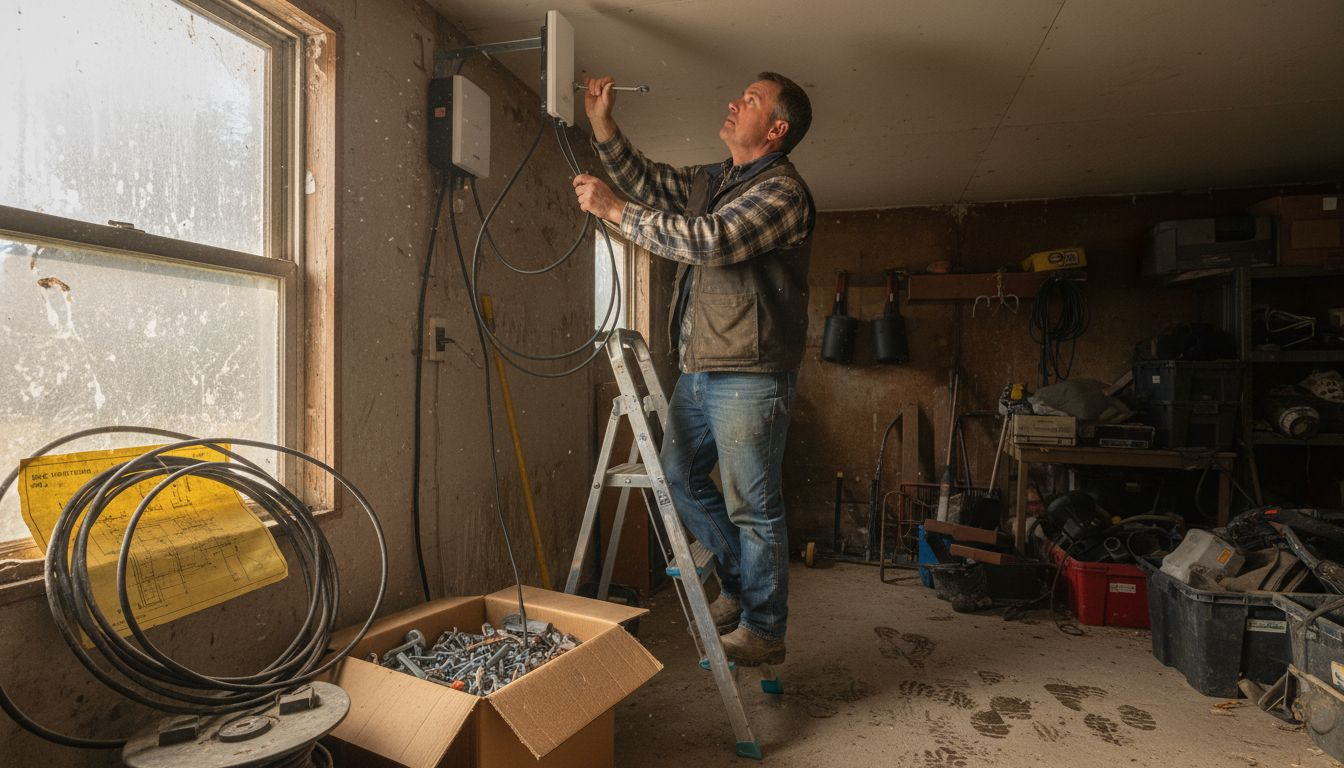
Precise antenna placement can dramatically improve your mobile signal strength, transforming weak connectivity into a reliable communication lifeline for your rural property. Understanding how to strategically position your external and internal antennas is crucial for maximizing signal performance.
Movable antenna optimization provides advanced strategies for enhancing signal reception in challenging rural environments. Key considerations for optimal antenna alignment include:
- Vertical positioning at highest possible elevation
- Clear line of sight to nearest cell tower
- Minimal physical obstructions
- Reduced interference from metal structures
- Proper directional orientation
Follow these strategic antenna alignment steps:
- Use a smartphone signal meter app to identify strongest signal direction
- Rotate external antenna incrementally while monitoring signal strength
- Adjust vertical angle to maximize received signal power
- Minimize distance between external and internal antenna
- Maintain recommended separation to prevent signal oscillation
Precision mounting requires careful attention to detail. Most rural signal boosters benefit from roof or high exterior wall mounting, which provides optimal signal capture. Avoid locations near electrical interference sources or dense metal structures that can disrupt signal transmission.
Strategic antenna placement transforms marginal signals into robust connectivity.
Pro Tip: Invest in a professional signal meter for precise alignment, ensuring you capture the maximum possible signal strength in your specific rural location.
Step 5: Test mobile signal strength for reliability
Validating your mobile signal strength is a critical step in ensuring your new boosting system delivers the connectivity you need. Understanding precisely how your signal performs will help you make informed adjustments and confirm your investment’s effectiveness.
Mobile connectivity testing methods provide multiple strategies for assessing signal reliability across rural environments. Your signal strength evaluation toolkit should include:
- Smartphone signal meter apps
- Professional signal measurement devices
- Online coverage map comparisons
- Multiple test locations on your property
- Consistent time-of-day testing
Conduct a comprehensive signal strength assessment:
- Download multiple signal testing applications
- Perform tests in different property locations
- Record signal strength measurements
- Compare results across various times and conditions
- Document variations in signal performance
Signal measurement metrics include decibel milliwatts (dBm), with readings closer to zero indicating stronger signals. Aim for measurements between -50 dBm (excellent) and -100 dBm (marginal). Professional signal meters provide more precise readings than smartphone apps.
The following table summarizes optimal signal measurement values and their meaning:
| dBm Reading | Signal Quality | Usability Recommendation |
|---|---|---|
| -50 dBm | Excellent | Reliable calls and fast data |
| -70 dBm | Good | Consistent connectivity |
| -85 dBm | Fair | Occasional dropped calls possible |
| -100 dBm | Marginal | Data slow, calls may fail |
Consistent and thorough testing reveals the true performance of your mobile signal booster.
Pro Tip: Run signal tests during different weather conditions and times of day to capture a comprehensive performance profile of your mobile connectivity.
Empower Your Rural Connectivity with SabertoothPro Solutions
Weak mobile signals and inconsistent coverage create daily frustration for many rural residents and businesses. This article highlights the challenges of assessing current signal strength, choosing the right booster technology, precise antenna installation, and ongoing testing to achieve reliable mobile connectivity in rural areas. At SabertoothPro, we understand these pain points and provide tailored solutions designed to enhance signal strength and ensure uninterrupted communication across your property.
Explore our advanced WiFi Extenders and the robust Titan WiFi product lines engineered specifically for rural and mobile environments. These products integrate seamlessly with your existing infrastructure to optimize your signal coverage.

Stop struggling with unreliable rural mobile signals. Visit SabertoothPro.com now to browse innovative boosting devices, consult with connectivity experts, and take control of your rural internet experience today.
Frequently Asked Questions
How can I assess my current mobile signal strength in rural areas?
Understanding your current mobile signal strength starts with a signal strength investigation. Use mobile carrier coverage maps, download signal mapping apps, and conduct manual signal tests around your property to pinpoint areas with weak or no coverage.
What are the best technologies for boosting mobile signal in rural locations?
Selecting the right boosting technology depends on your specific needs. Consider options such as cellular signal boosters, mobile signal repeaters, and fixed wireless systems based on current signal strength, coverage area, and budget constraints.
How do I install a mobile signal booster system effectively?
To install a mobile signal booster system, first gather essential components like an external antenna, amplifier, and indoor antenna. Follow a systematic installation process ensuring optimal placement of each component, especially the external antenna, to maximize signal capture and minimize interference.
What is the importance of antenna placement and alignment for mobile signal boosting?
Proper antenna placement and alignment can significantly enhance your mobile signal strength. Ensure the external antenna is positioned at a high elevation and has a clear line of sight to the nearest cell tower, adjusting its orientation until you achieve the strongest signal possible.
How can I test the effectiveness of my mobile signal booster?
After installing your mobile signal booster, test its effectiveness by measuring signal strength at various locations on your property using smartphone signal meter apps. Compare results over different times of day to ensure reliable connectivity across various conditions.