


Why Choose Wireless Internet: Complete Guide for 2025

Nearly 93 percent of american households use some form of wireless internet for work, learning, and daily life. This shift impacts how people connect across every environment, removing the limits of traditional wired networks. Understanding the core concepts, connection types, and real benefits of wireless internet gives you the clarity to choose solutions that keep your american home or business connected, mobile, and secure.
Table of Contents
- Defining Wireless Internet And Core Concepts
- Types Of Wireless Internet Connections Explained
- Key Features And Benefits For Users
- Essential Use Cases: Rural And Mobile Access
- Comparing Wireless Vs. Wired Internet Solutions
- Cost, Risks, And What To Avoid When Choosing
Key Takeaways
| Point | Details |
|---|---|
| Transformative Technology | Wireless internet enables connectivity without physical cables, allowing flexibility and mobile communication. |
| Connection Types | Various wireless connection types exist, including WiFi, cellular, and satellite, each catering to specific needs. |
| Key Benefits | Users gain mobility, instant connectivity, cost-effectiveness, and scalability, enhancing their digital experiences. |
| Considerations | When selecting a wireless internet solution, consumers must evaluate coverage limitations, signal interference, and security vulnerabilities. |
Defining Wireless Internet and Core Concepts
Wireless internet represents a transformative technology enabling digital connectivity without physical cable restrictions. Wireless networks allow devices to communicate and access online resources through radio frequency signals, creating flexible and mobile communication pathways. According to Wikipedia, a wireless LAN (WLAN) is a computer network that links multiple devices using wireless communication to form a local area network within specific environments like homes, offices, or schools.
At its core, wireless internet operates through radio wave transmission across different frequency bands. These signals enable data transmission between devices and network infrastructure without requiring direct physical connections. Wireless technologies utilize various protocols and standards including WiFi, cellular networks (4G/5G), satellite, and microwave transmission, each offering unique capabilities for different connectivity scenarios.
The primary components of wireless internet networks include:
- Wireless routers: Central hubs broadcasting internet signals
- Network adapters: Hardware enabling device connectivity
- Access points: Infrastructure devices extending network coverage
- Antennas: Signal transmission and reception equipment
Modern wireless internet solutions prioritize security, speed, and reliability.
 Wireless Internet Options List explores the diverse range of connectivity methods available to consumers and businesses, highlighting how technological advancements continue to expand wireless communication capabilities across different environments and use cases.
Types of Wireless Internet Connections Explained
Wireless internet encompasses multiple connection technologies that deliver digital connectivity through radio frequency signals. According to Webopedia, wireless internet provides an always-on connection accessible from anywhere within a network coverage area, utilizing radio frequency bands instead of traditional telephone or cable networks.
The primary wireless internet connection types include:
- WiFi Networks: Local area network technology based on IEEE 802.11 standards
- Cellular Data Networks: 4G and 5G mobile internet connections
- Satellite Internet: Broad coverage connections using orbiting communication satellites
- Fixed Wireless: Point-to-point connections using dedicated radio transmission equipment
- Mobile Hotspots: Portable devices creating localized wireless internet access points
Each wireless connection type offers distinct advantages depending on specific use cases. WiFi Frequency Guide explores how different frequency bands impact signal performance and device compatibility. As Wikipedia notes, wireless LANs based on IEEE 802.11 standards remain the most widely used computer networks, particularly for home and small office environments.
Modern wireless internet technologies continue evolving, offering increasingly sophisticated solutions for both consumer and enterprise connectivity needs. Factors like signal strength, bandwidth, latency, and coverage area determine the most appropriate wireless internet connection for specific scenarios, making it crucial to understand the unique characteristics of each connection type.
Key Features and Benefits for Users
Wireless internet technologies deliver transformative connectivity solutions that dramatically enhance user mobility and digital experiences. Wikipedia highlights that wireless LANs provide users the ability to move around within a limited area while remaining connected to the network, offering unprecedented flexibility and convenience.
Key benefits of wireless internet for users include:
- Mobility: Access internet from multiple locations without physical cable constraints
- Convenience: Instant connectivity across devices
- Cost-effectiveness: Reduced infrastructure and installation expenses
- Scalability: Easy network expansion and device integration
- Productivity: Seamless work and communication capabilities
Modern wireless internet solutions prioritize user experience through advanced features like enhanced security protocols, high-speed data transmission, and multi-device compatibility. Mobile Hotspots Guide explores how portable connectivity options are revolutionizing how individuals and businesses approach internet access.
The evolving landscape of wireless internet continues to push technological boundaries, delivering more robust, secure, and user-friendly connectivity solutions. From remote workers to digital nomads, wireless internet empowers users with unprecedented freedom to connect, collaborate, and communicate from virtually anywhere with network coverage.
Essential Use Cases: Rural and Mobile Access
Wireless internet technologies have become transformative solutions for connecting underserved and mobile populations. According to MHO Blog, fixed wireless internet delivers service via radio signals to an antenna installed at homes, offering speeds up to 100 Mbps in areas with poor DSL or cable coverage.
Key use cases for rural and mobile wireless internet include:
- Remote Work Connectivity: Enabling professionals to work from any location
- Educational Access: Providing internet for students in rural communities
- Agricultural Management: Supporting precision farming technologies
- Emergency Services: Maintaining communication in disaster-prone regions
- Economic Development: Bridging digital infrastructure gaps
Rural Internet Guide explores how wireless technologies are revolutionizing connectivity for communities traditionally left behind by standard infrastructure. As Wikipedia notes, wireless networks enable users to move around within limited areas while remaining connected, facilitating mobile access across diverse environments.
The future of wireless internet in rural and mobile contexts promises unprecedented opportunities for digital inclusion. By leveraging advanced radio frequency technologies, these solutions are breaking down geographical barriers, connecting communities, and creating new pathways for economic and social development across previously underserved regions.
Comparing Wireless vs. Wired Internet Solutions
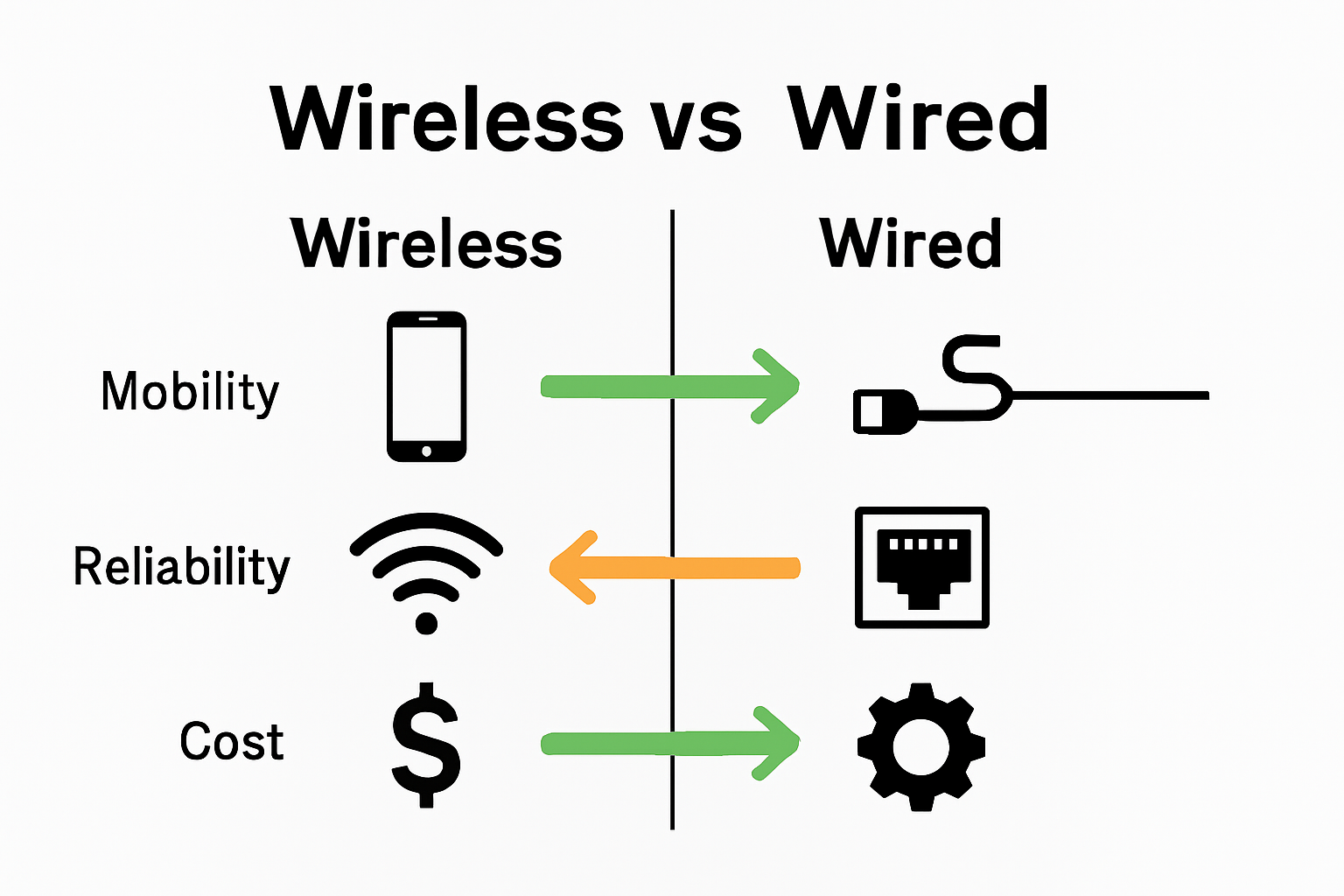
The landscape of internet connectivity presents distinct advantages and limitations for both wireless and wired technologies. According to JETIR Research, fixed networks are generally considered more reliable than wireless networks, offering faster and more stable connections, especially for high-bandwidth activities.
Key comparison points between wireless and wired internet solutions include:
- Mobility: Wireless networks provide unparalleled device flexibility
- Reliability: Wired connections offer more consistent performance
- Installation: Wireless solutions require minimal physical infrastructure
- Speed: Fiber and ethernet connections typically deliver higher bandwidth
- Cost: Wireless technologies often present more affordable setup options
Fiber vs. Satellite Connectivity Guide explores nuanced connectivity strategies. As MHO Blog notes, fiber-optic internet can provide extraordinary speeds up to 100 Gbps, utilizing light signals through fiber-optic cables and offering symmetrical upload and download capabilities.
The future of internet connectivity lies not in choosing between wireless and wired solutions, but in understanding how these technologies can complement each other. Hybrid approaches that leverage the strengths of both wireless and wired networks are increasingly becoming the optimal strategy for comprehensive, reliable, and flexible internet access.
Cost, Risks, and What to Avoid When Choosing
Choosing a wireless internet solution requires careful consideration of multiple financial and technical factors. According to Webopedia, wireless internet is typically more expensive and primarily available in metropolitan areas, with costs and availability varying significantly based on location and service provider.
Key risks and considerations when selecting wireless internet include:
- Coverage Limitations: Verify network availability in your specific area
- Signal Interference: Potential disruptions from physical obstacles and electronic devices
- Data Caps: Understanding monthly bandwidth restrictions
- Security Vulnerabilities: Implementing robust encryption and protection strategies
- Performance Variability: Recognizing potential speed fluctuations
MHO Blog highlights that fixed wireless internet solutions, while offering speeds up to 100 Mbps in areas with poor DSL or cable coverage, may come with higher costs and limited availability.
To mitigate potential risks, consumers should conduct thorough research, compare multiple providers, test network performance during trial periods, and develop a comprehensive understanding of contract terms and service level agreements. Prioritizing flexibility, scalability, and comprehensive technical support can help navigate the complex landscape of wireless internet connectivity.
Discover Reliable Wireless Internet Solutions for Your Needs
The article highlights the challenges of finding a wireless internet connection that balances coverage, speed, and security—especially in rural or mobile settings. Many users face frustrations with inconsistent signals, limited data, and costly setups. If you want a wireless internet experience that delivers true mobility, ease, and scalable performance then you need solutions designed to overcome those hurdles mentioned like signal interference and limited coverage.
At SabertoothPro.com, we specialize in high-speed wireless internet devices and plans tailored for modern demands. Explore our Titan WiFi Hotspot Plans for portable, powerful connectivity wherever you go. Complement your setup with our WiFi Extenders to boost signal strength and coverage throughout your home or office. These solutions reflect the article’s focus on flexibility, convenience, and performance all while ensuring security and reliability.

Empower your digital lifestyle with trusted wireless internet options today. Visit SabertoothPro.com now to find the right devices and plans built for your unique connectivity challenges. Don’t wait for slow or unreliable service to hold you back act now and experience wireless internet that truly keeps you connected everywhere.
Frequently Asked Questions
What are the main benefits of using wireless internet?
Wireless internet offers key benefits such as mobility, allowing users to access the internet from multiple locations without physical cable constraints, convenience through instant connectivity across devices, cost-effectiveness by reducing infrastructure expenses, scalability for easy network expansion, and increased productivity with seamless work capabilities.
How does wireless internet compare to wired solutions?
Wireless internet provides unparalleled device flexibility and mobility, while wired solutions generally offer more reliable and consistent performance. Wired connections often deliver higher bandwidth speeds, especially for high-bandwidth activities. Ultimately, hybrid approaches combining both technologies can deliver comprehensive connectivity.
What types of wireless internet connections are available?
There are several wireless internet connection types including WiFi networks, cellular data networks (4G/5G), satellite internet, fixed wireless, and mobile hotspots. Each type has its own specific advantages depending on your connectivity needs.
What factors should I consider when choosing a wireless internet solution?
Consider factors such as coverage limitations to ensure network availability in your area, potential signal interference from physical obstacles, data caps for monthly bandwidth restrictions, security vulnerabilities that require robust protection strategies, and performance variability that may affect speed fluctuations.