


Why Choose Wireless Internet: Complete Guide

Most american households now rely on wireless internet, with over 90 percent connecting daily across homes, businesses, and public spaces. As this technology reshapes how people work, learn, and interact, it comes with a surge of myths and misunderstandings that can confuse users and decision makers. Cutting through the noise, this guide clears up what wireless internet really means and highlights key truths every american should know about staying connected in a digital world.
Table of Contents
- Wireless Internet Defined And Common Myths
- Types Of Wireless Internet Connections Explained
- Core Benefits For Mobile And Rural Users
- Wireless Internet In Business And IoT Applications
- Comparing Wireless Internet To Wired Solutions
- Cost, Security, And Performance Considerations
Key Takeaways
| Point | Details |
|---|---|
| Understanding Wireless Internet | Wireless internet transmits data through radio waves, offering flexibility without physical cables and enabling access across various locations. |
| Dispelling Myths | Common misconceptions about wireless limitations—such as speed, security, and coverage—are increasingly outdated due to technological advancements. |
| Impact on Mobility and Rural Users | Wireless connectivity facilitates instant access and geographic flexibility, significantly benefiting mobile users and underserved rural areas. |
| Business Applications | Wireless technologies support diverse applications in business and IoT, enhancing operational efficiency and enabling real-time data handling. |
Wireless Internet Defined and Common Myths
Wireless internet represents a revolutionary telecommunications technology enabling digital connectivity without physical cable connections. At its core, wireless internet transmits data signals through radio waves, allowing devices to access online resources across various networks and platforms. As highlighted by research from aisel, understanding the nuanced landscape of wireless communications requires dispelling prevalent technological misconceptions.
Wireless Internet Fundamentals involve transmitting digital information through electromagnetic spectrum frequencies. Unlike traditional wired connections, wireless networks leverage radio waves to move data between devices and network infrastructure. These networks operate across multiple spectrums - from low-frequency cellular bands to high-bandwidth WiFi channels - providing flexible connectivity solutions for diverse user needs.
According to research examining wireless communication technologies, several persistent myths continue to circulate. Arxiv identifies key misconceptions that often prevent users from fully appreciating wireless internet’s capabilities:
- Bandwidth Limitation Myth: Many believe wireless networks inherently provide slower connections compared to wired alternatives. Modern wireless technologies now deliver speeds comparable to traditional broadband.

- Security Vulnerability Myth: While early wireless networks had genuine security concerns, contemporary protocols like WPA3 offer robust encryption and protection mechanisms.
- Coverage Inconsistency Myth: Advanced wireless technologies now provide increasingly consistent signal strength across broader geographic areas.
Understanding these nuances helps consumers and businesses make informed decisions about wireless internet adoption. By recognizing technological realities over outdated perceptions, users can leverage wireless connectivity’s tremendous potential for seamless, flexible digital experiences. For more insights into wireless internet options, check out our comprehensive wireless internet options guide.
Types of Wireless Internet Connections Explained
Wireless internet technologies have dramatically evolved, offering diverse connection types to meet varied connectivity needs across different environments. Arxiv research highlights the complex landscape of wireless technologies, revealing multiple options for digital connectivity that extend far beyond traditional networking approaches.
Cellular Networks represent one of the most widespread wireless internet connections. These networks leverage mobile infrastructure to provide internet access through 3G, 4G LTE, and increasingly 5G technologies. Each generation offers improved speed, reduced latency, and enhanced coverage, making cellular networks ideal for mobile devices and remote locations with limited infrastructure.
WiFi Connections are another prevalent wireless internet type, typically used in homes, offices, and public spaces. Arxiv research indicates these networks operate across different frequency bands, including 2.4 GHz and 5 GHz channels, each with unique characteristics:
- 2.4 GHz Band: Longer range, better wall penetration
- 5 GHz Band: Faster speeds, less network congestion
- WiFi 6 (802.11ax): Enhanced performance for multiple connected devices
Additional wireless internet connection types include Satellite Internet for rural areas, Fixed Wireless for stationary locations, and emerging Low Power Wide Area (LPWA) networks designed for Internet of Things (IoT) applications. Understanding these technologies helps consumers select the most appropriate connectivity solution.
Core Benefits for Mobile and Rural Users
Wireless internet technologies have revolutionized connectivity for mobile and rural users, breaking down traditional infrastructure barriers. EBSCO research highlights how wireless networks provide unprecedented internet access without physical cable limitations, dramatically expanding digital opportunities for communities traditionally underserved by conventional connectivity solutions.
Mobility Advantages represent a critical benefit for users requiring flexible internet access. Mobile wireless technologies enable internet connectivity from virtually anywhere - whether traveling across country, working from remote locations, or operating businesses in areas with limited infrastructure. These technologies empower professionals, digital nomads, and rural residents to stay connected without geographic restrictions.
Rural communities particularly benefit from wireless internet’s transformative potential. Traditional broadband deployment often proves economically challenging in sparsely populated regions, making wireless solutions a game-changing alternative. ScienceDirect research underscores the legal and practical considerations of wireless networks, emphasizing their role in extending digital access to previously disconnected communities.
Key benefits for mobile and rural users include:
- Instant Connectivity: Immediate internet access without complex installation processes
- Geographic Flexibility: Reliable internet across diverse terrains and locations
- Cost-Effectiveness: Lower infrastructure investment compared to traditional wired networks
- Rapid Deployment: Quick setup with minimal physical infrastructure requirements
For those seeking deeper insights into rural internet solutions, explore our comprehensive guide to rural internet options.
Wireless Internet in Business and IoT Applications
Wireless internet has become a transformative technology for businesses and Internet of Things (IoT) applications, enabling unprecedented connectivity and operational efficiency. Arxiv research reveals a complex ecosystem of wireless technologies specifically designed to support diverse IoT communication needs, ranging from low-power sensor networks to high-bandwidth enterprise solutions.
Enterprise Connectivity represents a critical domain where wireless internet technologies deliver substantial advantages. Businesses can now implement flexible network architectures that support mobile workforces, remote operations, and distributed communication systems. Modern wireless technologies provide robust security protocols, seamless scalability, and real-time data transmission capabilities that traditional wired networks struggle to match.
Arxiv research on Massive MIMO technology highlights the emerging potential for ultra-reliable, low-latency communication in IoT environments. This technological advancement enables businesses to deploy complex networked systems with enhanced performance characteristics, supporting everything from industrial monitoring to smart city infrastructure.
Key wireless internet applications in business and IoT include:
- Smart Manufacturing: Real-time equipment monitoring and predictive maintenance
- Logistics Tracking: Seamless global asset and shipment tracking
- Healthcare Monitoring: Remote patient monitoring and medical device connectivity
- Agricultural Technology: Precision farming with sensor-based environmental monitoring
- Retail Analytics: Customer behavior tracking and inventory management
For enterprises seeking to understand mobile internet deployment strategies, check out our mobile internet for enterprises guide.
Comparing Wireless Internet to Wired Solutions
EBSCO research reveals the transformative potential of wireless internet technologies, challenging traditional wired connectivity paradigms. Unlike fixed cable-based solutions, wireless networks offer unprecedented flexibility and accessibility, fundamentally reimagining how users connect and interact with digital resources across diverse environments.
Mobility and Flexibility represent the most significant differentiators between wireless and wired internet solutions. Wired networks require physical infrastructure, limiting connectivity to specific locations. Wireless technologies eliminate these geographic constraints, enabling internet access from virtually anywhere. Professionals, travelers, and remote workers particularly benefit from this unprecedented freedom of connectivity, transforming how we conceptualize digital communication.
ScienceDirect research underscores the complex legal and security considerations that distinguish wireless networks from traditional wired solutions. While wired networks historically offered more predictable security frameworks, modern wireless technologies have developed robust encryption and authentication protocols that often surpass traditional infrastructure security standards.
Key comparative advantages of wireless over wired internet include:
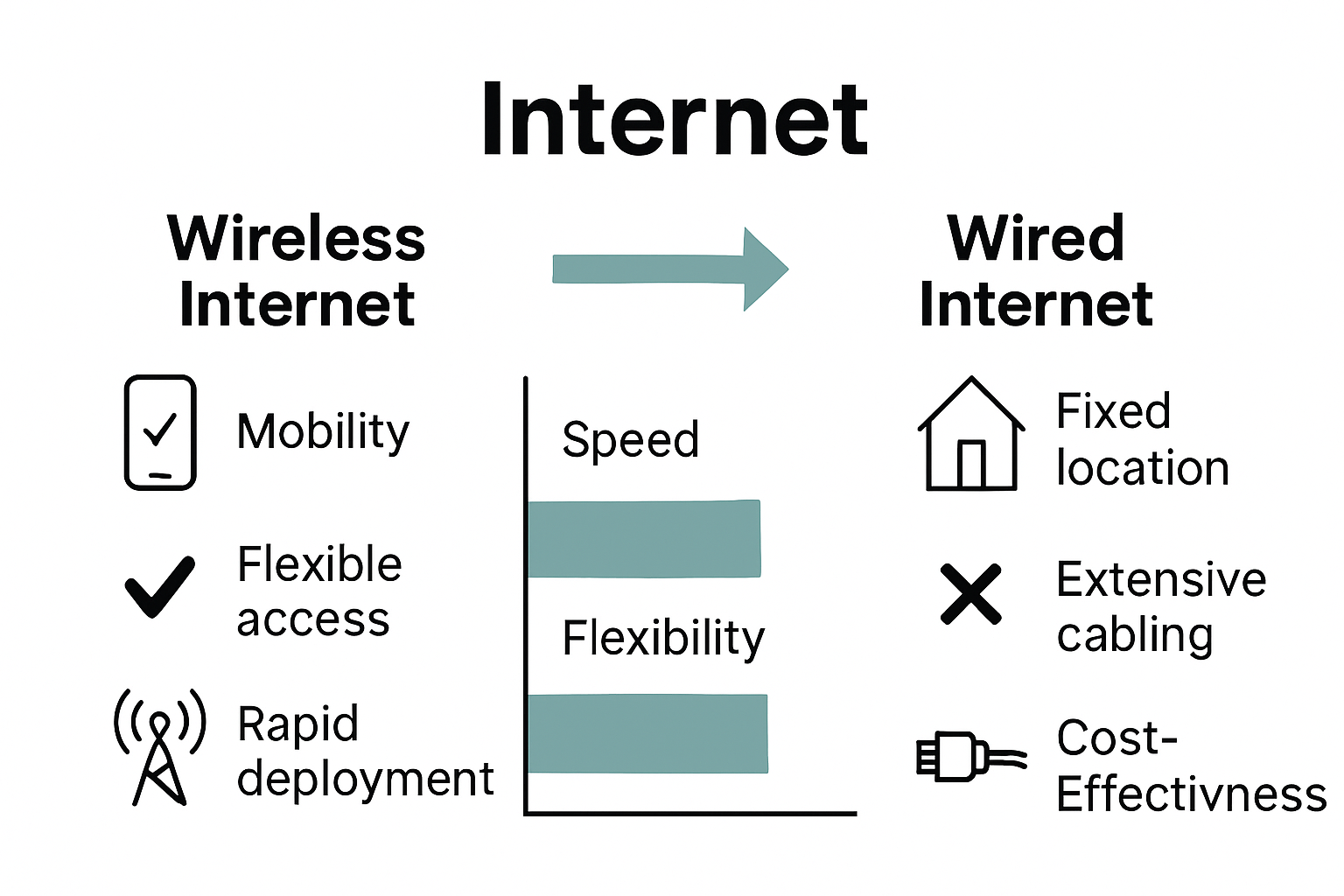
- Instant Deployment: No physical cable installation required
- Geographic Flexibility: Connectivity across diverse terrains and locations
- Scalability: Easier network expansion without infrastructure reconstruction
- Cost-Effectiveness: Lower infrastructure and maintenance expenses
- Remote Access: Seamless connectivity for mobile and distributed workforces
For those interested in exploring different connectivity approaches, check out our guide comparing connectivity options.
Cost, Security, and Performance Considerations
Wireless internet technologies have dramatically transformed connectivity landscapes, introducing complex considerations around cost, security, and performance. ScienceDirect research highlights the critical legal and security dimensions that organizations must navigate when adopting wireless networking solutions, emphasizing the nuanced challenges beyond traditional technological assessments.
Performance Dynamics represent a critical evaluation point for wireless internet technologies. Modern wireless networks now deliver speeds and reliability that challenge previous perceptions of network performance. Advanced technologies like Massive MIMO have revolutionized signal processing capabilities, enabling more efficient data transmission and reducing previous limitations of wireless communication systems. Arxiv research debunks multiple myths surrounding these technological advancements, demonstrating how contemporary wireless solutions can match and sometimes exceed wired network performance.
Security considerations remain paramount in wireless networking strategies. While early wireless technologies presented significant vulnerabilities, contemporary protocols have developed robust encryption mechanisms that provide enterprise-grade protection. Organizations can now implement multilayered security approaches that include:
- Advanced Encryption Standards: Protecting data transmission
- Dynamic Authentication Protocols: Preventing unauthorized access
- Real-time Threat Monitoring: Identifying potential network intrusions
- Segmented Network Architecture: Limiting potential breach impacts
From a cost perspective, wireless internet offers substantial economic advantages over traditional infrastructure. Reduced physical installation requirements, lower maintenance expenses, and rapid deployment capabilities make wireless solutions increasingly attractive for businesses seeking efficient connectivity strategies. For deeper insights into wireless networking economics, explore our comprehensive broadband guide.
Unlock Seamless Wireless Internet with SabertoothPro Solutions
The challenge of finding reliable, high-speed wireless internet that delivers across rural, mobile, and enterprise environments can feel overwhelming. This guide highlights common pain points such as inconsistent coverage, security concerns, and performance doubts. SabertoothPro understands these hurdles and offers advanced connectivity options, including 4G LTE and 5G hot spots designed to provide secure, fast, and flexible internet wherever you need it most.
Explore our selection of Titan WiFi Hotspot Plans to experience instant, reliable internet access without complicated installations. Whether you are a remote worker, a traveler, or managing a business network, our solutions prioritize your need for mobility, security, and cost efficiency.

Don’t let outdated technology hold you back. Visit SabertoothPro.com today to discover cutting-edge wireless devices and plans tailored to your specific connectivity goals. Take control of your digital experience now and enjoy the freedom and performance that wireless internet promises.
Frequently Asked Questions
What are the main advantages of wireless internet?
Wireless internet offers significant advantages such as instant connectivity without installation hassles, geographic flexibility to connect anywhere, cost-effectiveness through lower infrastructure costs, and quick deployment without the need for extensive physical wiring.
How does wireless internet compare to wired solutions in terms of speed and security?
Modern wireless technologies can deliver speeds comparable to wired networks, especially with advancements like Massive MIMO. While wired solutions traditionally offered better security, contemporary wireless protocols now include robust encryption and multilayered security measures to protect data transmission.
Can wireless internet provide reliable coverage in rural areas?
Yes, wireless internet is especially beneficial in rural communities where traditional broadband is challenging to deploy. It offers reliable connectivity without the need for extensive infrastructure, making it a cost-effective solution for underserved areas.
What types of wireless internet options are available for businesses?
Businesses can choose from various wireless internet options, including cellular networks (3G, 4G LTE, and 5G), WiFi connections, and specialized networks for Internet of Things (IoT) applications, allowing tailored solutions for their specific operational needs.