


What Is Broadband? Complete Guide for 2025

Broadband internet now powers over 90 percent of American households with high-speed connectivity that shapes daily life and work. Fast and reliable internet access drives everything from remote jobs and streaming to telemedicine and digital learning. Knowing what broadband is and how its technology works helps you make smart choices in a world where being connected matters more each year.
Table of Contents
- Defining Broadband And Core Concepts
- Types Of Broadband Connections Explained
- How Broadband Works For Users
- Key Advantages And Limitations
- Comparing Broadband With Alternative Options
Key Takeaways
| Point | Details |
|---|---|
| Broadband Definition | Broadband is a high-speed internet service enabling continuous connectivity and advanced digital applications, surpassing traditional dial-up connections. |
| Connection Types | Key broadband methods include DSL, cable modem, fiber-optic, wireless, satellite, and broadband over power lines, catering to different geographic needs. |
| Advantages and Limitations | Broadband offers ultra-fast connectivity and enables services like telehealth, but faces challenges such as rural coverage and technological disparities. |
| Performance Comparison | Broadband outperforms dial-up by providing simultaneous internet and phone usage with high-speed data transmission essential for modern applications. |
Defining Broadband and Core Concepts
Broadband is more than just an internet connection - it’s a high-speed gateway to the digital world that transforms how we communicate, work, and access information. According to Broadband NY, broadband refers to advanced telecommunications services delivering high-speed internet access for homes, businesses, and institutions through multiple technologies like cable modem, fiber-optic cable, DSL, and mobile wireless networks.
At its core, broadband represents a significant leap from traditional dial-up connections. HealthIT defines it as an internet service providing higher data transmission rates that enable continuous connectivity without blocking phone lines. This means faster downloads, smoother video streaming, and more reliable online experiences.
Key characteristics of broadband include:
- Consistently high-speed data transmission
- Always-on connectivity
- Ability to support multiple simultaneous users
- Compatibility with advanced digital services like videoconferencing
- Multiple delivery technologies (cable, fiber, wireless)

The evolution of broadband has dramatically reshaped how we interact with digital technologies. From remote work capabilities to telemedicine, educational resources, and global communication platforms, broadband has become an essential utility in the modern world - as critical to contemporary life as electricity or running water. Check out our guide on rural connectivity to understand how different technologies are bridging digital divides across various geographical landscapes.
Types of Broadband Connections Explained
Broadband technology offers multiple connection types to meet diverse connectivity needs across different geographical landscapes. According to the FCC, broadband technologies encompass six primary connection methods: DSL, cable modem, fiber-optic, wireless, satellite, and broadband over power lines (BPL), each with unique characteristics and performance profiles.
Pew Research highlights that broadband connections can be categorized into three main technological approaches:
- Wireline Connections
- DSL (Digital Subscriber Line)
- Cable Modem
- Fiber-Optic Networks
- Fixed Wireless Connections
- Mobile Wireless
- Fixed Point-to-Point Wireless
- Satellite Connections
- Geosynchronous Satellite
- Low Earth Orbit (LEO) Satellite Networks
Understanding these connection types becomes crucial when selecting an internet service that matches your specific requirements. Learn more about choosing the right internet service provider to make an informed decision tailored to your connectivity needs. Urban areas typically benefit from robust wireline options, while rural regions often rely on wireless and satellite technologies to bridge digital connectivity gaps.
How Broadband Works for Users
Broadband internet is a complex network that delivers digital connectivity through an intricate infrastructure designed to provide seamless online experiences. BroadbandUSA explains that internet service reaches users through two critical components: the middle mile and the last mile infrastructure, which work together to transmit data from global networks directly to your devices.
The middle mile represents the critical backbone of internet connectivity, connecting core network infrastructure to local networks. This segment transfers massive amounts of data across long distances, routing information through high-capacity fiber-optic lines and advanced switching systems. The last mile is the final stage of connectivity, where internet service is delivered directly to homes, businesses, and mobile devices using technologies like fiber, cable, wireless, or satellite connections.
Key steps in the broadband delivery process include:
- Data transmission from global internet backbone
- Routing through regional and local network centers
- Converting digital signals for specific connection types
- Delivering data to end-user devices
Boost your WiFi signal strength and optimize your internet experience to ensure you’re getting the most out of your broadband connection. Understanding how these technological layers interact helps users appreciate the complex infrastructure that enables instant global communication and seamless digital experiences.
Key Advantages and Limitations
Broadband technology has revolutionized digital connectivity, offering remarkable benefits alongside some notable challenges. According to the FCC, broadband provides high-speed internet access that enables advanced services like streaming, telehealth, and remote work, while simultaneously presenting unique infrastructure limitations across different geographical regions.
Advantages of Broadband:
- Ultra-fast data transmission
- Continuous, always-on connectivity
- Support for high-bandwidth applications
- Enhanced communication technologies
- Enabling remote work and education
Limitations and Challenges:
- Inconsistent rural area coverage
- Speed variations across connection types
- Potential infrastructure reliability issues
- Higher costs in underserved regions
- Technological access disparities
Pew Research highlights that while broadband offers superior data transmission capabilities, significant gaps remain between urban and rural connectivity. These disparities create digital divide challenges that continue to impact communities’ access to essential online resources and opportunities. Discover what to look for in a 5G internet device to understand how emerging technologies are addressing some of these connectivity challenges.
Comparing Broadband With Alternative Options
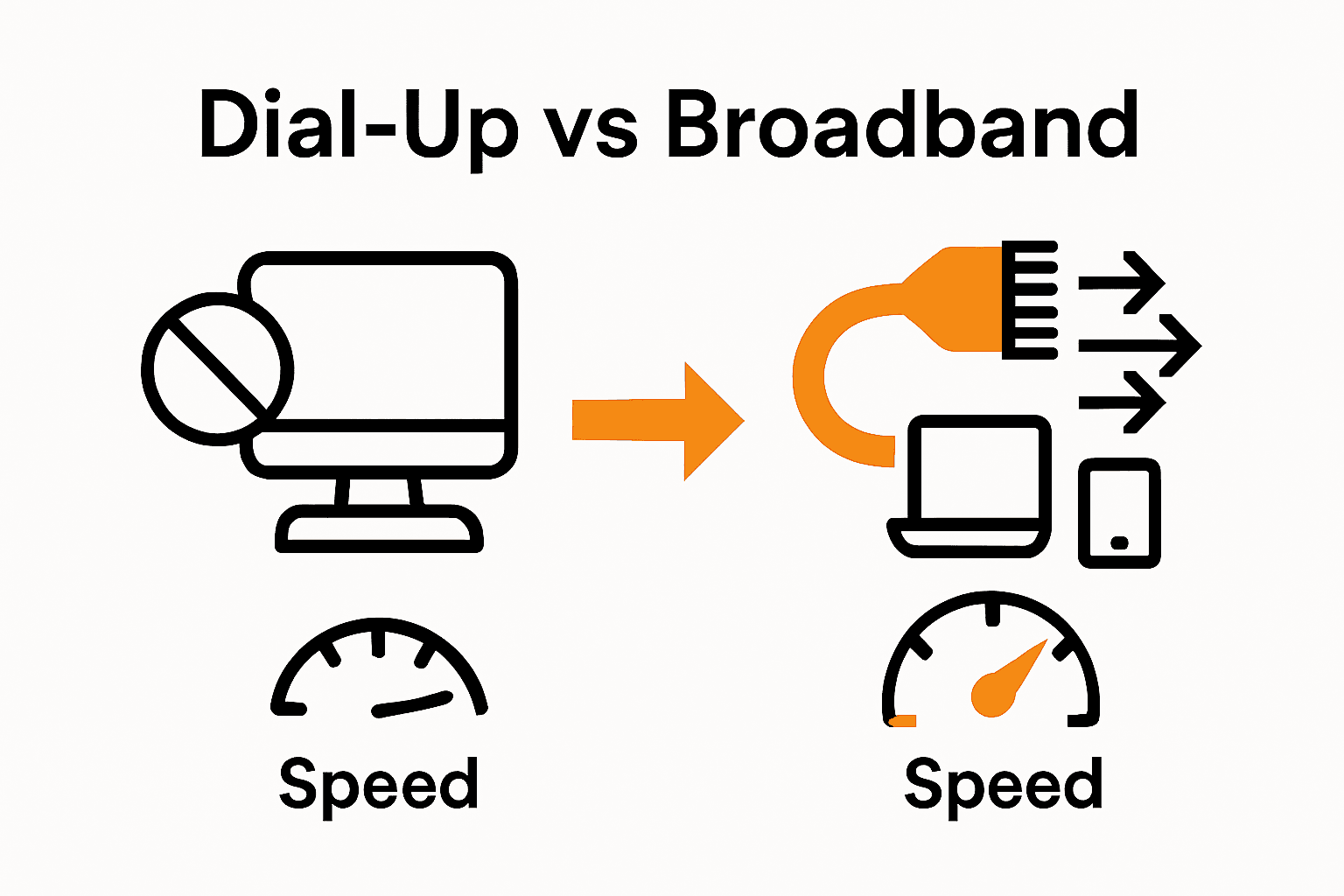
The evolution of internet connectivity has dramatically transformed how we access and experience digital services. FCC research reveals that broadband has fundamentally outperformed traditional alternatives like dial-up internet, offering higher speeds and continuous connectivity that enables simultaneous internet and phone service usage.
Comparative Performance Breakdown:
- Dial-Up Internet
- Slow connection speeds
- Blocked phone line during internet use
- Limited data transmission
- Inability to support modern applications
- Broadband Internet
- High-speed data transmission
- Simultaneous service usage
- Support for streaming and online gaming
- Continuous connectivity
HealthIT emphasizes that broadband’s superior data transmission rates have revolutionized critical sectors like healthcare, enabling advanced services such as telehealth and electronic health record access. These technological capabilities are simply impossible with older internet connection methods.
Explore the best rural internet providers to understand how modern broadband technologies are bridging connectivity gaps and providing advanced internet solutions across diverse geographical landscapes.
Unlock Reliable High-Speed Broadband with SabertoothPro
Struggling with spotty or slow internet connections that hold you back from streaming, working remotely, or connecting your smart devices? Many users face challenges such as limited rural coverage, fluctuating speeds, and reliability concerns. This guide explained key broadband concepts and technologies, now it’s time to experience the benefits of truly seamless high-speed internet. With SabertoothPro’s advanced wireless solutions, including our powerful Titan WiFi devices and effective WiFi Extenders, you can boost your connectivity and stay reliably online wherever you are.

Don’t settle for slow connections or limited coverage. Visit SabertoothPro.com today and discover tailored internet plans and IoT solutions designed for both home users and businesses seeking secure and fast broadband alternatives. Unlock better speeds, stable connections, and modern technology now to experience the true power of broadband in your daily life.
Frequently Asked Questions
What is broadband and how does it differ from dial-up internet?
Broadband is a high-speed internet connection that provides consistently fast data transmission and allows for continuous connectivity without blocking phone lines. Unlike dial-up internet, which is slow and occupies the phone line, broadband supports simultaneous services and modern applications.
What are the different types of broadband connections available?
Broadband connections can be categorized into three main types: wireline connections (DSL, cable modem, fiber-optic), fixed wireless connections (mobile and point-to-point), and satellite connections (geosynchronous and low Earth orbit satellites).
How does broadband internet work for users?
Broadband internet operates through a complex network infrastructure involving the middle mile and last mile. The middle mile connects core network infrastructure to local networks, while the last mile delivers the internet service directly to homes, businesses, and devices via various technologies like fiber, cable, and wireless.
What are the advantages and limitations of using broadband?
The advantages of broadband include ultra-fast data transmission, continuous connectivity, and support for high-bandwidth applications such as streaming and telehealth. However, limitations include inconsistent coverage in rural areas, speed variations across connection types, and potential infrastructure reliability issues.