


Why Upgrade to 5G: Speed, Security, and Connectivity

Most American consumers are surprised to learn that 5G networks can deliver speeds up to 65 times faster than traditional 4G. As wireless technology takes another major leap, understanding the jump from 4G to 5G matters for anyone navigating today’s always-connected world. Whether you are curious about mobile speeds, worried about security, or trying to find the best option for your business, this article untangles the facts and highlights how 5G could reshape everyday digital experiences.
Table of Contents
- What 5G Is and How It Differs From 4G
- Key Benefits of 5G for Consumers and Businesses
- Real-World Use Cases: Rural, Mobile, and Enterprise
- Security, Privacy, and Network Reliability Factors
- Comparing Costs and Alternatives to 5G Adoption
Key Takeaways
| Point | Details |
|---|---|
| 5G Represents a Major Leap | 5G technology significantly surpasses 4G in speed, reliability, and connectivity, achieving speeds up to 20 Gbps and reducing latency to 1 millisecond. |
| Enhanced Connectivity for Consumers and Businesses | 5G enables improved digital experiences for consumers and empowers businesses with faster data transfer, real-time analytics, and advanced capabilities for IoT networks. |
| Diverse Real-World Applications | 5G is transforming sectors such as education, telemedicine, and smart infrastructure, particularly improving access and connectivity in rural areas. |
| Security Challenges and Considerations | The complexity of 5G networks necessitates advanced security protocols and strategies to address vulnerabilities associated with increased connectivity and device integration. |
What 5G Is and How It Differs From 4G
5G represents the fifth generation of mobile network technology, delivering a transformative leap beyond previous wireless communication standards. Unlike its predecessor 4G, this advanced network infrastructure promises unprecedented speed, reliability, and connectivity for both individual consumers and enterprise users.
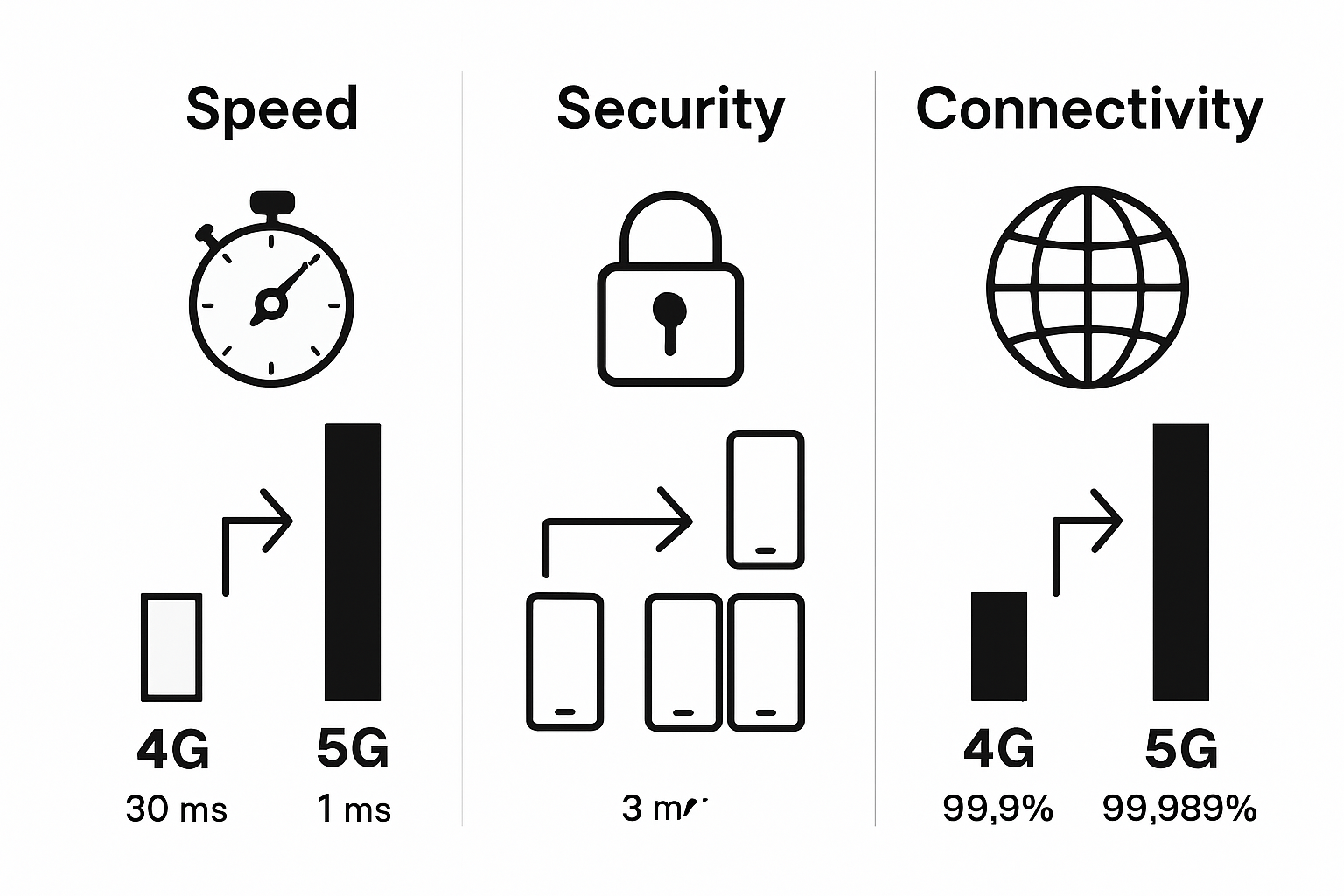
5G fundamentally differs from 4G through several critical technological advancements. While 4G networks traditionally supported download speeds up to 300 Mbps with latency around 55 milliseconds, 5G dramatically improves performance metrics. The new network can achieve speeds up to 20 Gbps and reduce latency to an astonishing 1 millisecond, enabling near-instantaneous data transmission and communication.
The infrastructure supporting 5G is markedly different from previous generations. 5G introduces higher-frequency radio waves and smaller, more densely distributed wireless access points, creating a more robust and flexible network topology. This technological shift allows for several key improvements:
- Dramatically faster data transfer rates
- Significantly reduced network latency
- Enhanced capacity to support multiple connected devices simultaneously
- More reliable connections across diverse environments
These advancements make 5G far more than just an incremental upgrade. It represents a fundamental reimagining of wireless communication infrastructure, capable of supporting emerging technologies like autonomous vehicles, remote surgical procedures, advanced IoT systems, and complex industrial automation networks. The network’s ability to handle massive amounts of data with unprecedented speed and reliability positions 5G as a critical technological foundation for future digital innovations.
Key Benefits of 5G for Consumers and Businesses
5G technology represents more than just an incremental network upgrade—it’s a transformative platform that delivers substantial benefits across consumer and enterprise landscapes. Mobile internet solutions for enterprises are particularly poised to leverage these technological advancements, creating unprecedented opportunities for connectivity and productivity.

For consumers, 5G introduces revolutionary improvements in everyday digital experiences. The network enables near-instantaneous streaming, seamless video communication, and immersive augmented reality interactions. Gamers can expect reduced latency, remote workers can access cloud resources with lightning speed, and travelers can maintain consistent high-quality connections across diverse environments.
Businesses stand to gain even more significant advantages from 5G infrastructure. Enterprise connectivity transforms with capabilities that support complex technological ecosystems:
- Accelerated data transfer for real-time analytics
- Enhanced support for Internet of Things (IoT) device networks
- Improved remote collaboration tools
- Advanced security protocols for distributed workforces
- Reliable connections for mission-critical communication systems
The technological leap represented by 5G extends beyond speed—it’s fundamentally redesigning how organizations communicate, operate, and innovate. From manufacturing automation to telemedicine, 5G hotspot technologies are creating new paradigms of efficiency and responsiveness that were previously unimaginable. This network represents not just an upgrade, but a comprehensive reimagining of digital infrastructure that will drive technological progress across multiple industries.
Real-World Use Cases: Rural, Mobile, and Enterprise
5G technology is revolutionizing connectivity across diverse environments, with particularly transformative implications for rural communities, mobile users, and enterprise organizations. Rural internet solutions are experiencing unprecedented advancements that promise to bridge long-standing digital connectivity gaps.
5G’s potential for educational transformation is remarkable. Low latency and expanded bandwidth can dramatically improve remote learning capabilities, especially in rural areas where traditional internet infrastructure has been limited. Students can now access virtual classrooms, interactive learning platforms, and high-quality educational content with unprecedented reliability and speed.
In the enterprise sector, 5G technology opens extraordinary possibilities for innovation and connectivity:
- Seamless Internet of Things (IoT) device integration
- Enhanced autonomous vehicle technologies
- Advanced telemedicine and remote medical monitoring
- Smart city infrastructure development
- Real-time data analytics and processing
Mobile internet technologies in 2025 are poised to unlock entirely new paradigms of connectivity. Travelers, remote workers, and mobile professionals will experience unprecedented network reliability, enabling sophisticated communication tools, immersive virtual collaboration platforms, and consistent high-speed internet access across previously challenging environments. The technological leap represented by 5G isn’t just an upgrade—it’s a fundamental reimagining of how humans and machines interact with digital infrastructure.
Security, Privacy, and Network Reliability Factors
5G networks represent a complex technological ecosystem that demands rigorous security and privacy considerations. Advanced network protections are critical, as the expanded technological infrastructure introduces new potential vulnerabilities alongside unprecedented connectivity capabilities.
5G’s security landscape is fundamentally different from previous generations. While the network introduces lower latency and increased device connections, it also creates a more complex attack surface that requires sophisticated encryption and authentication mechanisms. Cybersecurity experts must develop multilayered protection strategies that can adapt to the dynamic nature of 5G’s distributed network architecture.
Key security considerations for 5G include:
- Advanced encryption protocols
- Dynamic authentication mechanisms
- Real-time threat detection systems
- Secure edge computing frameworks
- Comprehensive device identity verification
Network performance variability remains a critical challenge, particularly in urban and rural deployment scenarios. While 5G promises unprecedented reliability, inconsistent infrastructure implementation can compromise network performance. Users and enterprises must carefully evaluate local network capabilities, understanding that technological potential does not always translate directly into consistent real-world experiences. The future of 5G security demands continuous innovation, proactive threat monitoring, and adaptive technological frameworks that can protect increasingly complex digital ecosystems.
Comparing Costs and Alternatives to 5G Adoption
5G technology represents a significant investment for individuals and organizations considering network infrastructure upgrades. Wireless internet options vary widely in cost, performance, and implementation complexity, requiring careful strategic evaluation.
5G promises faster speeds and lower latency, but its implementation involves substantial investment in new infrastructure and technology. Businesses and consumers must weigh several critical factors when considering adoption:
Key considerations for 5G alternatives include:
- Upgrade costs for existing network infrastructure
- Regional technological accessibility
- Performance requirements for specific use cases
- Long-term scalability potential
- Total cost of ownership
Comparative device technologies reveal that alternatives like enhanced 4G networks, advanced satellite internet, and emerging wireless technologies can provide cost-effective solutions. Some regions might find incremental upgrades more practical than full 5G deployment, especially where infrastructure investments are prohibitively expensive. Strategic decision-makers must analyze their specific connectivity needs, budget constraints, and long-term technological roadmaps to determine the most appropriate networking approach.
Upgrade to 5G for Faster, Safer, and More Reliable Connections
If you are ready to overcome slow speeds and unreliable networks, upgrading to 5G is the solution you need. This article highlights the crucial benefits of 5G technology such as lightning-fast data transfer, enhanced security features, and seamless connectivity for both consumers and businesses. Whether you face challenges with rural internet access or demand low latency for your smart devices, 5G offers a transformative experience that drastically improves your digital world.
At SabertoothPro, we provide tailored 5G hotspot and router solutions designed to meet your specific needs. Explore our Titan WiFi collection for powerful devices to boost your speed and coverage. Enhance your network even further with reliable options from our WiFi extenders that bring connectivity to every corner.

Don’t let outdated infrastructure hold you back. Visit SabertoothPro.com today to find your ideal 5G solution and experience cutting-edge connectivity that supports your lifestyle and business ambitions. Act now to secure the future of your internet with trusted technology built for speed, security, and reliable performance.
Frequently Asked Questions
What are the key benefits of upgrading to 5G?
Upgrading to 5G offers dramatic improvements in speed, reduced latency, and the ability to connect multiple devices simultaneously. It enhances everyday digital experiences such as streaming, gaming, and remote work, as well as enabling advanced applications in businesses.
How does 5G security compare to previous generations?
5G introduces a more complex security landscape that necessitates advanced encryption and authentication mechanisms. It requires proactive threat monitoring and multilayered protection strategies to safeguard against new vulnerabilities that arise from its expanded network capabilities.
What are some real-world use cases for 5G technology?
5G technology can transform sectors like education, healthcare, and manufacturing. Examples include improved remote learning capabilities, advanced telemedicine, seamless integration of IoT devices, and enhanced autonomous vehicle technologies.
What factors should I consider when deciding between 5G and alternatives like 4G?
When deciding between 5G and alternatives like 4G, consider costs for infrastructure upgrades, regional technological accessibility, specific performance requirements, long-term scalability potential, and overall cost of ownership. These factors will help determine the most suitable connectivity option.