


What Is VPN for Rural Users: Security and Access

Most American households in rural regions face unreliable connections, with nearly 30 percent lacking access to stable broadband. Staying protected online in these areas is more important than ever, especially as digital risks grow. This guide explains how VPNs can safeguard privacy, expand access, and meet the unique needs of rural American users who want better security and smoother internet experiences.
Table of Contents
- Defining VPNs And Their Role In Rural Areas
- How VPNs Enhance Security And Privacy Remotely
- Types Of VPN Services Available For Rural Use
- Key Benefits For Streaming, Work, And IoT Devices
- Risks, Limitations, And Common Challenges For Rural Users
- Comparing VPNs And Other Rural Connectivity Tools
Key Takeaways
| Point | Details |
|---|---|
| VPNs Enhance Security | VPNs create a secure, encrypted connection that protects user data from unauthorized access, especially in rural areas with limited internet security. |
| Improved Internet Access | Users in rural locations can bypass geographical content restrictions and enjoy better online privacy with a VPN. |
| Types of VPNs for Rural Use | Remote access VPNs are particularly beneficial for rural users, enabling secure connections to resources over public networks. |
| Challenges and Solutions | Rural users may face slow speeds and unreliable connectivity, making it critical to choose VPN services that optimize performance and security. |
Defining VPNs and Their Role in Rural Areas
A Virtual Private Network (VPN) is a sophisticated digital solution that creates a secure, encrypted connection over public internet infrastructure, enabling users to transmit data privately and safely. In rural areas, where internet connectivity can be limited and potentially less secure, VPNs play a critical role in providing enhanced digital protection and expanded network access.
VPNs fundamentally work by routing network connections through remote servers, which masks the user’s original IP address and encrypts data transmission. For rural users, this means significantly improved online privacy and the ability to access geographically restricted content. Unlike traditional network connections, VPNs extend private network capabilities across public networks, allowing remote users to securely connect as if they were directly linked to a private, protected system.
In rural contexts, VPN technology becomes especially valuable due to several key advantages. These include protecting sensitive information when using potentially unsecured public Wi-Fi networks, bypassing geographical content restrictions, and maintaining anonymity while browsing. Virtual private networks enable users to send and receive data as if their devices were directly connected to a private network, which is particularly beneficial in areas with limited direct network infrastructure.
Pro Tip - Rural VPN Selection: When choosing a VPN for rural internet, prioritize providers offering stable connections, multiple server locations, and robust encryption protocols to ensure consistent, secure online access.
Key VPN Benefits for Rural Users:
- Enhanced online privacy and security
- Access to geographically restricted content
- Protection on public and shared networks
- Anonymized browsing experience
- Bypassing local internet restrictions
How VPNs Enhance Security and Privacy Remotely
Network security becomes critically important for rural users who often rely on potentially vulnerable internet connections. VPNs encrypt all internet traffic, ensuring the protection of sensitive information by creating a secure digital tunnel that prevents unauthorized monitoring and potential data interception.
The primary mechanism of VPN security involves creating an encrypted connection that masks a user’s original IP address and scrambles data transmission. This technological approach means that even if someone intercepts the data stream, they cannot easily decode or understand the information being transferred. Rural internet users particularly benefit from this protection, especially when accessing public Wi-Fi networks or using potentially unsecured internet connections in remote locations.
Privacy enhancement goes beyond simple encryption. VPN technologies reduce the risk of data interception by implementing sophisticated encryption protocols, which create multiple layers of digital protection. These protocols ensure that personal information, browsing history, and online activities remain confidential, effectively shielding users from potential cyber threats, tracking attempts, and unauthorized surveillance.
Key Privacy Protection Features:
- Complete data encryption
- IP address masking
- Prevention of geographic tracking
- Secure browsing on public networks
- Anonymous online interactions
Pro Tip - VPN Privacy Verification: Always select VPN providers that offer transparent privacy policies and undergo regular independent security audits to ensure comprehensive protection.
Secure your mobile hotspot with additional privacy techniques to complement your VPN’s built-in security measures and create a robust digital defense strategy.
Types of VPN Services Available for Rural Use
Virtual Private Network (VPN) services offer diverse options for rural users seeking secure and reliable internet connectivity. Commercial VPN services utilize advanced technologies like OpenVPN and WireGuard to provide encrypted internet access, specifically designed to address the unique challenges faced by users in remote and underserved areas.
The primary categories of VPN services relevant to rural users include remote access VPNs and site-to-site VPNs. Remote access VPNs are particularly beneficial for individual users in rural settings, enabling secure connections over public internet infrastructures, allowing them to access resources and maintain privacy regardless of their geographic location. These VPNs create a secure tunnel that encrypts data transmission, effectively protecting users from potential cyber threats and ensuring confidential internet browsing.
Rural users have several specific VPN service options to consider, each with unique advantages. Commercial VPN providers typically offer different connection protocols, server locations, and pricing structures. Some specialize in rural connectivity, providing optimized services with wider coverage, lower latency, and robust security features tailored to users in remote regions. The selection process involves evaluating factors like connection speed, server network density, privacy policies, and compatibility with local internet infrastructure.
Key VPN Service Types for Rural Users:
- Remote access VPNs
- Site-to-site VPNs
- Commercial consumer VPNs
- Enterprise-grade VPN solutions
- Mobile-optimized VPN services
Pro Tip - VPN Selection: Prioritize VPN providers offering unlimited bandwidth, multiple server locations, and strong encryption protocols to ensure reliable and secure rural internet access.
Here’s a comparison of common VPN types and their suitability for rural needs:
| VPN Type | Typical Use Case | Pros for Rural Users | Potential Drawbacks |
|---|---|---|---|
| Remote Access VPN | Individuals remote working | Easy setup, strong privacy | May reduce speed on slow lines |
| Site-to-Site VPN | Business network connections | Secures branch-to-main office | Complex setup, less flexible |
| Mobile-Optimized VPN | Smartphones/tablets | Good mobility, low latency | Limited to mobile devices |
| Commercial Consumer VPN | Home user privacy | Simple, flexible, affordable | Varies in privacy and speed |
Explore the best rural internet providers to complement your VPN strategy and maximize your connectivity options.
Key Benefits for Streaming, Work, and IoT Devices
Virtual Private Networks (VPNs) provide transformative advantages for rural users across multiple digital domains, enabling enhanced connectivity and security for streaming, professional work, and Internet of Things (IoT) device management. VPNs offer secure connections for remote work by encrypting data transmissions, ensuring that sensitive information remains protected while enabling seamless digital operations in remote and challenging environments.
For streaming enthusiasts in rural areas, VPNs unlock unprecedented access and performance. By routing internet traffic through specialized servers, VPNs can bypass geographical content restrictions, improve streaming quality, and protect users from potential bandwidth throttling. IoT devices benefit similarly, with VPNs providing an additional layer of security that prevents unauthorized access and ensures encrypted communication between smart home devices, agricultural sensors, and other network-connected technologies.
Remote workers gain substantial advantages through VPN technologies, particularly in rural settings where internet infrastructure might be less reliable. These networks create secure, stable connections that enable professionals to access corporate resources, participate in video conferences, and transfer sensitive documents without compromising data integrity. The encryption protocols effectively shield work-related communications from potential cyber threats, making VPNs an essential tool for distributed teams and independent professionals operating in geographically isolated regions.
Key VPN Benefits Across Domains:
- Enhanced streaming content access
- Secure remote work capabilities
- Protected IoT device communications
- Bypassing geographic content restrictions
- Preventing bandwidth throttling
- Maintaining professional data privacy
Pro Tip - Multi-Domain VPN Selection: Choose VPN services offering comprehensive protection with multiple server locations, robust encryption, and consistent performance across streaming, work, and IoT applications.
Explore mobile internet benefits for remote professionals to complement your VPN strategy and maximize digital connectivity.
Risks, Limitations, and Common Challenges for Rural Users
Virtual Private Networks (VPNs) present unique challenges for rural users, requiring careful consideration of potential vulnerabilities and performance limitations. Some VPN services may have inherent vulnerabilities that could potentially compromise user data, making it crucial for rural internet users to approach VPN selection with a critical and informed perspective.

Rural users face distinct technical challenges when implementing VPNs, primarily stemming from limited internet infrastructure and inconsistent connectivity. Bandwidth constraints can significantly impact VPN performance, often resulting in slower connection speeds, increased latency, and intermittent service disruptions. These limitations are particularly pronounced in remote areas where internet service providers offer minimal broadband options, forcing users to navigate complex trade offs between security, speed, and accessibility.
The most significant risks for rural VPN users include potential data leaks, inadequate encryption protocols, and the possibility of unreliable service providers. Some VPN services might log user data, sell information to third parties, or fail to provide comprehensive security measures. Additionally, rural users may encounter challenges with server availability, with fewer geographic server options potentially limiting their ability to bypass regional restrictions or maintain consistent connection quality.
Common VPN Challenges in Rural Areas:
- Limited bandwidth and slow internet speeds
- Inconsistent network connectivity
- Reduced server location options
- Potential data privacy vulnerabilities
- Higher subscription costs for reliable services
- Complex technical setup requirements
Pro Tip - Risk Mitigation: Thoroughly research VPN providers, read independent security audits, and select services with transparent privacy policies and proven track records of protecting user data.
Explore rural broadband options to complement your VPN strategy and enhance your overall internet infrastructure.
The table below summarizes challenges rural VPN users might face and effective strategies to overcome them:
| Challenge | Why It Matters | Practical Solutions |
|---|---|---|
| Slow Internet Speeds | Causes streaming and work delays | Choose lightweight protocols, local servers |
| Unreliable Connectivity | Session drops, loss of access | Use VPNs with automatic reconnect |
| Fewer Server Locations | Harder to bypass regional blocks | Select providers with global servers |
| Higher Subscription Costs | Increases overall internet expenses | Look for bundled deals or discounts |
| Technical Setup Difficulties | Limits adoption by non-IT users | Opt for VPNs with guided setup tools |
Comparing VPNs and Other Rural Connectivity Tools
Rural connectivity presents complex challenges that require understanding various technological solutions beyond traditional Virtual Private Networks. Multiple methods for broadband internet access exist in rural areas, including mobile internet, satellite internet, and terrestrial wireless internet, each offering unique advantages and limitations compared to standard VPN technologies.
Virtual Private Networks differ significantly from alternative rural connectivity tools. While mobile hotspots provide direct internet access, VPNs focus on creating secure, encrypted network connections. Satellite internet offers broader geographic coverage but typically experiences higher latency, whereas VPNs prioritize data privacy and secure transmission. Emerging technologies like delay-tolerant networks (DTNs) complement VPN strategies by providing intermittent connectivity solutions, particularly in regions with inconsistent internet infrastructure.
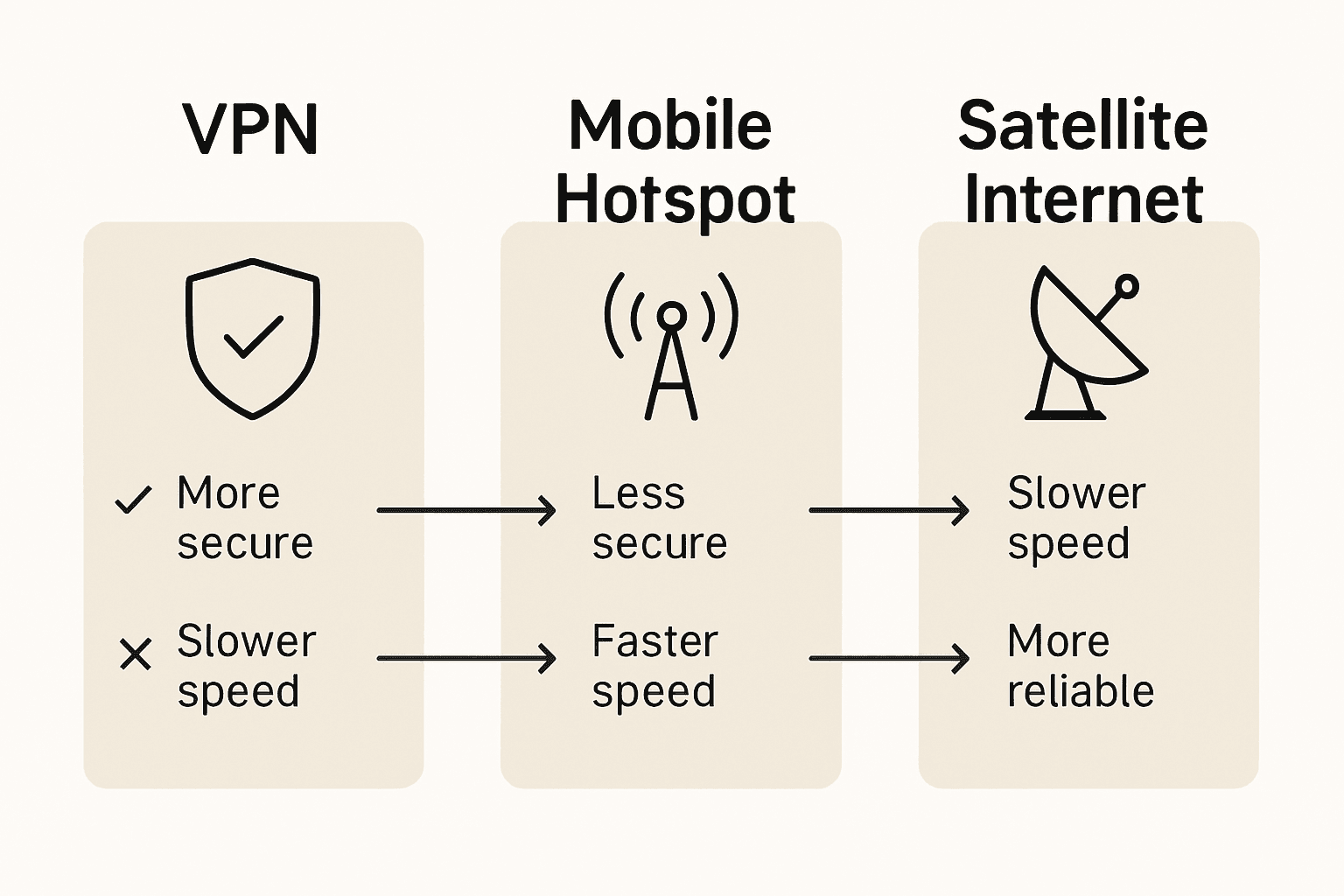
The comparative landscape of rural connectivity tools reveals distinct characteristics across performance, security, and accessibility metrics. Mobile internet solutions offer flexibility but may lack consistent coverage, satellite services provide wide-area connectivity with potential signal interruptions, and VPNs excel in creating secure, encrypted communication channels. Each technology addresses different user needs, with VPNs standing out for their robust security protocols and ability to protect sensitive digital communications in remote environments.
Comparative Connectivity Tool Characteristics:
- Mobile Internet
- Pros: Flexible, portable
- Cons: Inconsistent coverage, potential data limitations
- Satellite Internet
- Pros: Wide geographic coverage
- Cons: High latency, weather-dependent performance
- VPN Services
- Pros: Enhanced security, encrypted communications
- Cons: Potential speed reduction, subscription costs
- Delay-Tolerant Networks
- Pros: Intermittent connectivity options
- Cons: Limited real-time access
Pro Tip - Connectivity Selection: Evaluate your specific rural internet needs by assessing bandwidth requirements, security priorities, and geographic constraints before selecting a connectivity solution.
Explore strategies for finding the best rural internet options to complement your connectivity research and make an informed decision.
Secure and Reliable Rural Internet Starts Here
Living in a rural area means facing unique challenges like limited bandwidth, inconsistent connectivity, and security risks when using vulnerable networks. This article uncovered how VPNs transform rural internet experiences by protecting your data, enabling secure remote work, and unlocking streaming content without borders. But to truly maximize those benefits, you need reliable, high-speed internet and devices purpose-built for tough rural environments.
At SabertoothPro, we specialize in delivering exactly what rural users require. From our selection of powerful Titan WiFi hotspots and advanced Titan WiFi routers that ensure stable and fast connections to enhancing coverage with our easy-to-install WiFi extenders, we provide all the tools needed to boost your VPN experience. Combining these with top-tier internet plans from SabertoothPro.com guarantees that your VPN runs smoothly without frustrating slowdowns or interruptions.

Ready to secure your digital life and enjoy seamless connectivity no matter where you live? Discover your ideal rural internet solution today. Visit SabertoothPro.com to explore plans and devices designed specifically with rural challenges in mind. Act now to unlock the power of safe, fast, and dependable internet that perfectly complements your VPN’s capabilities.
Frequently Asked Questions
What is a VPN and how does it benefit rural users?
A VPN, or Virtual Private Network, is a technology that creates a secure, encrypted connection over the internet. For rural users, VPNs enhance online privacy, protect sensitive information, and provide access to geographically restricted content.
How do VPNs enhance security for rural internet users?
VPNs encrypt all internet traffic, creating a secure digital tunnel that prevents unauthorized monitoring and data interception. This is particularly vital for rural users who may rely on unsecured public Wi-Fi.
What types of VPN services are suitable for users in rural areas?
Rural users can benefit from remote access VPNs, site-to-site VPNs, and commercial consumer VPNs that are designed for their unique connectivity challenges. These services ensure secure connections and protect user data.
What challenges do rural users face when using VPNs?
Challenges include limited bandwidth resulting in slower speeds, inconsistent network connectivity, and fewer server locations, which can affect the overall performance and usability of VPN services.