


What Is Rural Broadband? Complete U.S. Guide
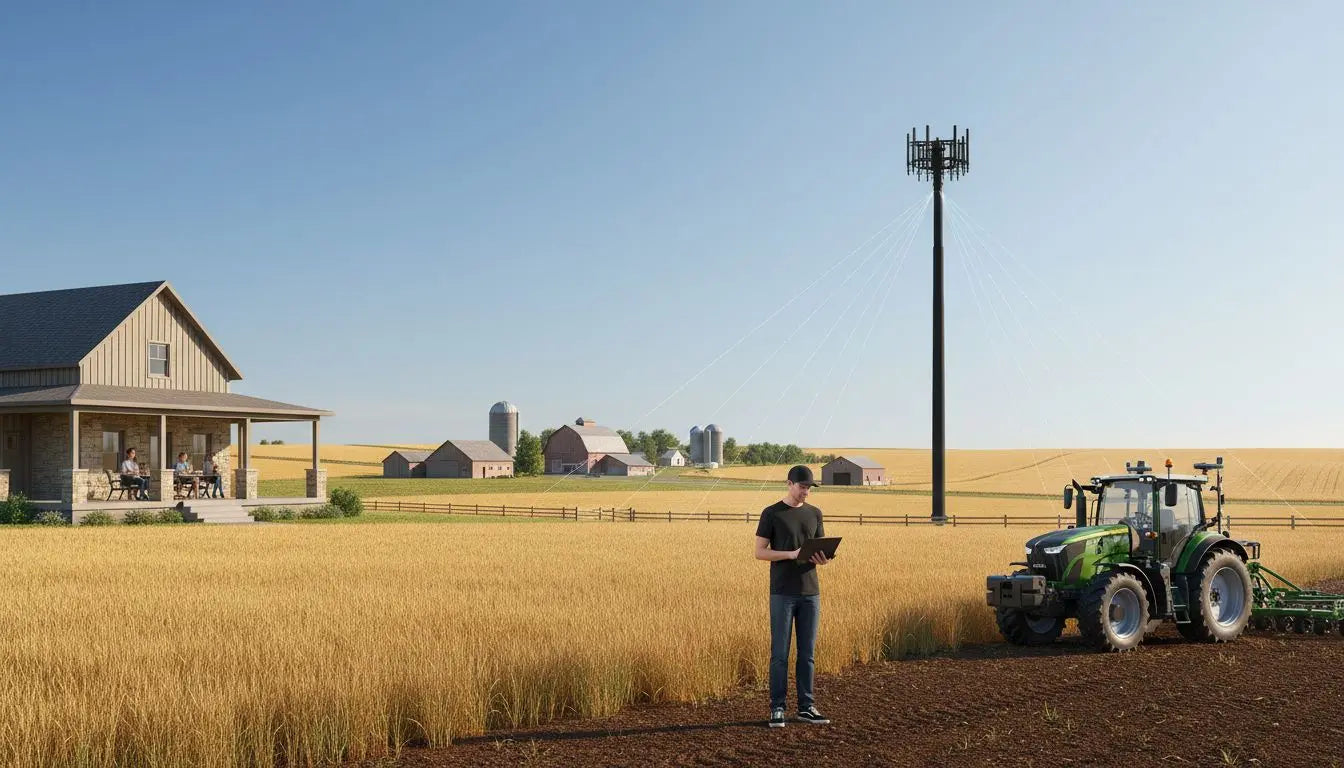
Nearly one in four rural Americans still lacks access to reliable high-speed internet, a reality that can limit everything from education to emergency services. In today’s world, digital connectivity shapes how communities work, learn, and grow. Understanding rural broadband is the first step toward closing the gap and unlocking new opportunities for millions living far from urban centers.
Table of Contents
- Defining Rural Broadband And Its Importance
- Key Technologies Used For Rural Broadband Access
- Challenges Impacting Rural Internet Coverage
- Government Policies And Funding Initiatives
- Comparing Rural And Urban Broadband Solutions
Key Takeaways
| Point | Details |
|---|---|
| Rural Broadband Necessity | Rural broadband is essential for agricultural practices and economic growth, connecting rural communities to global markets and opportunities. |
| Technological Solutions | Key technologies like DSL, cable, fixed wireless, and satellite address unique rural connectivity challenges, each with specific advantages. |
| Challenges in Coverage | Deployment faces obstacles such as geographical distances, low population densities, and financial constraints, necessitating strategic solutions. |
| Government Initiatives | Federal programs aim to enhance rural connectivity through funding and policy support, recognizing internet access as vital for economic participation. |
Defining Rural Broadband and Its Importance
Rural broadband is high-speed internet connectivity designed specifically for less populated regions where traditional telecommunications infrastructure often falls short. Unlike urban areas with multiple internet service providers, rural communities face significant technological challenges in establishing reliable digital networks.
According to the American Farm Bureau Federation, rural broadband is not just about internet access—it’s a critical infrastructure enabling modern agricultural practices and community development. Farmers and ranchers now rely on these networks to:
- Monitor global commodity markets
- Communicate directly with customers
- Access international market information
- Utilize precision agricultural technologies
The USDA’s Economic Research Service underscores that broadband internet is fundamental to rural economic growth. These networks facilitate new business formations, expand existing enterprises, and create unprecedented opportunities for rural residents. By providing robust connectivity, rural broadband transforms how people work, learn, and engage with the broader world.

Beyond economic implications, rural broadband delivers essential services that were previously difficult to access. Telemedicine consultations, remote education programs, online government services, and digital skill training become possible, effectively bridging longstanding geographical disparities. The technology represents more than infrastructure—it’s a lifeline connecting rural communities to global opportunities.
For those seeking to understand their rural internet options, check out our guide on rural internet providers to explore the most effective connectivity solutions for your specific needs.
Key Technologies Used for Rural Broadband Access
Rural broadband technologies represent a diverse ecosystem of connectivity solutions designed to overcome geographical challenges and deliver high-speed internet to remote communities. Understanding these technologies is crucial for bridging the digital divide and ensuring comprehensive internet access.
The Pew Charitable Trusts highlights several key technologies utilized in rural internet deployment:
- DSL (Digital Subscriber Line): Provided by traditional telecommunications companies
- Cable Internet: Leveraging existing cable infrastructure
- Fixed Wireless: Transmitting signals from ground-based transmission towers
- Satellite Services: Delivering connectivity through orbital communication networks
The Benton Institute for Broadband & Society emphasizes the transformative potential of wireless technologies, particularly in agricultural settings. Fixed wireless and mobile cellular networks now enable precision farming techniques, allowing real-time data collection and sophisticated decision-making directly in agricultural fields.
Each technology offers unique advantages and limitations.
Learn more about comparing different rural connectivity approaches in our guide on fiber versus satellite internet to understand which technology might best suit your specific rural internet needs.
Challenges Impacting Rural Internet Coverage
Rural internet coverage faces a complex web of obstacles that make widespread, reliable connectivity a significant challenge. These barriers extend far beyond simple technological limitations, encompassing economic, geographical, and infrastructural constraints that require comprehensive strategic solutions.
The United Nations outlines several critical challenges in rural broadband deployment:
- Vast geographical distances from existing telecommunications infrastructure
- Limited financial resources for network expansion
- Lower population densities reducing economic feasibility
- Significantly reduced affordability due to lower average rural incomes
The Center for Growth and Opportunity emphasizes that these connectivity challenges have profound economic implications. Without robust internet infrastructure, rural communities struggle to:
- Attract new businesses
- Support local entrepreneurship
- Promote population growth and in-migration
- Enhance agricultural productivity and profitability
The topographical diversity of rural landscapes further complicates internet deployment. Mountainous regions, dense forests, and sprawling agricultural lands create significant signal transmission challenges that require specialized technologies and substantial investment. Traditional urban-centric internet infrastructure models simply cannot be directly transplanted into these unique environments.
Explore our guide on finding the best rural internet solution for your specific needs to understand how innovative technologies are addressing these complex connectivity challenges.
Government Policies and Funding Initiatives
Government intervention has become increasingly critical in addressing the rural broadband connectivity gap. Recognizing internet access as a fundamental infrastructure necessity, federal and state agencies have developed comprehensive strategies to expand digital access across rural America.
The Pew Charitable Trusts highlights several key federal programs driving rural internet expansion:
- FCC (Federal Communications Commission): Developing nationwide connectivity strategies
- Rural Utilities Service (USDA): Providing targeted infrastructure grants
- National Telecommunications and Information Administration: Supporting digital inclusion initiatives
The American Farm Bureau Federation emphasizes the importance of innovative funding mechanisms, advocating for:
- Expanding the Universal Service Fund
- Creating targeted tax incentives
- Implementing strategic grant programs
- Developing supportive regulatory frameworks
These government initiatives recognize that rural broadband is more than just technological infrastructure—it’s an economic lifeline. By providing financial support, creating regulatory frameworks, and incentivizing private sector investment, these programs aim to bridge the digital divide and create opportunities for rural communities to participate fully in the digital economy.
Learn more about selecting the right rural internet solution with our comprehensive guide to understand how government policies are transforming rural connectivity.
Comparing Rural and Urban Broadband Solutions
Broadband connectivity presents distinctly different challenges and opportunities in rural versus urban environments. While both settings require robust internet infrastructure, the approach, implementation, and impact vary significantly across geographical landscapes.
The Pew Research Center highlights the historical disparities in broadband adoption, revealing a persistent digital divide:
- In 2003, only 19% of rural users had broadband
- Urban areas boasted a 36% broadband adoption rate
- Significant technological gaps continue to challenge rural connectivity
The USDA’s Economic Research Service suggests that broadband’s economic impact can be even more transformative in rural settings. While urban areas typically have multiple internet infrastructure options, rural regions often experience more substantial economic benefits from connectivity.
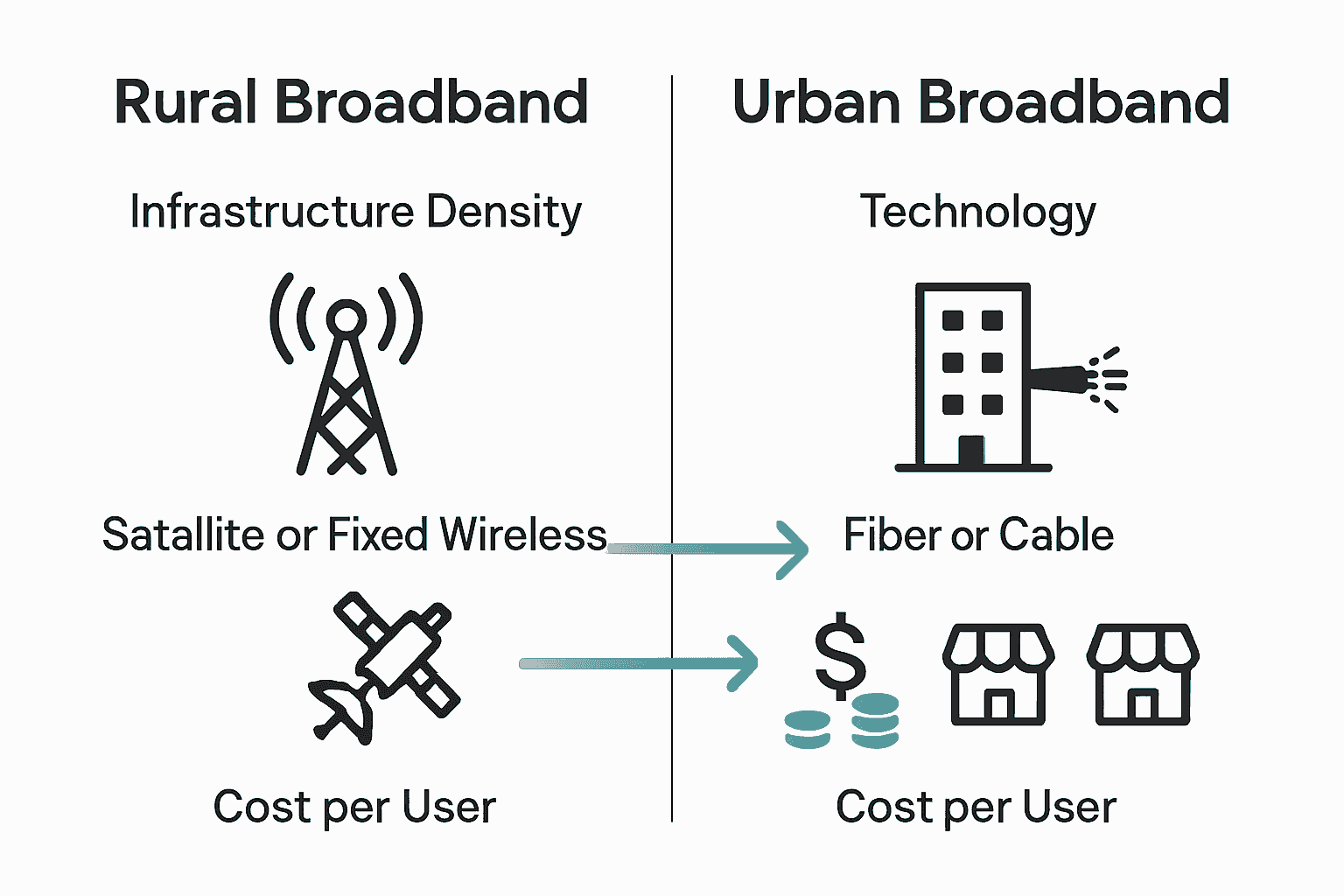
Key differences between rural and urban broadband solutions include:
- Infrastructure Density: Urban areas have multiple providers and dense network infrastructure
- Technology Deployment: Rural regions require specialized wireless and satellite technologies
- Cost per User: Higher infrastructure costs make rural internet typically more expensive
- Signal Transmission: Urban environments have fewer geographical barriers
Explore our guide on choosing the right internet service provider to understand the nuanced considerations for selecting broadband solutions in different geographical contexts.
Unlock Reliable Rural Broadband with SabertoothPro
Access to dependable rural broadband remains a challenge with issues like limited infrastructure and high costs impacting your connection. You deserve high-speed, secure internet that supports your lifestyle or business no matter where you are. SabertoothPro offers innovative solutions including 4G LTE and 5G hotspots and powerful routers designed specifically to overcome rural connectivity hurdles. Our range lets you enjoy smooth streaming, reliable communication, and advanced smart technology integration even in remote locations.

Discover how our Titan WiFi devices provide the cutting-edge wireless technology needed for rural internet access. Enhance your coverage with WiFi extenders that boost your signal across large or challenging outdoor areas. Don’t let geography hold you back. Visit SabertoothPro now to explore tailored options that bring you closer to seamless rural broadband today.
Frequently Asked Questions
What is rural broadband?
Rural broadband refers to high-speed internet connectivity specifically designed for less populated areas where traditional telecommunications infrastructure may be inadequate.
Why is rural broadband important for communities?
Rural broadband is crucial for modern agricultural practices, economic growth, education, telemedicine, and ensuring access to essential services that bridge geographical disparities.
What technologies are used to provide rural broadband access?
Key technologies for rural broadband include DSL, cable internet, fixed wireless, and satellite services, each offering unique advantages for different geographical challenges.
What challenges does rural internet coverage face?
Rural internet coverage faces challenges such as geographical distance from infrastructure, limited financial resources, lower population densities, and topographical diversity, which complicates internet deployment.