


Trends in Business Connectivity 2025: What Logistics Leaders Need to Know

Every logistics manager knows the frustration of unreliable fleet connectivity just as demand spikes across the Mid-Atlantic. Rapid advancements in business connectivity and smart data management are changing the stakes for American logistics companies, promising more resilient networks and adaptive digital ecosystems by 2025. Stay ahead of the curve with strategies and technologies proven to drive efficiency, protect your data, and future-proof fleet operations in a competitive environment.
Table of Contents
- Business Connectivity Redefined For 2025
- Key Technologies Driving Fleet Operations
- AI, IoT, And Telematics In Logistics
- Cybersecurity And Data Governance Challenges
- Sustainability Strategies For Connected Fleets
Key Takeaways
| Point | Details |
|---|---|
| Emerging Technologies | By 2025, logistics connectivity will be driven by AI, edge computing, and zero-trust security frameworks that enhance operational efficiency. |
| Advanced Fleet Management | Technologies like telematics and electric vehicles are essential for optimizing fleet operations and reducing environmental impact. |
| Proactive Cybersecurity | A robust cybersecurity strategy incorporating AI is crucial to protect against evolving risks and maintain regulatory compliance. |
| Sustainability Initiatives | Integrated electric solutions and data analytics are fundamental for logistics companies striving for operational efficiency and carbon reduction. |
Business Connectivity Redefined for 2025
The logistics industry stands on the precipice of a transformative connectivity revolution. By 2025, business networks will transcend traditional communication models, integrating advanced technologies that redefine operational efficiency and strategic collaboration. Connectivity is no longer just about transmission - it’s about intelligent, resilient, and adaptive digital ecosystems.
Businesses are experiencing a fundamental shift driven by emerging technologies and changing operational demands. Innovative connectivity strategies are emerging that prioritize multiple network redundancies, cybersecurity, and real-time data integration. These strategies are designed to support seamless operations across distributed teams and complex supply chains.
Key trends reshaping business connectivity include:
- AI-Powered Network Management: Intelligent systems that proactively diagnose and resolve connectivity issues
- Edge Computing Integration: Decentralized data processing for faster, more responsive network performance
- Zero-Trust Security Frameworks: Enhanced protection against evolving cyber threats
- Hybrid Cloud Connectivity: Flexible infrastructure supporting multiple network environments
For logistics leaders, these technological shifts demand strategic reimagining of connectivity infrastructure. Networks must now support not just communication, but predictive analytics, real-time tracking, and dynamic resource allocation. The goal is creating adaptive digital ecosystems that can rapidly respond to operational challenges.
Pro tip: Invest in modular connectivity solutions that can scale and adapt with your technological evolution, ensuring your infrastructure remains future-proof.
Key Technologies Driving Fleet Operations
The landscape of fleet operations is undergoing a radical transformation, powered by cutting-edge technologies that promise unprecedented efficiency and performance. Advanced fleet efficiency technologies are reshaping how logistics companies manage, monitor, and optimize their vehicle networks, creating smarter, more responsive transportation ecosystems.
Modern fleet technologies encompass several critical domains that are revolutionizing operational capabilities:
- Telematics Systems: Real-time vehicle tracking and performance monitoring
- Electric Vehicle Integration: Sustainable transportation with reduced operational costs
Electrification and digital connectivity are becoming central to fleet management strategies. Emerging vehicle technologies are enabling logistics companies to dramatically reduce emissions while simultaneously improving operational efficiency. These innovations support comprehensive fleet transformation through sophisticated data analytics, predictive maintenance, and intelligent routing algorithms.
Key technological drivers include advanced sensors, artificial intelligence, and comprehensive network connectivity that enable unprecedented levels of operational visibility. Fleet managers can now access granular insights about vehicle performance, driver behavior, fuel consumption, and maintenance requirements in real-time, allowing for proactive decision-making and strategic resource allocation.

Pro tip: Implement a comprehensive technology assessment strategy that evaluates emerging fleet technologies against specific operational requirements and long-term business goals.
Here’s an overview of how key technologies are reshaping fleet management in logistics:
| Technology | Primary Benefit | Example Business Impact |
|---|---|---|
| Telematics Systems | Real-time vehicle insights | Reduced downtime, improved routing |
| Electric Vehicle Adoption | Lower emissions, cost savings | Regulatory compliance, reduced expenses |
| Predictive Maintenance | Early fault detection | Fewer breakdowns, prolonged asset life |
| AI-Driven Analytics | Data-driven decision making | Optimized resource allocation |
AI, IoT, and Telematics in Logistics
The intersection of artificial intelligence, Internet of Things (IoT), and telematics is creating a revolutionary paradigm in logistics operations. Advanced logistics technologies are transforming how companies track, manage, and optimize their transportation and supply chain networks with unprecedented precision and intelligence.
Key technological capabilities driving this transformation include:
- Predictive Analytics: Forecasting demand and potential operational disruptions
- Real-Time Tracking: Comprehensive visibility across entire logistics networks
- Autonomous Decision-Making: AI-powered systems that optimize routing and resource allocation
- Sensor-Based Monitoring: Continuous performance and condition tracking for fleet assets
Artificial Intelligence is particularly transformative, enabling logistics companies to move beyond reactive management toward proactive, anticipatory strategies. Logistics AI innovations are generating actionable insights through advanced machine learning algorithms that can process massive datasets, identifying patterns and opportunities invisible to human analysts.
The convergence of these technologies creates intelligent ecosystems where vehicles, infrastructure, and management systems communicate seamlessly. Telematics now provide granular data about vehicle performance, driver behavior, fuel efficiency, and maintenance requirements, allowing logistics leaders to make data-driven decisions that dramatically improve operational efficiency and reduce overall costs.
Pro tip: Develop a comprehensive technology integration strategy that allows gradual, strategic implementation of AI, IoT, and telematics solutions across your logistics infrastructure.
Cybersecurity and Data Governance Challenges
The logistics industry faces unprecedented cybersecurity challenges as digital connectivity becomes increasingly complex and critical. Cybersecurity regulatory landscape is rapidly evolving, demanding comprehensive strategies to protect sensitive transportation and supply chain data from sophisticated cyber threats.
Key cybersecurity challenges for logistics leaders include:
- Network Vulnerability: Identifying and mitigating potential security breaches
- Data Privacy: Protecting sensitive operational and customer information
- Regulatory Compliance: Meeting stringent international security standards
- Threat Detection: Implementing advanced monitoring and response mechanisms
Artificial Intelligence is emerging as a critical tool in addressing these complex challenges. Cybersecurity workforce strategies now emphasize proactive threat management through machine learning algorithms that can detect and neutralize potential security risks before they escalate.
The increasing interconnectedness of logistics systems requires a holistic approach to data governance. Companies must develop robust frameworks that balance operational efficiency with rigorous security protocols, ensuring data integrity while maintaining the agility needed in a rapidly changing technological landscape.
Pro tip: Implement a comprehensive cybersecurity assessment that includes regular vulnerability audits, employee training, and adaptive security technologies.
Sustainability Strategies for Connected Fleets
The logistics industry is undergoing a transformative shift towards sustainable transportation, driven by technological innovation and regulatory pressures. Corporate fleet decarbonization strategies are becoming increasingly sophisticated, integrating advanced connectivity and electric vehicle technologies to reduce environmental impact.
Key sustainability initiatives for connected fleets include:
- Electric Vehicle Integration: Transitioning to zero-emission vehicle platforms
- Data-Driven Efficiency: Optimizing routes and reducing fuel consumption
- Carbon Tracking: Real-time emissions monitoring and reporting
- Renewable Energy Infrastructure: Supporting charging and alternative fuel ecosystems
Connected Technologies are proving critical in enabling comprehensive sustainability strategies. Decarbonization through fleet technologies now leverage sophisticated data analytics to support policy development and accelerate the transition to more sustainable transportation models.
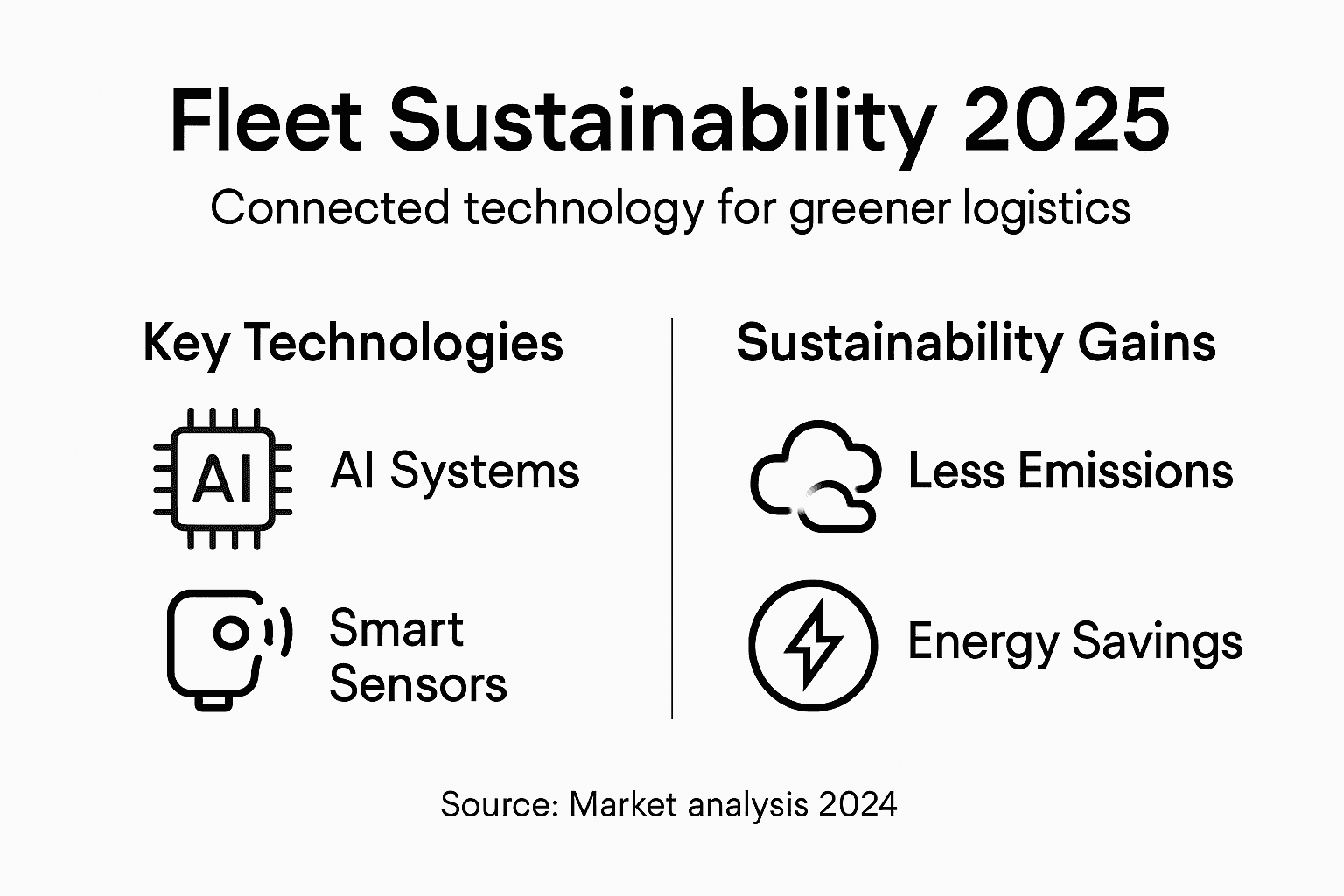
The convergence of connectivity, artificial intelligence, and electric vehicle technologies is creating unprecedented opportunities for logistics companies to reduce their carbon footprint. By implementing intelligent fleet management systems that prioritize sustainability, organizations can simultaneously improve operational efficiency and contribute to broader environmental goals.
Pro tip: Develop a comprehensive electrification roadmap that integrates connected technologies, allowing for gradual and strategic fleet transformation.
This table summarizes sustainability strategies and their operational effects on connected fleets:
| Sustainability Strategy | Technology Leveraged | Operational Outcome |
|---|---|---|
| Electric Vehicle Integration | Battery & charging tech | Zero-emission fleet operations |
| Data-Driven Efficiency | Advanced analytics | Lower fuel use, cost reduction |
| Carbon Tracking | IoT sensors, software | Transparent emissions reporting |
| Renewable Energy Infrastructure | Solar, wind, smart grids | Sustainable charging solutions |
Elevate Your Logistics Connectivity with SabertoothPro Solutions
The future of logistics demands networks that are intelligent adaptable and secure. If you are facing challenges like integrating real-time data AI-powered management and zero-trust security frameworks SabertoothPro.com offers tailored solutions that meet these exact needs. Our Titan WiFi collection delivers high-speed reliable internet optimized for mobile and distributed operations ensuring your fleet and teams stay connected without interruption. Combine that with our advanced WiFi extenders for seamless coverage and you have a scalable infrastructure ready for the demands of 2025 and beyond.

Take control of your logistics network today with SabertoothPro’s end-to-end IT and IoT stack designed for trucking and fleet operations. Visit SabertoothPro.com now to explore powerful connectivity solutions that transform challenges into competitive advantages. Secure your business future and stay ahead of connectivity trends with proven technology built for your success.
Frequently Asked Questions
What are the key trends in business connectivity for 2025?
Key trends for 2025 include AI-powered network management, edge computing integration, zero-trust security frameworks, and hybrid cloud connectivity. These trends focus on enhancing operational efficiency and adaptability in logistics.
How can AI improve network management in logistics?
AI can improve network management by proactively diagnosing connectivity issues, optimizing resource allocation, and enhancing predictive analytics, leading to more efficient logistics operations.
What role does cybersecurity play in the future of logistics connectivity?
Cybersecurity is crucial as it protects sensitive data from evolving cyber threats. A zero-trust security framework and robust threat detection mechanisms must be implemented to ensure data privacy and regulatory compliance in digital logistics systems.
How does electrification affect fleet operations in logistics?
Electrification significantly reduces emissions and operational costs for fleet operations. Transitioning to electric vehicles, coupled with advanced technologies, can optimize routes and enhance overall efficiency, contributing to sustainable logistics practices.