


Importance of Reliable Internet for E-Commerce Success

Seventy-five percent of American e-commerce businesses report lost sales due to unreliable internet service. In the Mid-Atlantic region, IT leaders are under pressure to support growing online operations and distributed teams. Reliability in internet connectivity is more than a technical concern—it safeguards customer experience and keeps transactions moving. This guide breaks down what reliable internet truly means and shows how the right solution can drive stronger results for your American online business.
Table of Contents
- Reliable Internet Defined and Key Concepts
- Types of Connectivity Solutions for Business
- How Reliable Internet Powers E-Commerce Operations
- Impact on Security, Compliance, and Uptime
- Cost, Downtime Risks, and Optimizing Choices
Key Takeaways
| Point | Details |
|---|---|
| Importance of Reliable Internet | Reliable internet is critical for e-commerce, providing seamless connectivity and enhancing customer experience. Regular performance audits help identify weaknesses to prevent disruptions. |
| Diverse Connectivity Solutions | Various connectivity options, like Fiber-Optic Broadband and 5G, cater to different operational needs and can significantly benefit e-commerce businesses. Businesses should assess which solutions align best with their requirements. |
| Operational Impact of Internet Issues | Internet reliability directly affects transaction processing and customer support, with potential revenue loss tied to connectivity failures. Continuous monitoring is essential for maintaining operational integrity. |
| Cost Management and Strategy | Unreliable internet can lead to significant financial losses and decreased efficiency. A strategic approach to internet connectivity, including regular cost-benefit analyses, is crucial for optimizing performance and minimizing downtime risks. |
Reliable Internet Defined and Key Concepts
Reliable internet represents more than just consistent connectivity - it encompasses a sophisticated network architecture designed to ensure seamless digital operations for e-commerce businesses. The Internet Society defines reliable internet through critical properties that guarantee uninterrupted digital performance: open infrastructure, interoperable protocols, and decentralized management systems.
At its core, reliable internet involves a complex global network of interconnected systems using standardized communication protocols. This network relies on multiple infrastructure components - including fiber-optic cables, advanced routers, and diverse connection media like ADSL, mobile, and satellite technologies. The robust architecture ensures businesses can maintain connectivity even when individual network components experience disruptions.
Key characteristics of reliable internet for e-commerce include:
- Consistent bandwidth performance
- Minimal latency
- Redundant network pathways
- Rapid recovery from potential service interruptions
- Secure data transmission protocols
- Scalable infrastructure capable of handling peak traffic loads
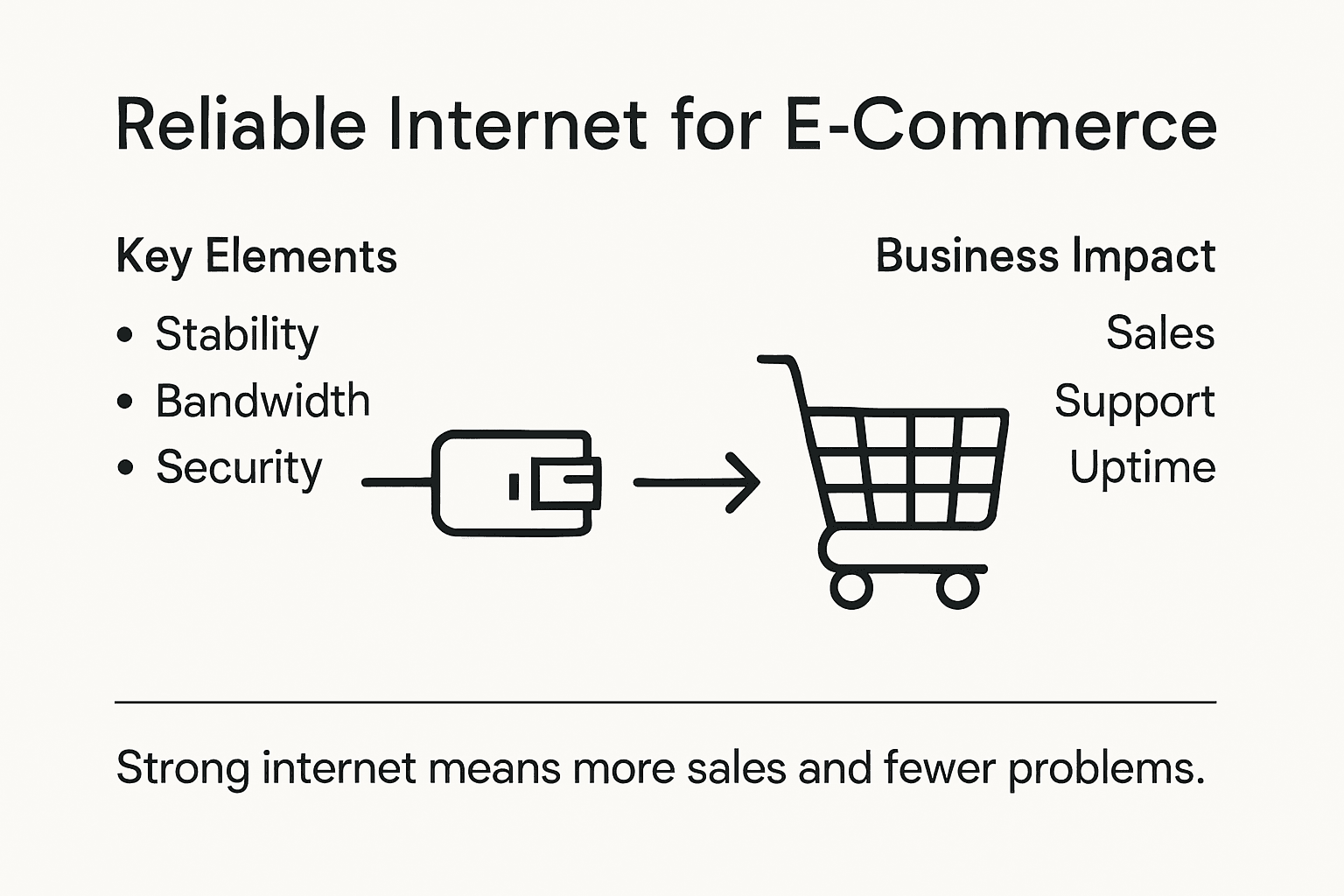
Bandwidth Stability matters critically for online businesses. Fluctuating connection speeds can directly impact customer experience, potentially causing abandoned shopping carts, delayed transactions, and reduced consumer trust. Modern e-commerce platforms require internet connections that provide predictable, high-speed data transfer to support real-time inventory management, payment processing, and customer interactions.
Pro tip: Conduct regular internet performance audits to identify potential connectivity weaknesses before they impact your online business operations.
Types of Connectivity Solutions for Business
Businesses today have multiple connectivity solutions available, each designed to meet specific operational requirements and technological demands. Emerging connectivity technologies are transforming how companies approach internet infrastructure, with options ranging from traditional broadband to advanced wireless networks that leverage artificial intelligence and machine learning.
Key connectivity solutions for modern businesses include:
- Fiber-Optic Broadband: Offering ultra-high-speed internet with minimal latency
- Wireless Networks: Including advanced Wi-Fi 6 and upcoming 6G technologies
- Mobile Hotspot Solutions: Providing flexible internet access for remote and distributed teams
- Satellite Internet: Enabling connectivity in rural or hard-to-reach business locations
- Enterprise-Grade LTE/5G: Delivering high-speed mobile connectivity for business operations
Enterprise connectivity demands go beyond simple internet access. Modern businesses require networks that can handle complex data transmission, support real-time communication, and provide robust security. Advanced wireless technologies now incorporate intelligent routing, automatic bandwidth optimization, and predictive maintenance capabilities that help businesses maintain seamless digital operations.
The evolution of connectivity solutions reflects the growing complexity of business technology ecosystems. Cloud computing, Internet of Things (IoT) devices, and distributed workforce models require increasingly sophisticated network infrastructures that can adapt quickly to changing operational needs and technological landscapes.
Here’s a comparison of connectivity solutions for business needs:
| Solution Type | Typical Use Case | Main Advantage | Limitation |
|---|---|---|---|
| Fiber-Optic Broadband | High-volume data transfer | Fastest, low latency | Expensive installation |
| Wireless Networks | Office/flexible layouts | Easy setup, scalable | Limited range |
| Mobile Hotspot | Remote or traveling teams | Portable, quick deployment | Variable speed |
| Satellite Internet | Rural and remote locations | Broad coverage | Higher latency |
| Enterprise LTE/5G | Real-time, mobile operations | High mobility, reliable | Urban dependence |
Pro tip: Conduct a comprehensive network assessment annually to ensure your connectivity solutions align with your current business technology requirements and future growth strategies.
How Reliable Internet Powers E-Commerce Operations
E-commerce operations are fundamentally dependent on robust, uninterrupted internet connectivity that enables complex digital transactions and seamless customer experiences. Business internet solutions play a critical role in maintaining the intricate digital infrastructure that supports online retail platforms, payment processing systems, inventory management, and real-time customer interactions.
Key operational functions powered by reliable internet include:
- Transaction Processing: Secure and instantaneous payment verification
- Inventory Management: Real-time stock tracking and automated reordering
- Customer Support: Instant communication channels and support platforms
- Data Analytics: Continuous collection and analysis of sales and customer behavior
- Cloud Integration: Seamless synchronization of business systems and platforms
The performance of an e-commerce platform directly correlates with internet reliability. Milliseconds of delay can translate into significant revenue loss, with studies showing that even a one-second delay in page load time can result in a 7% reduction in conversion rates. Modern e-commerce businesses require internet connections that provide consistent bandwidth, minimal latency, and redundant network pathways to ensure uninterrupted service.

Advanced internet technologies enable sophisticated e-commerce ecosystems that go beyond simple transactions. Machine learning algorithms, real-time inventory management systems, and automated customer interaction platforms all depend on stable, high-speed internet connections that can handle complex data transmission with precision and speed.
The table below summarizes how reliable internet supports core e-commerce operations:
| E-Commerce Function | Role of Reliable Internet | Risk if Unreliable |
|---|---|---|
| Transaction Processing | Enables secure instant payments | Transaction failures |
| Inventory Management | Real-time updates, automation | Stock discrepancies |
| Customer Support | Continuity in live communication | Slower response times |
| Data Analytics | Reliable, timely data collection | Inaccurate reporting |
| Cloud Integration | Smooth synchronization of systems | System conflicts |
Pro tip: Implement a comprehensive network monitoring system that provides real-time alerts and performance metrics to quickly identify and resolve potential connectivity issues.
Impact on Security, Compliance, and Uptime
Reliable internet connectivity is a fundamental requirement for maintaining robust cybersecurity and regulatory compliance in modern e-commerce environments. Cybersecurity best practices emphasize the critical role of continuous network reliability in preventing data breaches, protecting sensitive information, and ensuring uninterrupted business operations.
Key security and compliance considerations include:
- Continuous Monitoring: Real-time threat detection and response
- Data Protection: Secure transmission of sensitive customer information
- Regulatory Compliance: Meeting industry-specific security standards
- Incident Response: Rapid identification and mitigation of potential security threats
- Network Resilience: Minimizing potential downtime and service interruptions
E-commerce businesses face significant risks when internet connectivity fails or becomes compromised. A single security breach or extended network outage can result in substantial financial losses, damaged reputation, and potential legal consequences. Federal agencies increasingly recognize that robust internet infrastructure is not just a technical requirement, but a critical component of national economic security.
Advanced security protocols now integrate directly with internet connectivity solutions, creating multi-layered defense mechanisms that protect against evolving cyber threats. These systems leverage machine learning, real-time threat intelligence, and automated response protocols to create a dynamic security environment that adapts to emerging risks and maintains continuous operational integrity.
Pro tip: Develop a comprehensive incident response plan that includes specific protocols for maintaining business continuity during potential internet connectivity disruptions.
Cost, Downtime Risks, and Optimizing Choices
E-commerce businesses face substantial financial implications from internet connectivity challenges, with unreliable infrastructure contributing significantly to operational costs. Internet downtime represents more than a technical inconvenience - it translates directly into measurable revenue loss and decreased operational efficiency.
Key financial risks associated with internet reliability include:
- Direct Revenue Loss: Interrupted transactions and abandoned shopping carts
- Productivity Reduction: Decreased employee performance during network disruptions
- Customer Trust Erosion: Negative perception from service interruptions
- Operational Overhead: Additional expenses for backup systems and redundancy
- Compliance Penalties: Potential regulatory fines from extended service failures
Optimizing internet connectivity requires a strategic approach that balances cost, performance, and reliability. Businesses must evaluate multiple factors including bandwidth requirements, network redundancy, scalability, and total cost of ownership. Advanced connectivity solutions now offer flexible pricing models that allow companies to scale their internet infrastructure precisely to their operational needs.
Modern e-commerce organizations are increasingly investing in sophisticated network monitoring tools and multiple internet service providers to create resilient connectivity ecosystems. These strategies help mitigate downtime risks by providing automatic failover mechanisms and real-time performance diagnostics that minimize potential service interruptions.
Pro tip: Conduct a comprehensive cost-benefit analysis of your current internet infrastructure, comparing potential downtime expenses against proactive investment in reliable connectivity solutions.
Ensure Your E-Commerce Success with Reliable High-Speed Internet
Struggling to maintain seamless online transactions or facing frequent connectivity disruptions can hurt your e-commerce growth and customer trust. This article highlights how inconsistent bandwidth, latency issues, and security risks compromise your operations. At SabertoothPro, we understand these challenges and provide tailored solutions like Titan WiFi Hotspot Plans and advanced Wi-Fi Extenders to deliver the reliable, secure internet your business needs.

Don’t let internet downtime cost you revenue and customers. Visit SabertoothPro.com now to explore cutting-edge connectivity options designed for e-commerce resilience and growth. Act today to power your business with dependable internet solutions and protect your digital storefront from disruptions.
Frequently Asked Questions
What is reliable internet and why is it crucial for e-commerce?
Reliable internet refers to a consistent and robust network that ensures seamless connectivity for digital operations. It is crucial for e-commerce as it supports uninterrupted transaction processing, inventory management, and customer interactions, all of which are vital for maintaining sales and consumer trust.
How can unreliable internet impact e-commerce businesses?
Unreliable internet can lead to issues such as transaction failures, delayed customer support, and inventory discrepancies. This can result in abandoned shopping carts, decreased customer trust, and ultimately, significant revenue loss for e-commerce businesses.
What are the key characteristics of a reliable internet connection for e-commerce?
Key characteristics include consistent bandwidth performance, minimal latency, redundant network pathways, rapid recovery from service interruptions, secure data transmission protocols, and a scalable infrastructure that can handle peak traffic loads.
What types of connectivity solutions can enhance internet reliability for businesses?
Businesses can enhance internet reliability by using solutions like fiber-optic broadband for high-speed connectivity, wireless networks for scalability, mobile hotspot solutions for flexibility, and enterprise-grade LTE/5G for reliable mobile access. Each solution offers distinct advantages based on the business’s specific operational needs.
Recommended
- 7 Types of Website Design Every Regional Business Should Know
- What Is Luxury E-Commerce? Complete Overview - Corrado Manenti