


Internet Gateway: Boosting Security for Healthcare IT

Remote work and electronic health record sharing are now daily priorities, not rare exceptions, for healthcare IT teams in places like Pennsylvania and Maryland. With complex health systems exchanging patient data around the clock, the need for secure electronic health information exchange grows more urgent every year. This guide breaks down what an Internet Gateway does in healthcare, why it is vital for data privacy, and how choosing the right solution supports both security and seamless patient care.
Table of Contents
- Defining An Internet Gateway For Healthcare
- Types Of Internet Gateways And Their Distinctions
- Core Functions And Security Features
- Compliance Requirements And Regulatory Framework
- Risks, Cost Implications, And Common Pitfalls
- Internet Gateways Versus Alternative Solutions
Key Takeaways
| Point | Details |
|---|---|
| Internet Gateways Enhance Security | Internet Gateways ensure secure transmission of patient information while complying with healthcare regulations like HIPAA. |
| Variety of Gateway Types | Different types of Internet Gateways, such as Unidirectional and Bidirectional, serve specific communication needs within healthcare networks. |
| Regular Security Audits Are Essential | Conduct regular security audits to verify compliance and protect sensitive patient data against evolving cyber threats. |
| Integration with Other Technologies | Internet Gateways should be evaluated for compatibility with alternative digital health solutions to enhance overall communication efficiency. |
Defining an Internet Gateway for Healthcare
An Internet Gateway represents a critical technological infrastructure enabling secure electronic health information exchange across complex healthcare networks. Unlike traditional network interfaces, these gateways serve as sophisticated communication bridges specifically designed for medical environments where data privacy and interoperability are paramount.
At its core, an Internet Gateway in healthcare performs several essential functions:
- Securely transmit patient health information between authorized providers
- Enable standardized data transfer protocols
- Convert communication formats across different electronic health record (EHR) systems
- Maintain strict compliance with healthcare data protection regulations
Healthcare organizations rely on these gateways to facilitate health information management across disparate technological platforms. The gateway acts as a sophisticated protocol converter, allowing diverse healthcare systems to communicate seamlessly while maintaining robust security standards.
The technical architecture of a healthcare Internet Gateway involves multiple layers of protection. These systems must accommodate complex requirements including HIPAA compliance, encryption protocols, and real-time data verification mechanisms. By providing a centralized point of secure network interaction, gateways help healthcare providers streamline communication without compromising patient confidentiality.
Network Communication Features:
- Supports multiple data transmission standards
- Implements end-to-end encryption
- Enables cross-platform interoperability
- Provides granular access control
Pro tip: Regularly audit your Internet Gateway’s security configurations to ensure continuous compliance with evolving healthcare data protection standards.
Types of Internet Gateways and Their Distinctions
Healthcare organizations utilize multiple Internet Gateway types to address diverse network communication requirements. Network gateway variations play a critical role in managing complex data transmission protocols across different technological environments.
Key Internet Gateway classifications include:
- Unidirectional Gateways: Allow data flow in a single direction, critical for maintaining strict information security
- Bidirectional Gateways: Enable two-way communication between disparate network systems
- Cloud Storage Gateways: Bridge on-premise infrastructure with cloud-based platforms
- IoT Gateways: Manage sensor data translation and communication protocols
- VoIP Trunk Gateways: Facilitate voice communication over IP networks
The technical complexity of these gateways involves sophisticated protocol translation mechanisms. Each gateway type operates at different layers of the network communication stack, translating data formats to ensure seamless interoperability between heterogeneous technological systems.
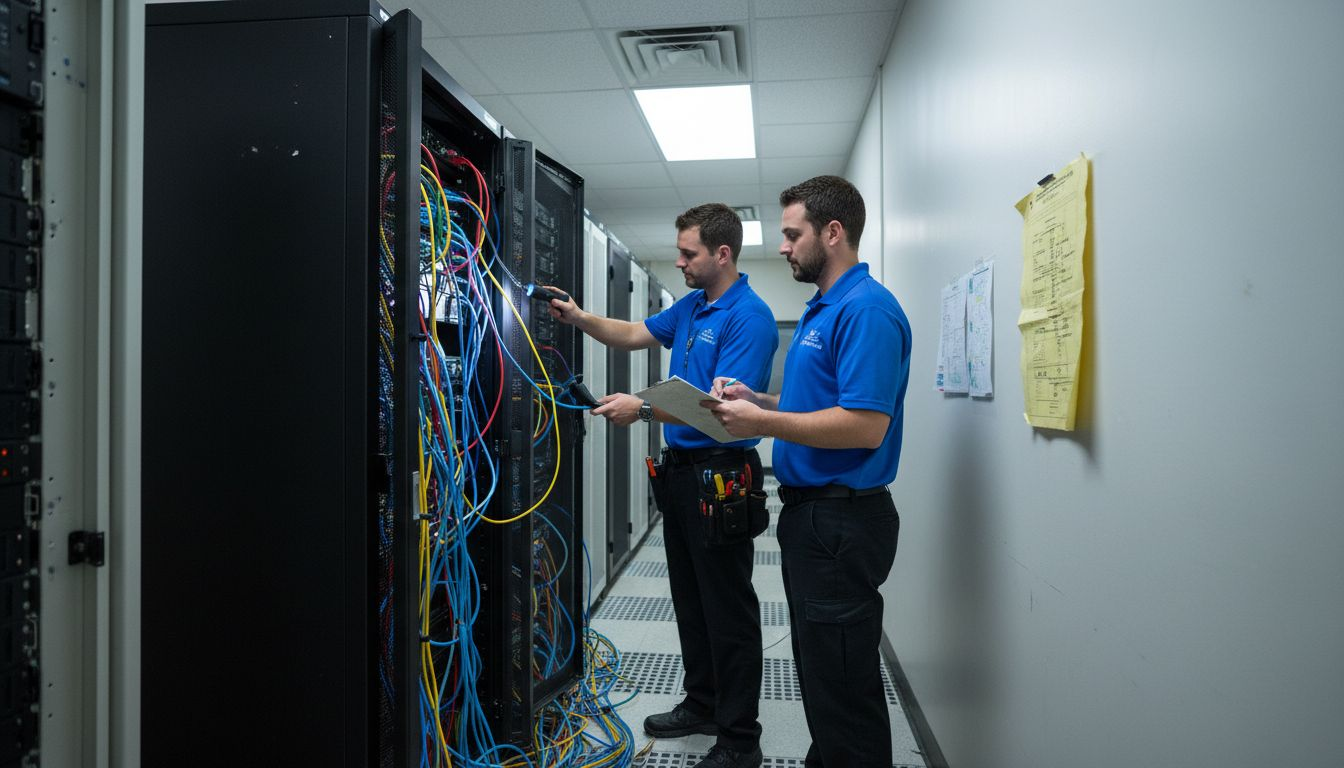
The table below outlines distinctions between common healthcare Internet Gateway types:
| Gateway Type | Primary Use Case | Security Emphasis | Integration Complexity |
|---|---|---|---|
| Unidirectional | One-way data feeds | Highest data isolation | Moderate |
| Bidirectional | Two-way EHR exchange | Strong with encryption | High |
| Cloud Storage | Hybrid cloud connectivity | Cloud data protection | Variable |
| IoT | Device data aggregation | Device authentication focus | High |
| VoIP Trunk | Voice communications | Call encryption | Moderate |
Gateway Communication Characteristics:
- Protocol conversion capabilities
- Encryption and security management
- Cross-platform compatibility
- Real-time data transformation
Healthcare networks require gateways that can dynamically adapt to evolving technological infrastructures and stringent data protection standards.
Pro tip: Select Internet Gateway solutions that offer flexible protocol support and robust security features tailored to your specific healthcare network architecture.
Core Functions and Security Features
Healthcare Internet Gateways serve as critical technological guardians, protecting sensitive patient information through sophisticated cybersecurity and data protection mechanisms. These advanced systems go beyond simple network routing, actively defending against potential security threats while maintaining seamless data communication.
Key Security Functions:
- Encryption: Transforming sensitive data into unreadable formats
- Identity Authentication: Verifying user credentials before network access
- Intrusion Detection: Monitoring and blocking unauthorized access attempts
- Protocol Translation: Ensuring secure data exchange across different systems
- Anomaly Monitoring: Identifying potential security breaches in real-time
The technical complexity of these gateways involves multiple layers of protection. Each security feature is meticulously designed to address specific vulnerabilities in healthcare technological ecosystems, preventing potential data breaches that could compromise patient privacy and institutional integrity.
Advanced Security Mechanisms:
- Multilayered authentication protocols
- End-to-end data encryption
- Continuous network threat assessment
- Automated security incident response
Healthcare Internet Gateways must dynamically adapt to evolving cybersecurity landscapes, providing robust protection without compromising operational efficiency.
Pro tip: Implement comprehensive security audits quarterly to ensure your Internet Gateway’s defense mechanisms remain current and effective against emerging cyber threats.
Compliance Requirements and Regulatory Framework
Healthcare Internet Gateways must navigate a complex landscape of federal regulations designed to protect patient data and ensure secure information exchange. Regulatory compliance frameworks establish critical standards that healthcare organizations must meticulously follow to maintain patient privacy and technological interoperability.
Key Regulatory Requirements:
- HIPAA: Protecting patient health information privacy
- HITECH Act: Promoting health IT adoption and security standards
- 21st Century Cures Act: Enhancing healthcare data interoperability
- ONC Health IT Certification Program: Ensuring technology meets federal standards
- TEFCA: Standardizing nationwide health information exchange
The Trusted Exchange Framework represents a significant milestone in healthcare technology regulation. This comprehensive framework provides a standardized set of policies that govern how healthcare organizations can securely share patient information across different technological platforms, ensuring consistent privacy protections and data integrity.
Here’s a summary of key regulations shaping healthcare Internet Gateway compliance:
| Regulation | Focus | Gateway Compliance Requirement |
|---|---|---|
| HIPAA | Privacy & Security | Encrypted PHI transmission |
| HITECH Act | Health IT advancement | Security audits and breach reporting |
| 21st Century Cures Act | Interoperability | Open data sharing standards |
| ONC Health IT Certification | Federal certification | Certified secure gateway technology |
| TEFCA | Nationwide exchange | Framework-aligned exchange policies |
Compliance Validation Mechanisms:
- Regular security audits
- Comprehensive documentation of data handling practices
- Continuous monitoring of access controls
- Periodic risk assessment protocols
Healthcare Internet Gateways must demonstrate ongoing compliance, treating regulatory adherence as a dynamic process rather than a static checklist.
Pro tip: Develop a comprehensive compliance tracking system that automatically maps your Internet Gateway’s features against current regulatory requirements to ensure continuous alignment.
Risks, Cost Implications, and Common Pitfalls
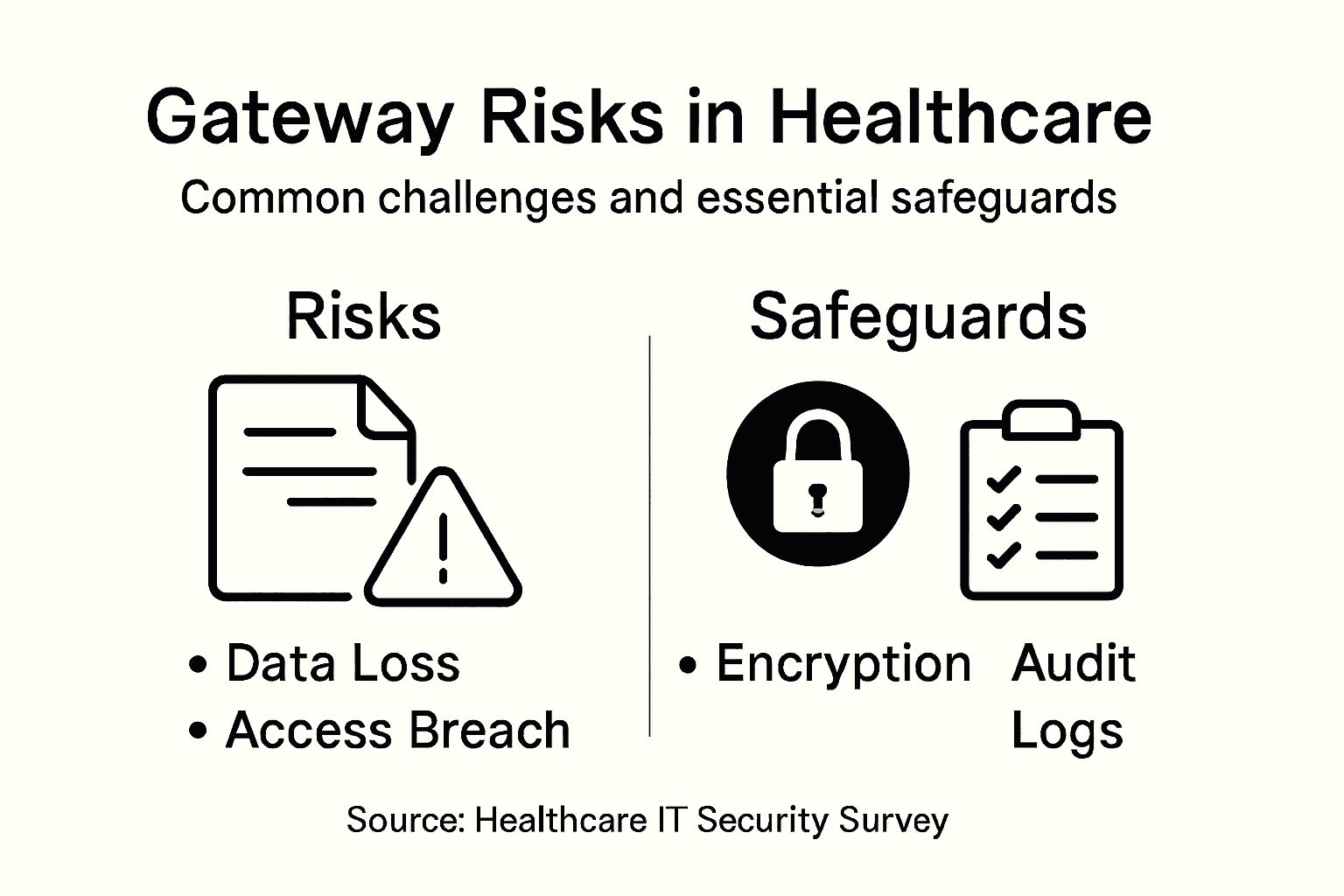
Healthcare organizations face increasingly complex cybersecurity challenges with Internet Gateways, where cybersecurity risks threaten operational stability and patient safety. These technological vulnerabilities can result in devastating financial and reputational consequences that extend far beyond immediate technological breaches.
Primary Cybersecurity Risks:
- Ransomware attacks targeting patient data systems
- Unauthorized third-party network access
- Data breaches compromising patient confidentiality
- Supply chain security vulnerabilities
- Potential disruption of critical healthcare services
The financial implications of these risks are substantial. A single cybersecurity incident can generate millions in recovery costs, regulatory penalties, and lost revenue. Healthcare organizations must adopt proactive strategies that anticipate and mitigate potential technological vulnerabilities before they escalate into full-scale security incidents.
Cost Impact Categories:
- Incident response and investigation expenses
- Regulatory compliance fines
- Potential legal settlements
- Reputation management costs
- Technology remediation investments
Cybersecurity in healthcare is not just an IT problem, but a critical patient safety issue that requires comprehensive, strategic management.
Pro tip: Develop a comprehensive cyber risk management framework that includes continuous monitoring, regular vulnerability assessments, and multi-layered defense strategies.
Internet Gateways Versus Alternative Solutions
Healthcare organizations face complex technological choices when selecting data communication solutions, with Internet Gateways representing just one approach among multiple digital health technologies. Unlike specialized point solutions, Internet Gateways provide comprehensive network-level infrastructure that enables broad, secure data exchange across disparate healthcare systems.
Alternative Digital Health Solutions:
- Telehealth platforms
- Mobile health applications
- Patient portal systems
- Cloud-based health information exchanges
- Direct messaging technologies
Each alternative solution offers unique advantages and limitations. Telehealth platforms prioritize direct patient engagement, while Internet Gateways focus on backend interoperability and secure data transmission. The strategic approach involves understanding how these technologies complement rather than compete with each other.
Comparative Technology Characteristics:
- Scalability of network infrastructure
- End-user accessibility
- Data security protocols
- Interoperability capabilities
- Implementation complexity
Effective healthcare digital strategies require a holistic approach that integrates multiple technological solutions, recognizing the unique strengths of each platform.
Pro tip: Conduct a comprehensive technology assessment that evaluates how Internet Gateways can integrate with existing digital health solutions to maximize communication efficiency and security.
Strengthen Healthcare IT Security with SabertoothPro’s Advanced Connectivity Solutions
The article highlights the critical need for secure, compliant, and reliable Internet Gateways in healthcare IT to protect sensitive patient data and enable seamless interoperability. Healthcare organizations face challenges like encryption, protocol translation, and constant cybersecurity threats. SabertoothPro understands these pain points and offers high-speed, secure internet options including 4G LTE and 5G hotspots, designed to support robust network security frameworks and ensure uninterrupted data flow across healthcare systems.
Boost your healthcare IT infrastructure with:
- Powerful Titan WiFi devices creating secure network layers
- Flexible Titan WiFi Hotspot Plans enabling scalable and reliable connectivity
- Enhanced coverage with WiFi Extenders to maintain strong signals in critical care environments

Secure your healthcare network today by partnering with SabertoothPro. Visit SabertoothPro.com now for customized solutions that align perfectly with your Internet Gateway security needs and compliance requirements. Don’t wait until risks turn into costly breaches. Act now to safeguard patient safety and streamline your healthcare IT communication.
Frequently Asked Questions
What is an Internet Gateway in healthcare?
An Internet Gateway in healthcare is a technological infrastructure that enables secure electronic health information exchange across various healthcare networks while ensuring data privacy and interoperability.
How do Internet Gateways enhance security in healthcare IT?
Internet Gateways enhance security by implementing end-to-end encryption, identity authentication, intrusion detection, and anomaly monitoring, protecting sensitive patient information from cybersecurity threats.
What are the different types of Internet Gateways used in healthcare?
Common types of Internet Gateways in healthcare include unidirectional gateways for one-way data feeds, bidirectional gateways for two-way EHR exchanges, cloud storage gateways for hybrid connectivity, IoT gateways for device data, and VoIP trunk gateways for voice communications.
What compliance requirements must healthcare Internet Gateways meet?
Healthcare Internet Gateways must comply with various regulations, including HIPAA for patient privacy, HITECH for health IT security, and the 21st Century Cures Act for interoperability, ensuring safe and standardized information exchange.
Recommended
- AI Awareness Training for employees | Artificial Intelligence