


Network Slicing in 5G: Transforming Secure Connectivity

Over 80 percent of American businesses are now exploring 5G technology, driven by its promise of rapid customization and efficiency. The way networks are managed and adapted has changed dramatically, with network slicing at the heart of this transformation. This article sheds light on how network slicing empowers American enterprises and service providers to create specialized networks for everything from high-speed streaming to critical IoT solutions, unlocking new possibilities in connectivity.
Table of Contents
- Defining Network Slicing in 5G Technology
- How Network Slicing Works in Real Deployments
- Types of Network Slices and Key Use Cases
- Benefits for Enterprises, IoT, and Rural Internet
- Security, Regulatory, and Cost Implications
Key Takeaways
| Point | Details |
|---|---|
| Network Slicing Innovation | Network slicing allows multiple independent logical networks to operate on a single physical infrastructure, enabling tailored performance for diverse applications. |
| Dynamic Resource Allocation | Telecommunications operators can flexibly create and manage network slices based on real-time demands, enhancing service delivery and resource efficiency. |
| Industry-Specific Benefits | Different sectors, including IoT and rural internet, can leverage customized network slices to optimize performance and connectivity. |
| Security and Compliance Needs | Advanced security protocols are essential for protecting network slices, and compliance mechanisms must be built into the design to meet various regulatory standards. |
Defining Network Slicing in 5G Technology
Network slicing represents a groundbreaking approach in 5G technology that fundamentally transforms how telecommunications infrastructure delivers services. At its core, network slicing enables the creation of multiple independent logical networks within a single physical infrastructure, allowing unprecedented customization and efficiency.
By leveraging network slicing, mobile operators can divide a single physical network into multiple logical networks, each configured with unique performance characteristics tailored to specific application requirements. This revolutionary technique means different services like ultra-reliable low-latency communications, massive machine-type communications, and enhanced mobile broadband can coexist on the same network infrastructure without compromising individual performance needs.
The technical implementation of network slicing involves sophisticated software-defined networking principles. Each network slice acts like a complete end-to-end virtual network with dedicated resources, including compute, storage, and networking capabilities. These slices can be dynamically created, modified, and terminated based on real-time demand, providing operators unprecedented flexibility in service delivery.
Critical technical components of network slicing include network function virtualization, software-defined networking, and advanced orchestration platforms that enable precise resource allocation and management. Researchers have demonstrated that network slicing allows operators to create networks with specific configurations and Quality of Service requirements, representing a significant leap forward in telecommunications infrastructure design.
Pro Tip: Network Slice Design Strategy - Always map specific service requirements to dedicated network slices before implementation, ensuring optimal performance and resource utilization for each unique use case.
How Network Slicing Works in Real Deployments
Real-world network slicing deployments represent a complex orchestration of advanced telecommunications technologies, transforming how mobile networks deliver specialized services across diverse industry sectors. Detailed analyses of 5G Radio Access Network (RAN) features reveal intricate configurations that enable precise network performance management, demonstrating the practical implementation of this revolutionary approach.
In practical deployments, network slicing operates through sophisticated resource allocation mechanisms that dynamically partition network infrastructure. Telecommunications operators can now create multiple virtual networks within a single physical infrastructure, each tailored to specific performance requirements. For instance, a slice dedicated to autonomous vehicle communications might prioritize ultra-low latency, while another slice for Internet of Things (IoT) sensors could optimize for massive device connectivity and energy efficiency.

Advanced systems like OnSlicing utilize reinforcement learning algorithms to dynamically allocate network resources, ensuring that each network slice maintains its Service Level Agreement (SLA) in real-time. These intelligent systems continuously analyze network performance, automatically adjusting compute, storage, and bandwidth allocations to meet the unique demands of different applications and services.
The implementation typically involves several key technological components: software-defined networking controllers, network function virtualization infrastructure, and intelligent orchestration platforms. These technologies work in concert to create, manage, and terminate network slices based on real-time demand, providing telecommunications operators unprecedented flexibility in service delivery.
Pro Tip: Network Slice Optimization Strategy - Continuously monitor and profile your network slice performance, using machine learning techniques to predictively adjust resource allocations before performance bottlenecks emerge.
Types of Network Slices and Key Use Cases
Network slicing in 5G enables a single network to be divided into multiple specialized ‘slices’, each designed to address unique performance requirements across diverse technological domains. These network slices represent a transformative approach to telecommunications infrastructure, allowing unprecedented customization and optimization of network resources for specific industry needs.
The primary types of network slices can be categorized into three fundamental archetypes: Enhanced Mobile Broadband (eMBB), Ultra-Reliable Low-Latency Communications (URLLC), and Massive Machine-Type Communications (mMTC). Each slice type targets distinct performance characteristics and application scenarios. eMBB slices prioritize high-speed data transmission for bandwidth-intensive applications like 4K video streaming and augmented reality, while URLLC slices focus on delivering near-instantaneous, mission-critical communications for autonomous vehicles, remote surgery, and industrial control systems.
Massive Machine-Type Communications (mMTC) slices are engineered to support large-scale IoT deployments, enabling connectivity for thousands of low-power sensors and devices simultaneously. These slices optimize network resources for applications requiring minimal data transmission, extended battery life, and wide-area coverage. Industries like smart agriculture, environmental monitoring, and large-scale infrastructure management benefit significantly from mMTC network slice capabilities.
Here is a summary comparing the three primary types of 5G network slices and their typical applications:
| Slice Type | Main Focus | Typical Applications |
|---|---|---|
| eMBB (Enhanced Mobile Broadband) | High-speed data | 4K video, AR/VR, cloud gaming |
| URLLC (Ultra-Reliable Low-Latency Communications) | Near-instant response | Autonomous vehicles, remote surgery |
| mMTC (Massive Machine-Type Communications) | Massive device connections | Smart agriculture, industrial IoT sensors |
Real-world deployment scenarios demonstrate the versatility of network slicing across multiple sectors. Automotive industries can leverage URLLC slices for autonomous vehicle communication, ensuring split-second responsiveness and safety. Healthcare providers can utilize dedicated network slices for telemedicine platforms, guaranteeing secure, low-latency connections for remote diagnostics and patient monitoring. Telecommunications operators can dynamically allocate and reconfigure these network slices in real-time, responding to changing bandwidth demands and service requirements.
Pro Tip: Network Slice Selection Strategy - Conduct a comprehensive analysis of your specific use case performance requirements before designing a network slice, mapping exact latency, bandwidth, and reliability needs to the most appropriate slice configuration.
Benefits for Enterprises, IoT, and Rural Internet
Network slicing in 5G introduces transformative benefits for enterprises, IoT deployments, and rural internet connectivity by enabling unprecedented network customization and resource optimization. This revolutionary approach allows telecommunications operators to create highly specialized network environments that address the unique performance requirements of different technological sectors.
For enterprises, network slicing delivers critical advantages in connectivity and operational efficiency. Organizations can now leverage dedicated network slices that prioritize specific performance parameters such as ultra-low latency for critical business applications, high-bandwidth channels for data-intensive processes, and secure communication corridors for sensitive corporate communications. Customized logical networks enable operators to dramatically improve resource utilization across diverse operational contexts, allowing businesses to optimize their digital infrastructure without massive infrastructure investments.
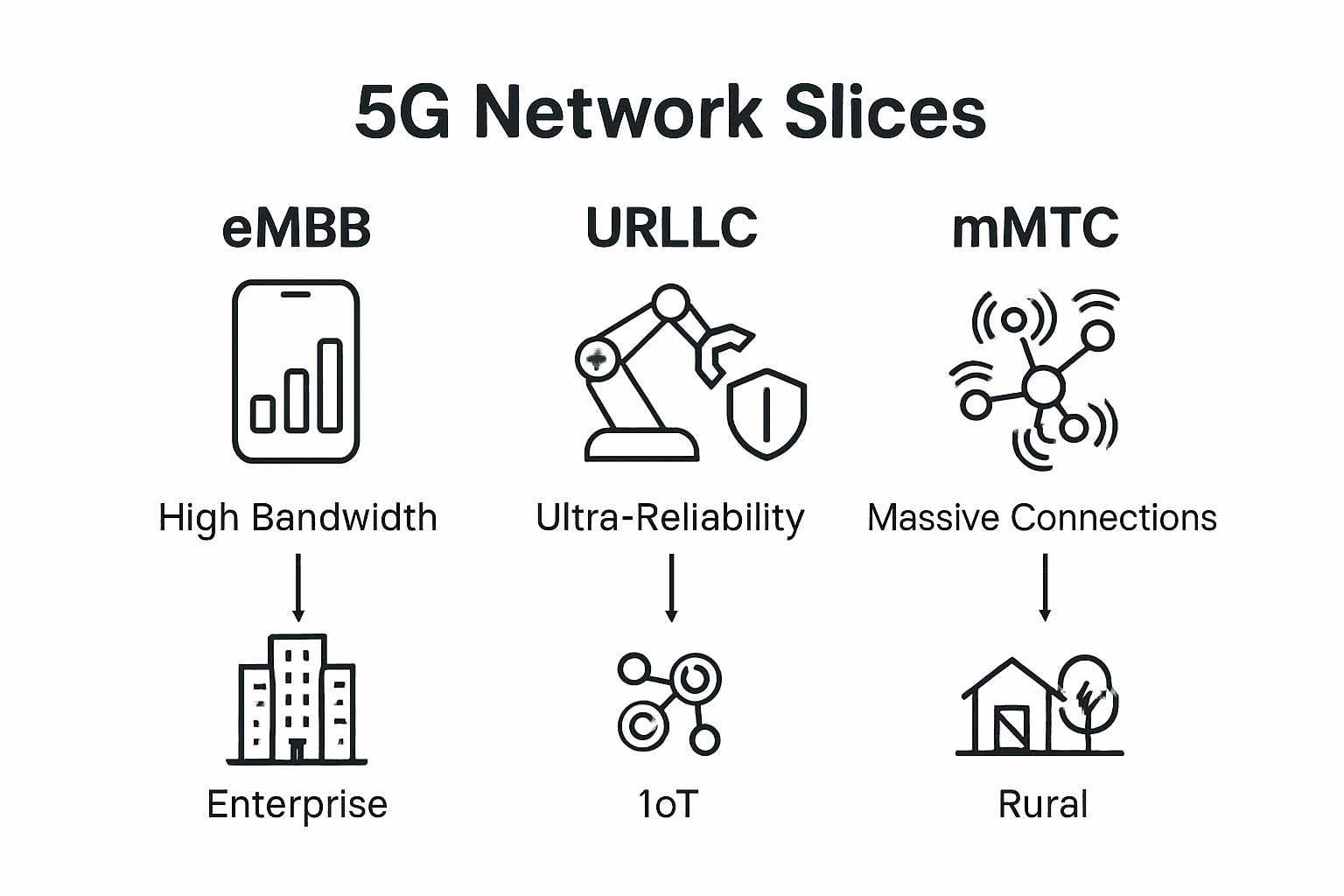
In the Internet of Things (IoT) ecosystem, network slicing emerges as a game-changing technology. IoT deployments ranging from smart agricultural sensors to industrial monitoring systems can now benefit from network slices specifically designed for massive machine-type communications. These specialized slices support thousands of low-power devices simultaneously, providing extended battery life, wide-area coverage, and minimal data transmission requirements that traditional network architectures struggle to accommodate.
Rural internet connectivity represents another domain where network slicing demonstrates remarkable potential. By creating flexible, efficient network segments, telecommunications providers can extend reliable high-speed internet access to previously underserved geographical regions. These dedicated rural internet slices can optimize bandwidth allocation, reduce operational costs, and provide more consistent connectivity in areas with challenging infrastructure limitations.
This table outlines business impacts of network slicing for key sectors:
| Sector | Key Benefit | Example Impact |
|---|---|---|
| Enterprise | Dedicated performance | Secure private business networks |
| IoT | Scale and efficiency | Connect thousands of sensors reliably |
| Rural Internet | Extended reach | Affordable broadband in remote areas |
Pro Tip: Network Slice Optimization Strategy - Conduct a comprehensive audit of your specific connectivity requirements, identifying precise performance metrics to design the most effective network slice configuration for your unique operational needs.
Security, Regulatory, and Cost Implications
Machine learning techniques are increasingly critical for detecting and securing network slices in 5G infrastructure, addressing the complex security challenges inherent in this transformative telecommunications technology. Network slicing introduces sophisticated architectural complexities that demand advanced security strategies beyond traditional network protection methodologies.
Cybersecurity Considerations emerge as a paramount concern in network slicing implementations. Each network slice represents a potential attack surface, requiring granular security protocols and robust isolation mechanisms. Virtualized 5G systems face significant challenges in enforcing Radio Access Network (RAN) slicing security frameworks, necessitating multi-layered defense strategies that can dynamically adapt to emerging threat landscapes.
Regulatory compliance represents another critical dimension of network slicing deployment. Different industries have unique compliance requirements, ranging from healthcare’s HIPAA standards to financial services’ stringent data protection regulations. Network slices must be designed with built-in governance mechanisms that ensure data privacy, maintain strict access controls, and provide comprehensive audit trails for regulatory scrutiny. This approach transforms network infrastructure from a potential liability into a proactive compliance management tool.
From a cost perspective, network slicing offers compelling economic advantages by enabling more efficient resource allocation. Telecommunications operators can optimize infrastructure investments by creating purpose-built network segments that match precise performance requirements. This approach reduces unnecessary infrastructure overprovisioning, lowers operational expenses, and allows for more flexible, scalable network architectures that can be rapidly reconfigured to meet changing business demands.
Pro Tip: Security Slice Design Strategy - Implement comprehensive security monitoring across network slices, utilizing advanced machine learning algorithms to detect anomalies and potential breaches in real-time, ensuring proactive threat mitigation and regulatory compliance.
Unlock the Full Potential of 5G Network Slicing with SabertoothPro
The article highlights the challenges enterprises, IoT deployments, and rural internet providers face in managing secure, high-performance, and customizable network connections. Network slicing in 5G offers tailored solutions but requires advanced connectivity tools, dynamic resource management, and robust security frameworks to truly succeed. Achieving ultra-low latency, massive device support, and reliable performance while maintaining strict security is critical for modern digital infrastructures.
At SabertoothPro, we understand these demands and deliver cutting-edge internet solutions designed for such complex environments. From our Titan WiFi collection featuring high-speed 4G LTE and 5G routers to our secure IoT connectivity and enterprise IT services, we empower businesses to build customizable, scalable networks that leverage the full capabilities of network slicing. Integrated with next-generation security and cloud infrastructure options, our solutions help you optimize resources and protect sensitive data seamlessly.

Experience reliable, secure 5G connectivity tailored for your specific use case right now. Visit SabertoothPro.com and explore our special promotions today. Take the first step toward transforming your network infrastructure with flexible, high-performance internet solutions built for the future.
Frequently Asked Questions
What is network slicing in 5G technology?
Network slicing is a method in 5G technology that allows for the creation of multiple independent logical networks within a single physical infrastructure, enabling tailored performance and efficiency for different services and applications.
How does network slicing improve cybersecurity in telecommunications?
Network slicing enhances cybersecurity by creating isolated virtual networks, each with dedicated security protocols. This minimizes potential attack surfaces and allows for granular security measures to protect sensitive data and applications.
What are the main types of network slices in 5G, and what are their use cases?
The main types of network slices in 5G are Enhanced Mobile Broadband (eMBB) for high-speed data, Ultra-Reliable Low-Latency Communications (URLLC) for mission-critical applications, and Massive Machine-Type Communications (mMTC) for large-scale IoT deployments.
How can businesses benefit from network slicing in 5G?
Businesses can benefit from network slicing by utilizing dedicated slices that meet specific performance requirements, allowing for optimized resource allocation, enhanced operational efficiency, and improved connectivity for applications like telemedicine and remote monitoring.