


Private APN Explained: Secure Fleet Connectivity

Fleet managers in American logistics companies know that a single network interruption can bring critical supply chains to a halt. Modern fleets rely on dependable mobile connectivity, but standard public networks often fall short when it comes to protecting sensitive data and ensuring seamless operations. Private APN solutions provide isolated communication channels that empower IT leaders to secure fleet data, streamline operations, and reduce exposure to cyber threats. This guide clears up common misconceptions and highlights the technical and business value of private APN adoption.
Table of Contents
- Defining Private APN And Common Myths
- Types Of Private APN For Fleet Management
- How Private APN Solutions Work
- Key Benefits And Security Features
- Cost Considerations And Common Pitfalls
- Private APN Vs Public APN Alternatives
Key Takeaways
| Point | Details |
|---|---|
| Private APNs enhance security | Private APNs create isolated, secure communication channels that protect against external cyber threats and enhance data confidentiality. |
| Implementation costs vary | While initial setup for private APNs can be high, the long-term cost efficiency outweighs these expenses, especially when considering potential security breaches. |
| Different types of Private APNs | Organizations can choose from dedicated, shared, or hybrid Private APNs based on their specific operational needs and budget considerations. |
| Network audits are essential | Regular assessments of network requirements and security protocols are critical for maintaining the efficiency and effectiveness of Private APN solutions. |
Defining Private APN and Common Myths
A Private APN (Access Point Name) is a specialized network configuration designed for secure, controlled mobile connectivity in enterprise environments. Unlike standard public internet connections, private APNs create dedicated, isolated communication channels that enable businesses to manage and protect their mobile data transmission more effectively.
Private networks utilize private IP address spaces that are not directly routable on the public internet. This approach provides several key advantages for organizations, particularly those managing fleet communications or remote workforce connectivity:
- Enhanced network security through logical isolation
- Controlled access and traffic management
- Reduced exposure to external cyber threats
- Customizable routing and connection policies
- Improved performance for specific business applications
Common Myths About Private APN
Several misconceptions persist about private APN technologies that can mislead IT decision-makers. Myth 1: Private APNs are inherently completely secure. While private APNs offer significant security advantages, they are not impenetrable fortresses. Proper network configuration remains critical to maintaining robust protection.
Another prevalent myth is that private APNs are prohibitively expensive. In reality, many enterprises find that the long-term benefits of controlled, secure mobile connectivity far outweigh initial implementation costs. Modern private APN solutions can be surprisingly cost-effective, especially when compared to potential security breaches or inefficient communication infrastructure.
Technical Considerations
Implementing a private APN requires understanding several technical nuances. Businesses must consider factors like:
- Network architecture design
- Integration with existing infrastructure
- Authentication and access control mechanisms
- Scalability requirements
- Compliance with industry-specific regulations
Pro tip: Before implementing a private APN, conduct a comprehensive network assessment to identify specific connectivity needs and potential integration challenges.
Types of Private APN for Fleet Management
Private APNs are specialized network configurations designed to meet diverse fleet management connectivity needs. Private networks employ unique IP address spaces that enable secure, tailored communication strategies for enterprise vehicle operations.
Three primary types of private APNs exist for fleet management:
Here is a comparative overview of the main private APN types for fleet management:
| APN Type | Best For | Security Level | Cost Efficiency |
|---|---|---|---|
| Dedicated Private APN | Enterprises needing full isolation | Highest | Least cost-efficient |
| Shared Private APN | Firms with multiple departments | Moderate | Very cost-efficient |
| Hybrid Private APN | Flexible, scalable operations | Variable | Balanced cost and benefits |
- Dedicated Private APN: Completely isolated network infrastructure exclusively for a single organization’s fleet
- Shared Private APN: A segmented network allowing multiple departments or subsidiaries to share infrastructure
- Hybrid Private APN: Combining public and private network elements for flexible connectivity
Dedicated Private APN
A Dedicated Private APN provides the highest level of security and control. This approach creates an entirely separate network environment where all communication channels are exclusively managed by the organization. Such configurations are ideal for companies with stringent data protection requirements or those operating in sensitive industries like healthcare, finance, or government logistics.

Shared Private APN
Shared Private APNs offer a more cost-effective solution for organizations with multiple operational units. Fleet management services can leverage these networks to create logical separations between different departments while maintaining centralized network management. This approach allows businesses to optimize infrastructure costs without compromising individual departmental communication needs.
Hybrid Private APN
Hybrid Private APNs represent the most flexible connectivity model. These configurations blend private network security with public network accessibility, enabling enterprises to:
- Maintain core communication on secure private channels
- Leverage public networks for supplementary data transmission
- Scale connectivity based on operational requirements
- Implement dynamic routing strategies
- Reduce overall network infrastructure expenses
Pro tip: Conduct a comprehensive network audit to determine which private APN type best matches your fleet’s specific communication and security requirements.
How Private APN Solutions Work
Private APN solutions create secure communication networks that transform how enterprises manage mobile connectivity. Virtual private networks extend private infrastructure across public networks using sophisticated encryption and routing technologies, enabling businesses to maintain strict control over their communication channels.
The core mechanisms of private APN solutions involve several critical technical components:
- Secure Tunneling: Establishing encrypted communication pathways
- Network Segmentation: Isolating traffic from public internet channels
- Private IP Address Management: Assigning restricted network addresses
- Authentication Protocols: Verifying device and user credentials
- Encryption Standards: Protecting data transmission integrity
Technical Infrastructure
Private APN solutions operate through advanced network virtualization techniques. These systems create isolated network environments where every communication channel is meticulously controlled and monitored. Cryptographic protocols safeguard communication by implementing multiple layers of security that prevent unauthorized access and potential data breaches.
Communication Routing
The routing mechanism in private APN solutions is complex and multifaceted. When a device attempts to communicate, it must first pass through stringent authentication processes. These processes verify the device’s credentials, ensuring that only authorized equipment can access the network. Once authenticated, the device is assigned a private IP address and routed through secure, encrypted tunnels.
Security Mechanisms
Private APN solutions employ multiple security strategies to protect network integrity:
- Multi-factor authentication
- End-to-end data encryption
- Continuous network monitoring
- Automatic threat detection
- Granular access controls
Private APN solutions transform mobile connectivity from vulnerable public networks into fortress-like communication channels.
Pro tip: Regularly audit and update your private APN authentication protocols to maintain robust security infrastructure.
Key Benefits and Security Features
Private APN solutions offer comprehensive security advantages for fleet management and enterprise connectivity. Private networks provide enhanced protection by creating isolated communication environments that significantly reduce cybersecurity risks and vulnerability to external threats.
The key benefits of private APN solutions encompass several critical dimensions:
- Data Confidentiality: Preventing unauthorized access and data interception
- Operational Reliability: Maintaining consistent, uninterrupted communication channels
- Regulatory Compliance: Meeting industry-specific security standards
- Cost Efficiency: Reducing potential security breach expenses
- Scalable Security: Adapting protection mechanisms to evolving business needs
Security Architecture
Network segmentation forms the cornerstone of private APN security strategies. Network security mechanisms implement multiple layers of protection that create robust defense systems against potential cyber intrusions. These advanced configurations ensure that each communication channel remains isolated and protected from external vulnerabilities.
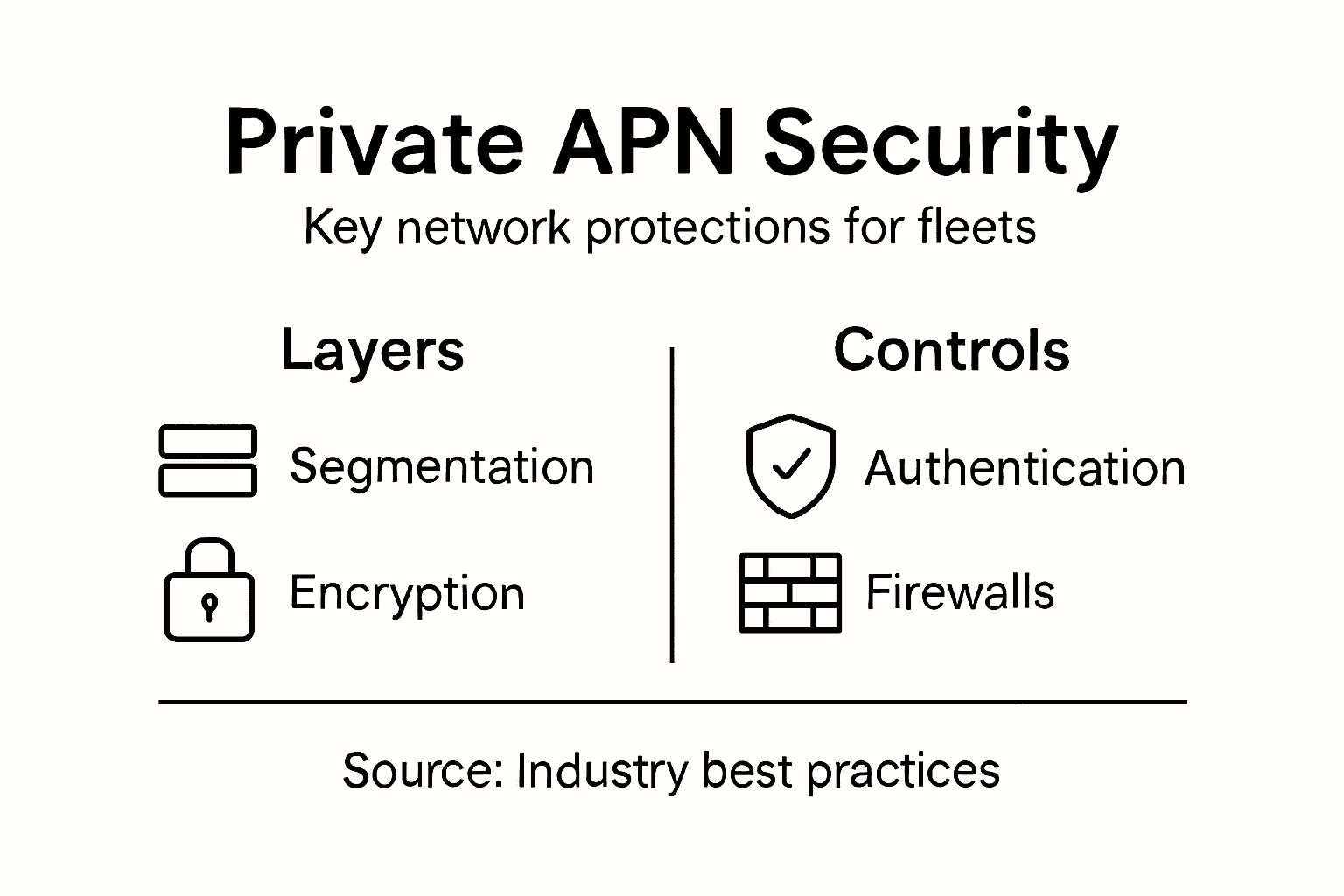
Comprehensive Protection Mechanisms
Private APN solutions integrate sophisticated security features designed to create multi-layered defense strategies:
- Advanced encryption protocols
- Continuous threat monitoring
- Granular access control systems
- Real-time authentication verification
- Automated intrusion detection capabilities
Private APN solutions transform mobile network vulnerability into a fortress of digital security.
Pro tip: Implement periodic security audits and penetration testing to continuously validate and enhance your private APN’s defensive capabilities.
Cost Considerations and Common Pitfalls
Private APN implementations represent significant technological investments that demand careful financial and strategic planning. Private network infrastructure requires comprehensive address planning and involves multiple layers of potential expenses beyond initial setup costs.
Key cost dimensions for private APN solutions include:
- Infrastructure Investment: Hardware and network equipment
- Licensing Expenses: Software and network management tools
- Operational Maintenance: Ongoing technical support and updates
- Security Compliance: Regulatory and cybersecurity requirements
- Training Costs: Personnel skill development and system familiarization
Financial Complexity
Budget allocation for private APN solutions involves more than straightforward equipment purchases. Public-private partnerships reveal complex implementation challenges that can dramatically impact total cost of ownership. Enterprises must anticipate potential hidden expenses and build financial flexibility into their technology roadmaps.
Common Implementation Pitfalls
Many organizations encounter recurring challenges when developing private APN strategies:
- Underestimating long-term maintenance costs
- Insufficient scalability planning
- Inadequate security protocol integration
- Poor vendor selection processes
- Lack of comprehensive risk management
Successful private APN deployment requires meticulous financial planning and risk mitigation strategies.
Pro tip: Conduct a comprehensive total cost of ownership analysis that includes potential future scalability and technological evolution scenarios before finalizing your private APN investment.
Private APN vs Public APN Alternatives
Network connectivity strategies present critical choices for enterprises managing mobile communications. Private networks use specialized IP address spaces to create isolated, secure communication environments that fundamentally differ from standard public network approaches.
Key comparative dimensions between private and public APNs include:
This summary highlights key differences between private and public APN approaches:
| Factor | Private APN | Public APN |
|---|---|---|
| Access Control | Organization-managed | Open to public users |
| Compliance Support | Meets strict requirements | Limited enforcement |
| Initial Investment | Higher setup costs | Lower startup costs |
| Threat Exposure | Minimal external risk | Significant vulnerabilities |
- Security Level: Private APNs offer superior protection
- Network Control: Granular management capabilities
- Compliance Requirements: Enhanced regulatory adherence
- Cost Structure: Higher initial investment
- Scalability: More predictable expansion options
Security Landscape
Public APN vulnerabilities represent significant operational risks for enterprises. Public IP addresses create inherent network exposure that can compromise sensitive communication channels. Unlike public networks, private APNs create dedicated, controlled communication pathways that minimize unauthorized access and potential data breaches.
Comparative Performance Analysis
Enterprises evaluating network strategies must consider multiple performance factors:
- Data transmission security
- Network reliability
- Operational flexibility
- Compliance management
- Long-term infrastructure costs
Private APN solutions transform network vulnerability from a liability into a strategic asset.
Pro tip: Conduct a comprehensive risk assessment that evaluates your specific operational requirements before selecting between private and public APN alternatives.
Unlock Secure Fleet Connectivity with SabertoothPro Solutions
Managing fleet communications requires more than just reliable internet. As the article explains, Private APN technology is essential for businesses seeking secure, controlled and scalable mobile connectivity. The challenge is clear: safeguard sensitive data while ensuring seamless access across your fleet amid evolving security threats and operational demands. SabertoothPro understands these pain points and offers tailored solutions combining IoT, mobile connectivity, and next-generation security frameworks designed specifically for trucking and logistics.
By choosing SabertoothPro, you gain access to advanced 4G LTE and 5G hotspot plans along with cutting-edge routers that leverage private APN principles to secure your fleet’s communications. Our solutions deliver:
- Enhanced data privacy and network isolation
- Simplified device management for your entire fleet
- Scalable connectivity options that evolve with your business

Explore our range of Titan WiFi hotspot plans today to experience high-speed, secure fleet internet designed to meet your specific needs. Don’t wait for a security breach or network failure to disrupt your operations. Visit SabertoothPro.com now to learn how our trusted IoT and mobile connectivity solutions can empower your fleet with the secure, reliable network it deserves.
Frequently Asked Questions
What is a Private APN?
A Private APN (Access Point Name) is a specialized network configuration that provides secure, controlled mobile connectivity for enterprises, offering enhanced security, traffic management, and improved performance for business applications.
How does a Private APN enhance security for fleet management?
Private APNs enhance security by creating isolated communication channels, utilizing private IP address spaces, and implementing robust authentication protocols and encryption standards to protect data from unauthorized access and external threats.
What are the different types of Private APNs available for fleet management?
The three main types of Private APNs include Dedicated Private APN (for full isolation), Shared Private APN (for multiple departments), and Hybrid Private APN (for combining public and private network elements) to meet diverse business needs.
What are the cost considerations when implementing a Private APN?
Cost considerations for a Private APN include infrastructure investment, licensing expenses, ongoing operational maintenance, security compliance, and training costs. It’s essential to conduct a total cost of ownership analysis to anticipate long-term expenses.