


What Is Mesh WiFi and Why It Matters for Connectivity

More than forty percent of American households report frustrating WiFi dead zones affecting daily life. Slow downloads, disrupted video calls, and spotty coverage are common headaches in both homes and offices. As wireless needs grow, understanding how mesh WiFi networks offer smarter, more resilient connectivity can transform your internet experience, providing practical solutions for consistent coverage across every room and device.
Table of Contents
- Mesh Wifi Defined And Core Concepts
- How Mesh Networks Improve Coverage
- Types Of Mesh Wifi Systems Explained
- Setup, Maintenance, And Security Insights
- Comparing Mesh Wifi To Traditional Routers
- Common Pitfalls And Choosing The Right System
Key Takeaways
| Point | Details |
|---|---|
| Mesh WiFi Networks Enhance Connectivity | Mesh networks provide seamless coverage and self-healing capabilities, ensuring reliable internet access throughout large spaces. |
| Flexible and Scalable Design | Users can easily expand their networks by adding nodes, accommodating changing connectivity needs without sacrificing performance. |
| Robust Network Security | Implementing strong encryption and authentication measures is crucial for maintaining the security of mesh networks against unauthorized access. |
| Careful Planning Required | Effective deployment of mesh networks necessitates strategic node placement and understanding of network requirements to avoid common pitfalls. |
Mesh WiFi Defined and Core Concepts
A mesh WiFi network represents a revolutionary approach to home and business wireless connectivity that transforms traditional internet distribution. Unlike standard single-router setups, mesh networks create a seamless web of interconnected devices working together to distribute data efficiently. Each node in the network acts as a relay point, ensuring comprehensive signal coverage across large spaces.
The core innovation of mesh networking lies in its decentralized architecture. Mesh networks consist of multiple nodes that are interconnected, allowing data to travel through multiple paths, which provides remarkable network redundancy and reliability. If one node experiences a technical failure, the network automatically reroutes communication through alternative paths, maintaining consistent internet connectivity. This self-healing capability makes mesh networks significantly more robust than traditional wireless setups.
Key characteristics of mesh WiFi networks include:
- Seamless roaming between nodes without signal drop
- Automatic path optimization for fastest data transmission
- Scalable design that allows easy expansion of network coverage
- Enhanced signal strength across larger physical spaces
- Intelligent routing that minimizes signal interference
Pro Tip - Network Planning: Before implementing a mesh WiFi system, carefully map your space and identify potential dead zones to determine the optimal number and placement of mesh nodes for maximum coverage and performance.
How Mesh Networks Differ from Traditional WiFi
Traditional WiFi networks rely on a single router broadcasting signals, which can create weak spots and inconsistent coverage. Mesh networks eliminate these limitations by creating a distributed network where each node communicates and cooperates, effectively extending internet access throughout complex environments like multi-story homes, large offices, or outdoor spaces.

Pro Tip - Signal Optimization: When setting up mesh nodes, position them at moderate distances that allow overlap but prevent signal congestion, typically 30-50 feet apart depending on your specific architectural layout.
How Mesh Networks Improve Coverage
Mesh networks represent a groundbreaking solution for addressing traditional wireless connectivity limitations, deploying multiple access points that communicate seamlessly to create a contiguous network over wide areas. This innovative approach allows for unprecedented flexibility in network design, enabling users to overcome signal dead zones and achieve comprehensive internet coverage across complex environments.
Wireless mesh networks enhance coverage by interconnecting stationary and mobile clients through multiple nodes that dynamically forward data, creating a robust and adaptive communication infrastructure. Unlike traditional WiFi systems that rely on a single router, mesh networks distribute connectivity responsibilities across multiple nodes, ensuring that even if one node fails, the network can automatically reroute signals through alternative paths. This intelligent routing mechanism provides several critical advantages:
- Consistent signal strength across larger areas
- Elimination of WiFi dead zones
- Seamless coverage for multi-story buildings
- Adaptive signal routing around physical obstacles
- Enhanced network resilience and reliability
The technological sophistication of mesh networks allows for remarkable scalability. By strategically adding nodes, users can progressively expand their network’s coverage without sacrificing performance. This modular approach makes mesh networking particularly valuable for environments with challenging signal distribution requirements, such as large homes, office complexes, warehouses, and outdoor spaces.
Pro Tip - Strategic Node Placement: When expanding your mesh network, prioritize node placement near potential signal blockage areas like thick walls, metal appliances, and corners to maximize signal penetration and overall network performance.
Types of Mesh WiFi Systems Explained
Mesh WiFi systems are not a one-size-fits-all solution, with multiple network topologies designed to address different connectivity challenges. The primary classifications include full mesh and partial mesh networks, each offering unique advantages for various technological environments and user requirements.
Full Mesh Networks represent the most comprehensive connectivity model, where every node is directly connected to every other node, creating an intricate web of communication pathways. This approach provides maximum redundancy and reliability, ensuring that if one node experiences failure, multiple alternative routes exist for data transmission. However, the complexity and infrastructure requirements make full mesh networks more suitable for specialized enterprise environments.
The primary types of mesh WiFi systems include:
- Wireless Mesh Networks: Utilize radio signals for node communication
- Wired Mesh Networks: Employ physical ethernet or fiber connections
- Hybrid Mesh Networks: Combine wireless and wired connection strategies
- Infrastructure Mesh Networks: Centrally managed with dedicated control nodes
- Client Mesh Networks: Distributed networks where client devices act as potential relay points
Partial mesh networks offer a more pragmatic approach for most residential and small business scenarios. These systems strategically connect nodes, balancing network performance with cost-effectiveness. By selectively establishing connections, partial mesh networks provide enhanced coverage and reliability without the extensive infrastructure demands of full mesh configurations.
Here’s a concise comparison of mesh WiFi network types and their practical applications:
| Mesh Network Type | Key Technology | Best For | Main Trade-off |
|---|---|---|---|
| Full Mesh | Direct connections | Large enterprises, data centers | High cost and complexity |
| Partial Mesh | Selective nodes | Homes, small businesses | Less redundancy |
| Wireless Mesh | Radio signals | Most modern households | Prone to interference |
| Wired Mesh | Ethernet/fiber | High-performance environments | Costly cabling required |
| Hybrid Mesh | Both wired/wireless | Flexible mixed infrastructures | Complexity in management |
Pro Tip - Network Matching: Evaluate your specific space and connectivity needs before selecting a mesh network type, considering factors like building size, number of devices, and potential signal obstructions.
Setup, Maintenance, and Security Insights
Deploying a mesh WiFi network requires strategic planning and precise configuration to ensure optimal performance and reliability. Setting up a mesh network involves carefully configuring nodes to form a Mesh Basic Service Set (MBSS) using specialized networking protocols, which establishes the fundamental communication framework for your wireless infrastructure.
The setup process encompasses several critical stages:
- Initial node placement and positioning
- Network configuration and protocol selection
- Device pairing and signal synchronization
- Performance testing and signal strength calibration
Network Security represents a paramount consideration in mesh WiFi deployments. Effective mesh networks implement robust authentication and encryption protocols to safeguard data transmission and prevent unauthorized access. This involves multiple layers of protection, including:
- Encrypted communication between nodes
- Strict device authentication mechanisms
- Regular firmware and security updates
- Intrusion detection and prevention systems
Maintenance of a mesh network requires ongoing monitoring and proactive management. Network administrators must regularly assess node performance, update firmware, and optimize configurations to maintain peak operational efficiency. This includes conducting periodic signal strength assessments, identifying potential interference sources, and ensuring seamless device integration.
Pro Tip - Security Vigilance: Implement a quarterly review of your mesh network’s security settings, update firmware across all nodes, and rotate authentication credentials to maintain a robust and protected wireless infrastructure.
Comparing Mesh WiFi to Traditional Routers
Traditional routers and mesh WiFi systems represent fundamentally different approaches to wireless network connectivity. Unlike traditional routers that rely on a single point of transmission, mesh networks offer multiple routes for data transmission, significantly enhancing network reliability, creating a more robust and adaptable communication infrastructure.
The key differences between traditional routers and mesh WiFi systems become apparent in several critical performance areas:
- Coverage: Traditional routers provide limited signal range from a single location
- Scalability: Mesh networks can easily expand by adding additional nodes
- Redundancy: Mesh systems offer automatic rerouting if one node fails
- Signal Consistency: Multiple nodes ensure more uniform signal distribution
Traditional router designs typically generate coverage from a single point, which frequently results in dead zones and limited scalability. Mesh WiFi systems fundamentally transform this approach by distributing network load across multiple interconnected nodes. This distributed architecture allows for more comprehensive coverage, particularly in larger or multi-story environments where signal penetration becomes challenging.
Performance differences extend beyond physical coverage. Mesh networks dynamically adjust routing paths, automatically selecting the most efficient communication channel between devices. Traditional routers, in contrast, maintain a more static connection model, which can lead to reduced network performance and increased latency during high-traffic periods.
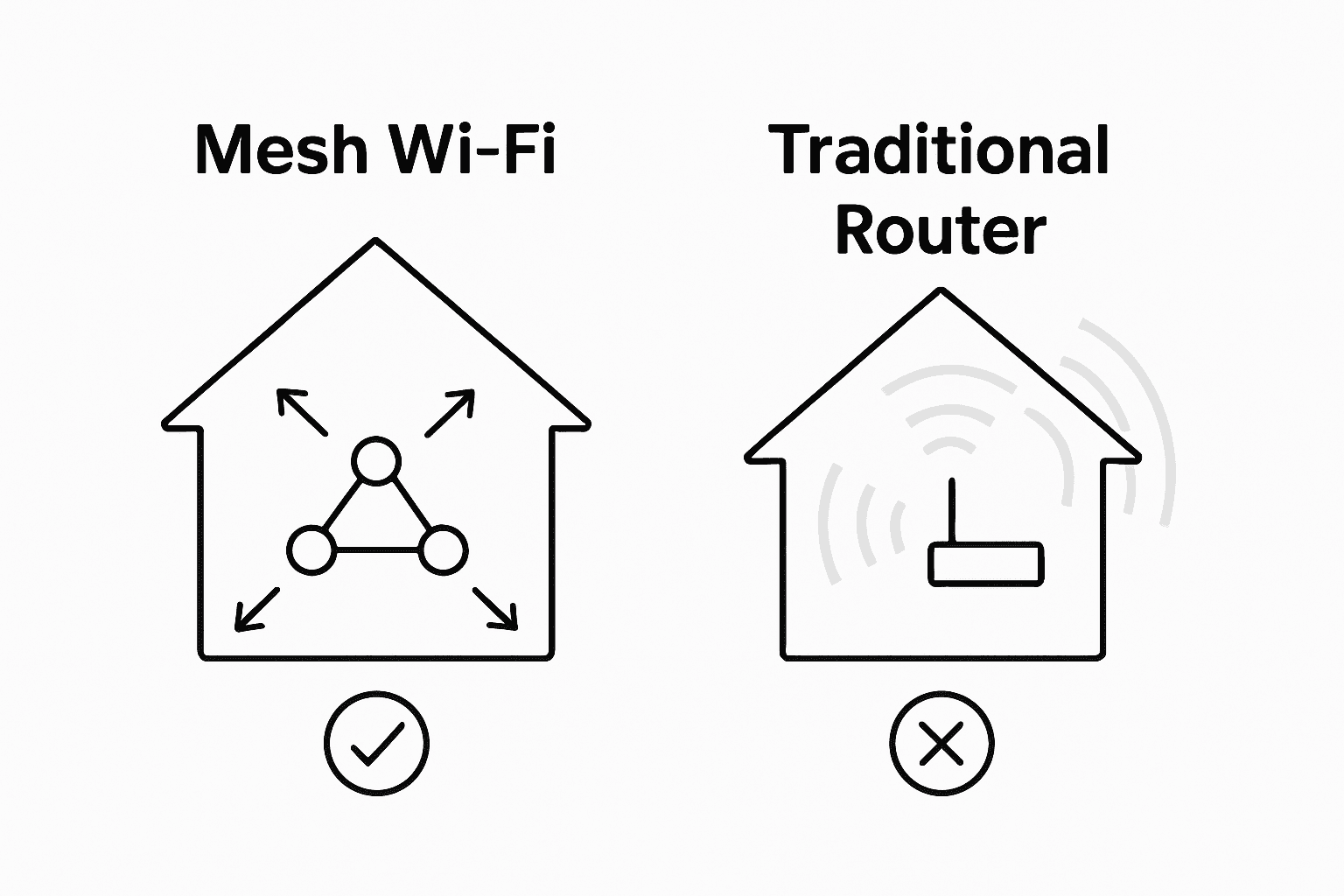
The following table summarizes performance and management differences between traditional routers and mesh WiFi systems:
| Aspect | Traditional Router | Mesh WiFi System |
|---|---|---|
| Coverage | Single source, limited | Multi-node, widespread |
| Scalability | Difficult to expand | Easily add more nodes |
| Reliability | Risk of total outage | Self-heals & reroutes data |
| Management | Manual settings needed | Centralized simple controls |
Pro Tip - Network Evaluation: Before transitioning from a traditional router to a mesh system, conduct a comprehensive site survey to map existing signal strengths and identify potential dead zones that your new network configuration will need to address.
Common Pitfalls and Choosing the Right System
Mesh WiFi networks require careful planning and strategic implementation to maximize their potential. Deploying these systems involves navigating several critical challenges, including inadequate node placement and insufficient capacity planning, which can significantly impact overall network performance.
Common pitfalls that users encounter when implementing mesh networks include:
- Improper node spacing leading to signal gaps
- Overlooking physical obstacles like thick walls or metal structures
- Inadequate bandwidth allocation
- Insufficient understanding of network topology requirements
- Neglecting security configuration during initial setup
Selecting the appropriate mesh network system involves carefully evaluating multiple factors, including network size, budget constraints, and available technical expertise. Users must consider their specific environment, including home or office layout, number of connected devices, and anticipated data transmission requirements. The complexity of mesh networks means that a one-size-fits-all approach rarely delivers optimal results.
Budgetary considerations play a significant role in system selection. Mesh networks typically require a higher initial investment compared to traditional router setups, with costs varying based on the number of nodes and advanced features. Professional-grade systems offer more robust performance but come with a correspondingly higher price point, making it crucial to balance technical requirements with financial constraints.
Pro Tip - Comprehensive Assessment: Before purchasing a mesh WiFi system, conduct a thorough site survey, map your current network dead zones, and calculate the total number of devices that will simultaneously connect to ensure you select a system with adequate performance capabilities.
Supercharge Your Connectivity with Mesh WiFi Solutions from SabertoothPro
If you are struggling with spotty coverage, dead zones, or unreliable internet in your home or business, it is time to consider mesh WiFi as highlighted in our article. Understanding concepts like seamless roaming, network redundancy, and intelligent routing can transform your wireless experience. SabertoothPro offers advanced products tailored to overcome the connectivity challenges discussed, including powerful mesh network devices and high-speed hotspot plans designed for seamless scalability and robust signal strength.

Explore our Titan WiFi systems for cutting-edge mesh WiFi hardware that ensures consistent coverage across any environment. Combine these with our flexible Titan WiFi hotspot plans for reliable internet access wherever you need it most. Get started today at SabertoothPro.com and eliminate dead zones with solutions built for performance, security, and effortless expansion.
Frequently Asked Questions
What is a mesh WiFi network?
A mesh WiFi network is a system that uses multiple interconnected nodes to distribute internet connectivity more effectively across a larger area, eliminating dead zones and providing consistent signal strength.
How does mesh WiFi improve coverage compared to traditional routers?
Mesh WiFi improves coverage by using multiple access points that work together, allowing for seamless roaming and eliminating weak signal spots that are common with traditional single-router setups.
What are the key benefits of using a mesh WiFi system?
The key benefits of a mesh WiFi system include seamless roaming, automatic path optimization for faster data transmission, scalability for expanding coverage, enhanced signal strength, and intelligent routing that minimizes interference.
What should I consider when setting up a mesh WiFi network?
When setting up a mesh WiFi network, consider factors like node placement to avoid interference, the layout of your space to identify potential dead zones, and the number of connected devices to ensure adequate bandwidth allocation.