


What Is Wireless Failover – Impact on Fleet Connectivity

Unexpected network failures can bring fleet operations to a standstill, leaving drivers and dispatchers disconnected when every second counts. For IT leaders in logistics, reliable connectivity means more than convenience—it is crucial for maintaining communication, tracking assets, and meeting customer expectations across the Mid-Atlantic region. This article breaks down how wireless failover delivers seamless, always-on network access, helping your fleet stay productive no matter where the road leads.
Table of Contents
- Wireless Failover Defined for Fleet Operators
- Types of Wireless Failover Solutions Available
- How Wireless Failover Powers Fleet Connectivity
- Key Risks and Implementation Challenges
- Costs, ROI, and Top Alternatives Compared
Key Takeaways
| Point | Details |
|---|---|
| Importance of Wireless Failover | Wireless failover ensures uninterrupted connectivity for fleet operations, preventing communication gaps. |
| Types of Solutions | Fleet operators can choose from various wireless failover solutions based on their specific needs, such as multi-connectivity and intelligent routing. |
| Challenges and Risks | Implementations involve navigating challenges like network interoperability and latency during transitions, which may affect performance. |
| Cost Considerations and ROI | A comprehensive financial evaluation is crucial to understand long-term value and operational efficiency gains from wireless failover investments. |
Wireless Failover Defined for Fleet Operators
Wireless failover represents a critical connectivity strategy for fleet operators, ensuring uninterrupted network access when primary communication channels experience disruption. At its core, this technology provides automatic network switching capabilities that maintain consistent internet connectivity across mobile fleet vehicles.
In practical terms, wireless failover works by seamlessly migrating connections between different wireless networks without interrupting active data transmissions. Fleet operators rely on this technology to prevent communication gaps that could compromise operational efficiency, tracking, and real-time reporting.
Key characteristics of wireless failover for fleet connectivity include:
- Automatic network switching between cellular networks
- Minimal connection interruption during transitions
- Support for multiple wireless network technologies
- Quick restoration of internet connectivity
- Maintenance of active data sessions during network changes
The underlying mechanism involves intelligent network management systems that continuously monitor connection quality and instantly redirect traffic through alternative wireless networks when primary links degrade or fail. This approach ensures fleet vehicles remain connected, regardless of geographical variations or infrastructure challenges.
Wireless Network Reliability becomes a mission-critical factor for logistics operations. Fleet managers need solutions that provide consistent, uninterrupted connectivity across diverse operational environments - from urban centers to remote rural routes.
Pro tip: Implement comprehensive network monitoring tools that can track multiple wireless connections simultaneously to optimize your fleet’s failover strategy.
Types of Wireless Failover Solutions Available
Wireless failover solutions for fleet operators encompass multiple sophisticated technologies designed to maintain continuous network connectivity. These solutions are critical for ensuring uninterrupted communication and data transmission across mobile vehicle networks.
One primary approach is multi-connectivity network architecture, which enables simultaneous connections across different wireless technologies. This innovative strategy allows fleet vehicles to dynamically switch between cellular networks, Wi-Fi, and satellite communications to guarantee persistent internet access.
Key wireless failover solution types include:
- Dual Connectivity Systems
- Cellular Bonding Technologies
- Multi-Path TCP Networks
- Software-Defined Network Switching
- Intelligent Routing Platforms
These solutions employ advanced network management techniques that continuously monitor connection quality and automatically redirect traffic through the most reliable available network. Intelligent Failover Mechanisms analyze signal strength, latency, and bandwidth to make real-time routing decisions, ensuring minimal disruption to active data sessions.
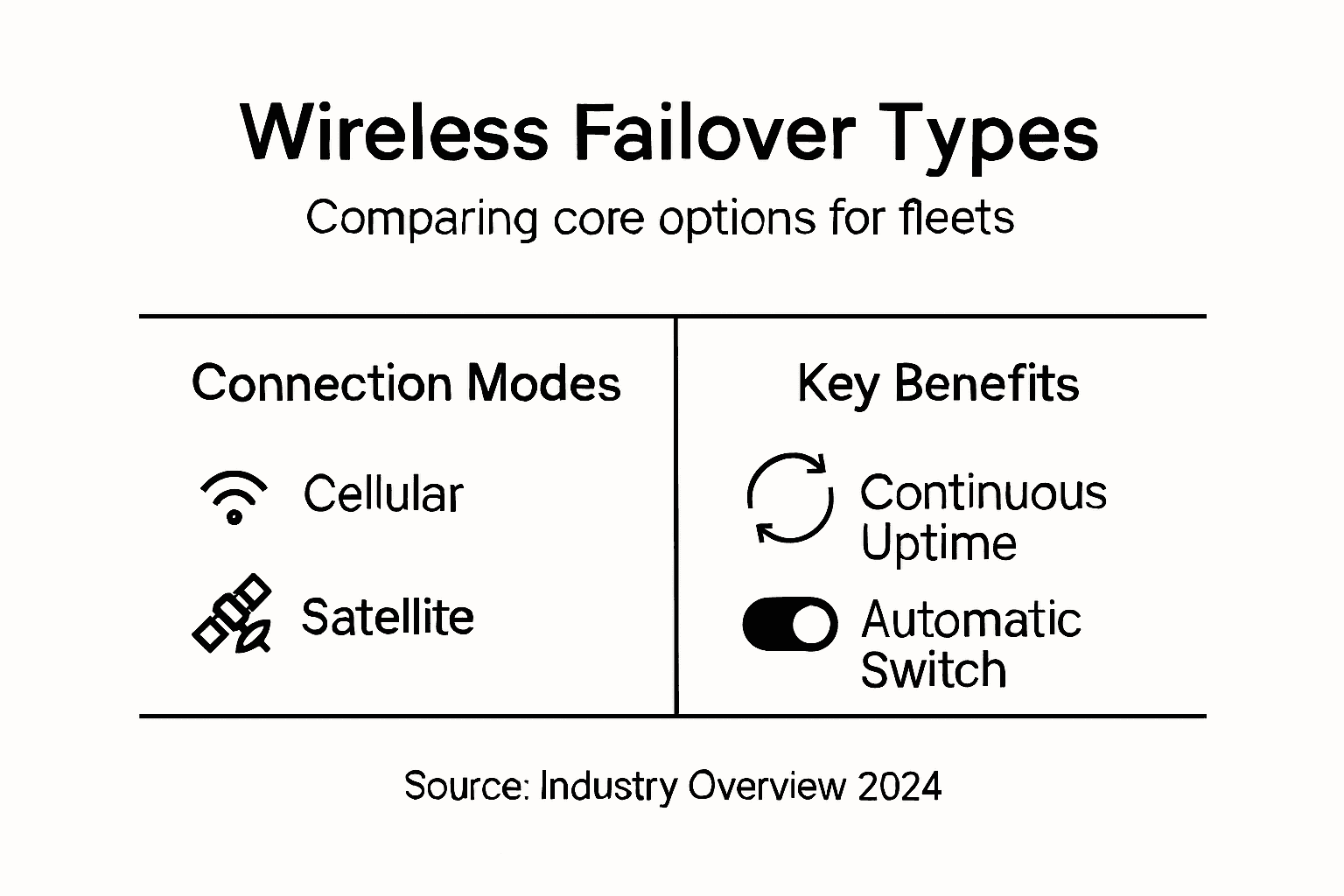
The technical complexity of these systems involves sophisticated protocols that can migrate active connections between different wireless infrastructures without losing data or interrupting critical communications. Fleet managers can select solutions based on their specific operational requirements, geographical coverage, and budget constraints.
Here is a comparison of leading wireless failover solution types and their optimal use cases:
| Solution Type | Best Deployment Setting | Primary Benefit |
|---|---|---|
| Dual Connectivity Systems | Urban and suburban fleets | Fast network recovery |
| Cellular Bonding Technologies | Intercity or highway operations | Strong bandwidth aggregation |
| Multi-Path TCP Networks | Geographically diverse routes | Reliable session continuity |
| Software-Defined Switching | Fleets with complex IT needs | Granular route control |
| Intelligent Routing Platforms | Large, distributed fleet networks | Automated decision-making |
Pro tip: Conduct thorough network assessments to identify the most suitable wireless failover solution that matches your fleet’s unique connectivity demands and operational environments.
How Wireless Failover Powers Fleet Connectivity
Wireless failover technologies are revolutionizing fleet connectivity by creating robust, adaptive communication networks that ensure uninterrupted data transmission across diverse operational environments. These advanced systems transform how logistics companies maintain real-time communication and operational visibility, regardless of geographical challenges or network infrastructure limitations.
Edge-to-cloud connectivity solutions enable fleet operators to maintain consistent communication by dynamically routing data through multiple wireless networks. This approach provides critical redundancy, allowing vehicles to seamlessly transition between cellular, satellite, and wireless networks without experiencing service disruptions.
Key mechanisms that power fleet connectivity include:
- Automated network path selection
- Real-time signal strength monitoring
- Intelligent traffic rerouting
- Predictive connection management
- Low-latency network handoffs
Adaptive Network Routing represents the core technological breakthrough in wireless failover systems. These sophisticated platforms continuously analyze network conditions, automatically selecting the most reliable communication pathway to maintain consistent data transmission for fleet vehicles.
Modern wireless failover technologies leverage advanced 5G and wireless protocols to create resilient communication infrastructures. These systems go beyond simple backup connections, actively managing multiple network interfaces to optimize performance, reduce latency, and ensure mission-critical data remains consistently accessible throughout complex logistical operations.
Pro tip: Implement comprehensive network monitoring tools that provide real-time visibility into your fleet’s wireless connectivity performance and potential failover scenarios.
Key Risks and Implementation Challenges
Wireless failover implementations for fleet connectivity present complex technical and operational challenges that can significantly impact network reliability and performance. Fleet operators must navigate a sophisticated landscape of technological constraints and potential disruption risks that could compromise mission-critical communication systems.
The most significant challenges emerge from cross-border connectivity complexities, which include inconsistent network interoperability, roaming policy variations, and technical synchronization difficulties. These obstacles can create unexpected service interruptions that directly threaten fleet operational continuity.
Key implementation risks include:
- Network latency during transition periods
- Inconsistent signal quality across geographical regions
- Complex multi-carrier coordination requirements
- Potential data transmission integrity issues
- Unpredictable resource allocation challenges
Technical Interoperability represents a critical concern for fleet wireless failover systems. Organizations must develop robust architectural approaches that can seamlessly manage transitions between different wireless networks while maintaining consistent performance standards.
Moreover, mission-critical network challenges introduce additional complexity, such as multi-layer signal interference, channel fading, and dynamic resource management requirements. These technical nuances demand sophisticated adaptive technologies that can rapidly reconfigure network pathways to sustain ultra-reliable communications.
Pro tip: Develop comprehensive network resilience testing protocols that simulate multiple failover scenarios to identify and mitigate potential connectivity vulnerabilities before full-scale deployment.
Costs, ROI, and Top Alternatives Compared
Wireless failover solutions represent significant capital investments for fleet operators, requiring comprehensive financial analysis to determine long-term value and operational benefits. Understanding the complex economic landscape of connectivity technologies is crucial for making informed strategic decisions.

Network technology investments demand careful evaluation of weighted average cost of capital (WACC) and expected returns on connectivity infrastructure. Fleet managers must balance upfront implementation expenses against potential operational efficiency gains and reduced communication disruption risks.
Key cost considerations include:
- Initial hardware and software deployment expenses
- Ongoing network subscription and maintenance fees
- Training and integration costs
- Potential productivity improvements
- Risk mitigation value
Investment Optimization requires a holistic approach that goes beyond simple price comparisons. Sophisticated fleet operators analyze comprehensive performance metrics, including reliability, coverage consistency, and potential operational impact when selecting wireless failover solutions.
The following table summarizes key cost factors and potential ROI drivers for fleet wireless failover investments:
| Cost Factor | Long-Term Impact | ROI Driver |
|---|---|---|
| Hardware Investment | Higher reliability, long use | Reduced downtime |
| Software Subscription Fees | Ongoing connectivity updates | Consistent network access |
| Training and Integration | Efficient onboarding | Faster deployment |
| Productivity Gains | Real-time fleet coordination | Lower operational costs |
| Risk Mitigation Value | Fewer service interruptions | Protects mission-critical data |
Alternative technologies offer intriguing opportunities for cost-effective network enhancement, such as network-controlled repeaters that improve spectral efficiency and power management. These innovative approaches can provide strategic alternatives to traditional failover infrastructure, potentially reducing overall implementation and operational expenses.
Pro tip: Conduct a detailed total cost of ownership (TCO) analysis that includes both direct infrastructure costs and potential indirect savings from improved operational reliability.
Ensure Seamless Fleet Connectivity with SabertoothPro Solutions
Maintaining uninterrupted wireless connectivity is critical for fleet operators facing the challenges of network interruptions and complex failover scenarios. The article highlights the importance of automatic network switching, intelligent routing, and real-time signal monitoring to prevent communication gaps that disrupt fleet operations. SabertoothPro offers advanced technology solutions tailored to these needs, including reliable 4G LTE and 5G hotspots, high-performance routers, and adaptive IoT connectivity designed to support multi-network failover and maintain your fleet’s edge-to-cloud communication.
Experience a new level of network resilience with our offerings that optimize your fleet’s connectivity through leading-edge wireless technology and robust security features. Explore reliable network extension tools like WiFi Extenders that enhance signal strength across mobile assets. Discover comprehensive enterprise IT and mobile communication solutions available at SabertoothPro.com to future-proof your fleet’s digital infrastructure.

Take control of your fleet’s wireless failover today and eliminate costly downtime. Visit SabertoothPro.com now to connect with expert solutions that deliver continuous, secure, and intelligent network performance. Empower your operations with the right technology to stay connected no matter where your fleet travels.
Frequently Asked Questions
What is wireless failover and how does it benefit fleet operators?
Wireless failover is a connectivity strategy that enables fleet operators to switch automatically between different wireless networks, ensuring uninterrupted internet access during disruptions. This technology helps prevent communication gaps that can compromise operational efficiency and real-time reporting.
What are the key features of a wireless failover system?
Key features of wireless failover systems include automatic network switching, minimal connection interruption during transitions, support for multiple wireless technologies, quick restoration of connectivity, and maintenance of active data sessions during network changes.
How do wireless failover solutions maintain consistent fleet connectivity?
Wireless failover solutions maintain connectivity by using intelligent network management systems that continuously monitor connection quality and redirect traffic through alternative networks when primary links degrade or fail. This ensures constant connectivity for fleet vehicles across diverse environments.
What types of wireless failover solutions are available for fleet operations?
Types of wireless failover solutions include dual connectivity systems, cellular bonding technologies, multi-path TCP networks, software-defined network switching, and intelligent routing platforms. Each solution is designed to address specific operational needs and optimize network performance.