


Why Secure Your WiFi – Impact on Privacy and Safety

More than 70 percent of American households now rely on WiFi for daily tasks and entertainment. As digital threats grow more sophisticated, simply setting a password is no longer enough to protect your digital life. Understanding what truly keeps a network secure helps American families and businesses guard private data, block intrusions, and use the internet with greater confidence. Learn the essential steps modern users are taking to keep their WiFi safe and their information private.
Table of Contents
- What Securing WiFi Really Means Today
- Common WiFi Vulnerabilities and Threats
- Hacker Risks: Data Breaches and Theft
- Compliance, IoT Devices, and WiFi Security
- Best Practices for Home and Business Networks
Key Takeaways
| Point | Details |
|---|---|
| Comprehensive Security Strategy | Modern WiFi security requires a multi-layered approach, including encryption, access control, and ongoing monitoring. |
| Awareness of Vulnerabilities | Users must recognize common threats like man-in-the-middle attacks and ensure their networks are adequately secured. |
| Regular Maintenance | Keeping router firmware updated and changing default passwords is essential to protect against evolving cyber threats. |
| IoT Considerations | The integration of IoT devices necessitates strict security protocols and regular audits to safeguard network integrity. |
What Securing WiFi Really Means Today
Securing your WiFi network is no longer optional—it’s essential protection for your digital life. Modern WiFi security goes far beyond simple password protection, encompassing multiple layers of technological safeguards designed to prevent unauthorized access and protect sensitive personal data. Implementing robust encryption protocols represents the first critical line of defense against potential cyber threats.
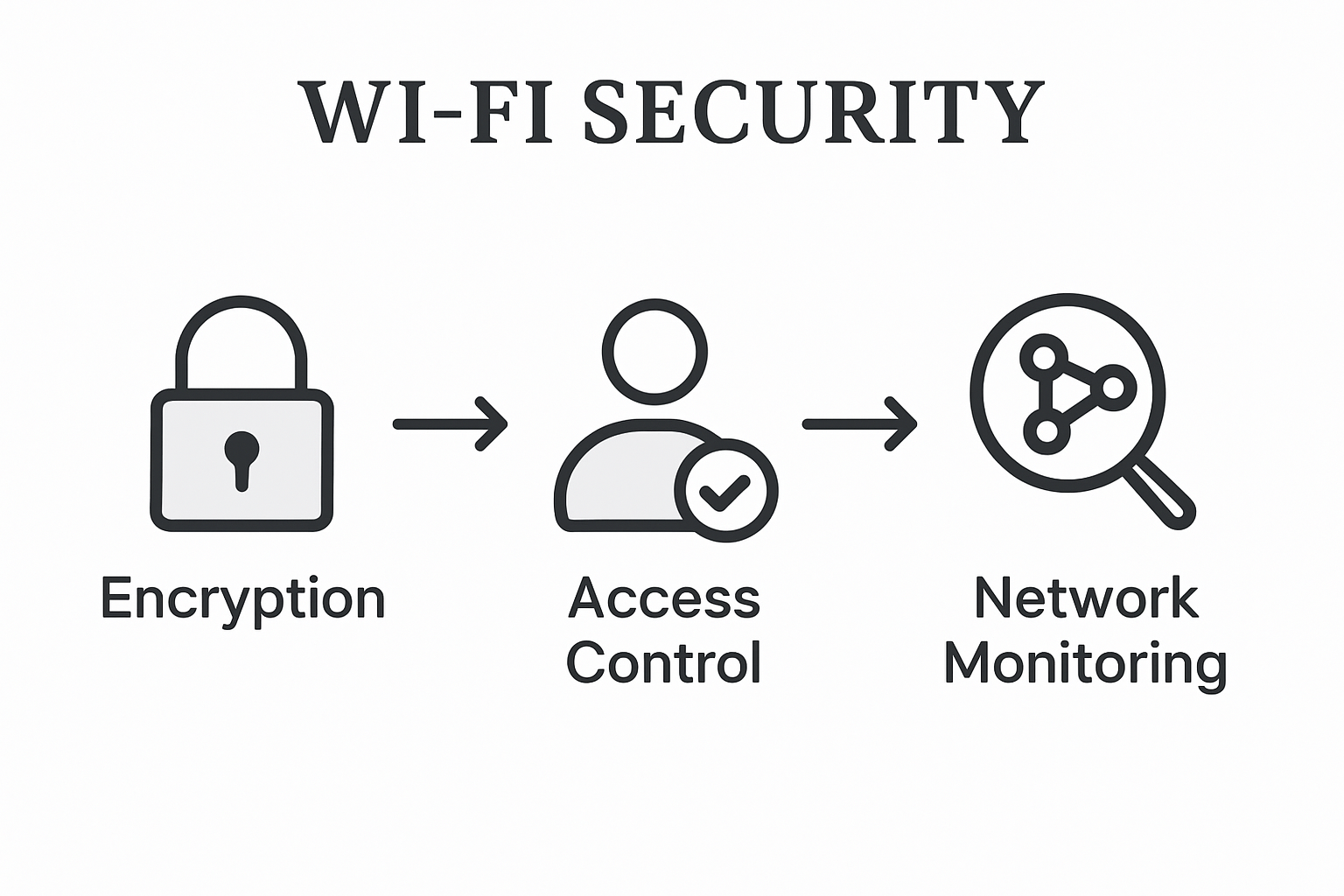
At its core, WiFi security involves three fundamental components: encryption, access control, and network monitoring. Encryption prevents outsiders from intercepting and reading data transmitted across your network, using advanced protocols like WPA2 and WPA3. Modern encryption transforms your data into an unreadable format, ensuring that even if someone manages to capture network traffic, they cannot decipher the actual information. Access control further strengthens security by limiting who can connect to your network, typically through complex passwords, MAC address filtering, and guest network segmentation.
Beyond basic settings, contemporary WiFi security requires ongoing management and awareness. This means regularly updating router firmware, disabling remote management features, changing default administrator passwords, and using network monitoring tools to detect unusual activity. Implementing a combination of technical controls and user education creates a comprehensive security strategy that protects against evolving digital threats. Advanced techniques like hiding your network’s SSID and using enterprise-grade firewall solutions can provide additional layers of protection for users seeking maximum digital privacy.
Key elements of modern WiFi security include:
- Strong, unique passwords
- WPA3 encryption
- Regular firmware updates
- Disabled WPS features
- Guest network isolation
- MAC address filtering
- Network activity monitoring
By understanding and implementing these strategies, users can transform their WiFi from a potential vulnerability into a secure digital environment.
Common WiFi Vulnerabilities and Threats
WiFi networks represent a complex digital landscape fraught with potential security risks that can compromise personal and professional data. Unsecured wireless networks are particularly susceptible to sophisticated cyber intrusions, with attackers employing various techniques to exploit network vulnerabilities. From casual opportunistic hackers to organized cybercriminal groups, the range of potential threats is both diverse and constantly evolving.
Some of the most critical WiFi vulnerabilities include man-in-the-middle attacks, where malicious actors intercept communication between devices, and eavesdropping techniques that compromise sensitive data transmissions. Specific attack methods like piggybacking and wardriving allow unauthorized users to gain network access by exploiting weak security configurations. These intrusions can lead to significant privacy breaches, including identity theft, financial fraud, and unauthorized access to personal or professional information.
Modern WiFi networks face multiple threat vectors that require comprehensive security strategies. Denial-of-service attacks can disrupt network functionality, while weak encryption protocols create openings for sophisticated cybercriminals to penetrate network defenses. Specific vulnerabilities often stem from:
- Outdated router firmware
- Default or weak passwords
- Unencrypted network connections
- Unpatched security holes
- Lack of network monitoring
Practical defense strategies involve implementing robust security measures, regularly updating network configurations, and maintaining vigilant monitoring of network activity. By understanding these potential threats, users can take proactive steps to protect their digital environments and minimize the risk of unauthorized access.
Hacker Risks: Data Breaches and Theft
The digital landscape is riddled with sophisticated threats that can transform an unsecured WiFi connection into a gateway for devastating cyber attacks. Unsecured public wireless networks expose users to critical vulnerabilities, creating opportunities for malicious actors to intercept sensitive personal and financial information with alarming precision. From casual coffee shop browsers to remote workers, anyone using an unprotected network becomes a potential target for cybercriminals seeking to exploit digital vulnerabilities.

Data breaches represent a significant and growing threat, with hackers employing increasingly complex techniques to infiltrate networks and steal valuable personal information. Malware spread through public WiFi networks can lead to catastrophic consequences, including identity theft, financial fraud, and comprehensive system compromises. These attacks can result in devastating personal and professional repercussions, ranging from stolen credit card details to complete digital identity takeover.
The most common hacker strategies involve:
- Intercepting unencrypted data transmissions
- Exploiting weak network security protocols
- Deploying sophisticated malware
- Conducting man-in-the-middle attacks
- Stealing login credentials
- Hijacking device connections
Protecting against these risks requires a multi-layered approach that combines technological safeguards, personal awareness, and proactive security measures. Users must remain vigilant, understanding that every unsecured connection represents a potential entry point for cybercriminals seeking to exploit digital vulnerabilities and compromise personal and professional digital ecosystems.
Compliance, IoT Devices, and WiFi Security
The integration of Internet of Things (IoT) devices has dramatically transformed network security landscapes, introducing complex challenges for organizations seeking to maintain robust digital infrastructures. The proliferation of IoT devices fundamentally reshapes network vulnerability frameworks, creating unprecedented security challenges that demand sophisticated, multi-layered protection strategies.
Enterprise wireless networks must now navigate increasingly complex compliance requirements, implementing advanced security protocols to safeguard sensitive information. Organizations must adopt comprehensive security frameworks that include Wireless Intrusion Detection and Prevention Systems, ensuring robust protection against emerging cyber threats. The integration of IoT devices introduces significant vulnerabilities, with each connected device potentially serving as an entry point for malicious actors seeking to compromise network integrity.
Key considerations for IoT and WiFi security include:
- Implementing strict device authentication protocols
- Utilizing WPA3 encryption standards
- Segmenting IoT device networks
- Conducting regular security audits
- Maintaining up-to-date firmware
- Monitoring device communication patterns
- Establishing clear access control policies
Successful IoT security strategies require a holistic approach that balances technological innovation with rigorous compliance standards. Organizations must continuously evolve their security frameworks, recognizing that IoT devices represent both a powerful technological asset and a potential network vulnerability that demands constant vigilance and proactive protection.
Best Practices for Home and Business Networks
Securing WiFi networks requires a comprehensive approach that addresses both technological vulnerabilities and human behavior. Implementing robust encryption and network configuration practices represents the foundational strategy for protecting digital environments against potential cyber threats. Home and business networks alike must adopt sophisticated security measures that go beyond basic password protection.
Network security demands a multi-layered approach that combines technical controls with proactive management strategies. Comprehensive router configuration involves changing default settings, enabling advanced encryption, and strategically positioning network equipment to minimize external access risks. Businesses and individuals must recognize that network security is an ongoing process requiring constant vigilance and adaptive strategies.
Key best practices for WiFi network protection include:
- Implementing WPA3 encryption protocols
- Changing default router login credentials
- Disabling remote administration features
- Regularly updating firmware and software
- Creating separate networks for guest and personal devices
- Using strong, unique passwords
- Enabling network firewalls
- Monitoring network access logs
- Restricting physical router access
Effective network security transcends technical configurations, requiring a holistic approach that combines technological solutions with user awareness and consistent maintenance. By treating network protection as a dynamic, evolving challenge, organizations and individuals can significantly reduce their vulnerability to potential cyber intrusions and protect their digital ecosystems from emerging threats.
Protect Your Privacy with Cutting-Edge WiFi Security Solutions
Securing your WiFi is essential to protect your sensitive data and maintain your peace of mind. This article highlights how threats like unauthorized access, data breaches, and weak encryption put your digital safety at risk. If you want strong WPA3 encryption, network monitoring, and reliable safeguards for your home or business, SabertoothPro.com offers comprehensive solutions designed to fight these exact vulnerabilities.
Explore advanced devices such as the Titan WiFi collection to boost your network’s security and performance. Pair this with customizable Titan WiFi hotspot plans for trusted high-speed internet anytime and anywhere. SabertoothPro empowers you to build a secure digital environment that stops hackers and protects your privacy.
Ready to secure your connection before threats evolve further
 Discover tailored security and connectivity solutions now at SabertoothPro.com and take control of your WiFi safety today.
Frequently Asked Questions
Why is securing my WiFi network important for my privacy?
Securing your WiFi network is essential to protect your sensitive personal information from unauthorized access. Without proper security, cybercriminals can intercept your data, leading to identity theft and financial fraud.
What are the best practices for securing my home WiFi network?
Best practices include using strong, unique passwords, enabling WPA3 encryption, regularly updating your router’s firmware, and creating separate networks for guest devices. Additionally, monitor your network for any unusual activity.
How often should I update my WiFi router’s firmware for optimal security?
You should update your WiFi router’s firmware regularly, ideally every few months, or whenever your router manufacturer releases updates. Keeping firmware up to date helps protect against new vulnerabilities and enhances overall security.
What are the common threats to unsecured WiFi networks?
Common threats include man-in-the-middle attacks, eavesdropping, unauthorized access through piggybacking, and malware infiltration. These vulnerabilities can lead to significant data breaches and privacy violations.