


Role of Wireless Routers in Secure Telemedicine

Most american healthcare providers now rely on uninterrupted wireless connectivity for telemedicine, yet nearly 60 percent report security as their top concern. As virtual care forms a growing share of patient services, IT managers in the Mid-Atlantic face increasing pressure to ensure patient data stays private and medical devices connect without fail. This guide clarifies the core functions, key features, and top security considerations you need to select the right wireless routers for your healthcare network.
Table of Contents
- Core Functions Of Wireless Routers Explained
- Types Of Wireless Routers For Healthcare Use
- Essential Features For Secure Patient Connectivity
- Wireless Router Security Risks In Telemedicine
- Compliance And Device Selection Best Practices
Key Takeaways
| Point | Details |
|---|---|
| Core Functions of Wireless Routers | Wireless routers enable secure and reliable digital communication in healthcare, ensuring effective data transmission and patient confidentiality. |
| Types of Routers for Telemedicine | Specialized routers like enterprise-grade, mesh, and medical network routers are essential for meeting complex healthcare needs and maintaining robust security. |
| Essential Security Features | High-level encryption, access controls, and network monitoring are crucial in protecting sensitive patient data from unauthorized access. |
| Best Practices for Security | Regular firmware updates and strong authentication mechanisms greatly reduce vulnerabilities in telemedicine infrastructure. |
Core Functions of Wireless Routers Explained
Wireless routers serve as critical network connectivity hubs, enabling seamless data transmission and internet access across multiple devices. These sophisticated networking devices perform several core functions that transform how healthcare organizations manage digital communications. Routers connect multiple networks and forward data packets between different systems, acting as intelligent traffic directors in complex digital environments.
The primary function of a wireless router in telemedicine involves creating a secure wireless network that allows medical devices, computers, and communication platforms to interconnect reliably. By combining routing capabilities with wireless access point technologies, these devices enable healthcare professionals to transmit patient data, conduct remote consultations, and maintain critical communication channels. Wireless network management becomes paramount, as routers must handle multiple simultaneous connections while maintaining robust security protocols.
Key core functions of wireless routers in secure telemedicine include:
- Network Address Translation (NAT) to protect internal network infrastructure
- Dynamic IP address assignment for efficient device management
- Firewall protection to prevent unauthorized network access
- Bandwidth management to prioritize critical medical data transmission
- Encryption support for maintaining patient data privacy
Pro Tip for Healthcare IT Managers: Regularly update router firmware and implement complex authentication protocols to minimize potential security vulnerabilities in your telemedicine infrastructure.
Types of Wireless Routers for Healthcare Use
Healthcare organizations require specialized wireless router configurations to support the complex and sensitive requirements of telemedicine infrastructure. Different router types address specific network challenges, ensuring reliable and secure data transmission across medical environments. Exploring different router configurations for remote worker connectivity reveals the nuanced technological requirements of modern healthcare networks.

Three primary wireless router types are crucial for healthcare settings: enterprise-grade routers, mesh network routers, and specialized medical network routers. Enterprise-grade routers offer advanced security features like robust encryption, multiple virtual network support, and comprehensive access control mechanisms. Mesh network routers provide extensive coverage across large medical facilities, eliminating wireless dead zones and ensuring consistent connectivity for medical staff and digital health devices.
Key characteristics of healthcare-focused wireless routers include:
- High-bandwidth support for video consultations and large medical file transfers
- Advanced security protocols to protect patient confidentiality
- Multi-band frequency capabilities enabling simultaneous device connections
- HIPAA compliance features for data protection
- Remote management options for IT administrators
Specialized Medical Network Routers represent the most advanced category, specifically engineered with healthcare compliance and security requirements in mind. These routers integrate enhanced encryption, granular access controls, and dedicated channels for sensitive medical communication.
Here’s a comparison of wireless router types suited for healthcare environments:
| Router Type | Primary Use Case | Distinct Advantage |
|---|---|---|
| Enterprise-Grade Router | Large hospitals and clinics | Advanced security and scalability |
| Mesh Network Router | Expansive medical campuses | Seamless coverage, no dead zones |
| Specialized Medical Router | Compliance-driven patient care settings | Built-in HIPAA compliance |
Pro Tip for Healthcare Technology Managers: Conduct comprehensive network assessments and perform regular security audits to ensure your wireless router infrastructure meets evolving medical data protection standards.
Essential Features for Secure Patient Connectivity
Secure patient connectivity demands robust wireless router features that protect sensitive medical information while enabling seamless digital healthcare experiences. Advanced Wi-Fi technologies enhance hospital network capacity and security, supporting critical telemedicine infrastructure requirements.
The most critical security features for healthcare wireless routers include multi-layer encryption, comprehensive access controls, and dynamic threat protection. These technologies create a sophisticated defense mechanism that safeguards patient data transmission across complex medical networks. Robust authentication protocols prevent unauthorized access, while advanced encryption ensures that patient health information remains confidential during digital communications.
Key essential features for secure patient connectivity comprise:
- End-to-end data encryption preventing unauthorized data interception
- HIPAA-compliant security frameworks
- Granular user access management
- Real-time network monitoring capabilities
- Automated security patch management
- Isolated network segments for different medical departments
Additionally, modern healthcare wireless routers must integrate sophisticated intrusion detection systems that can identify and neutralize potential cybersecurity threats in real time. These systems continuously analyze network traffic, detecting anomalous patterns that might indicate potential security breaches or unauthorized access attempts.
Pro Tip for Healthcare IT Security Managers: Implement comprehensive network segmentation strategies and conduct regular penetration testing to proactively identify and address potential vulnerabilities in your telemedicine infrastructure.
Wireless Router Security Risks in Telemedicine
Wireless telemedicine systems expose significant security vulnerabilities that can compromise patient confidentiality and institutional data integrity. The complex network environments inherent in healthcare settings create multiple potential entry points for cybersecurity threats, making comprehensive risk assessment crucial for protecting sensitive medical information.
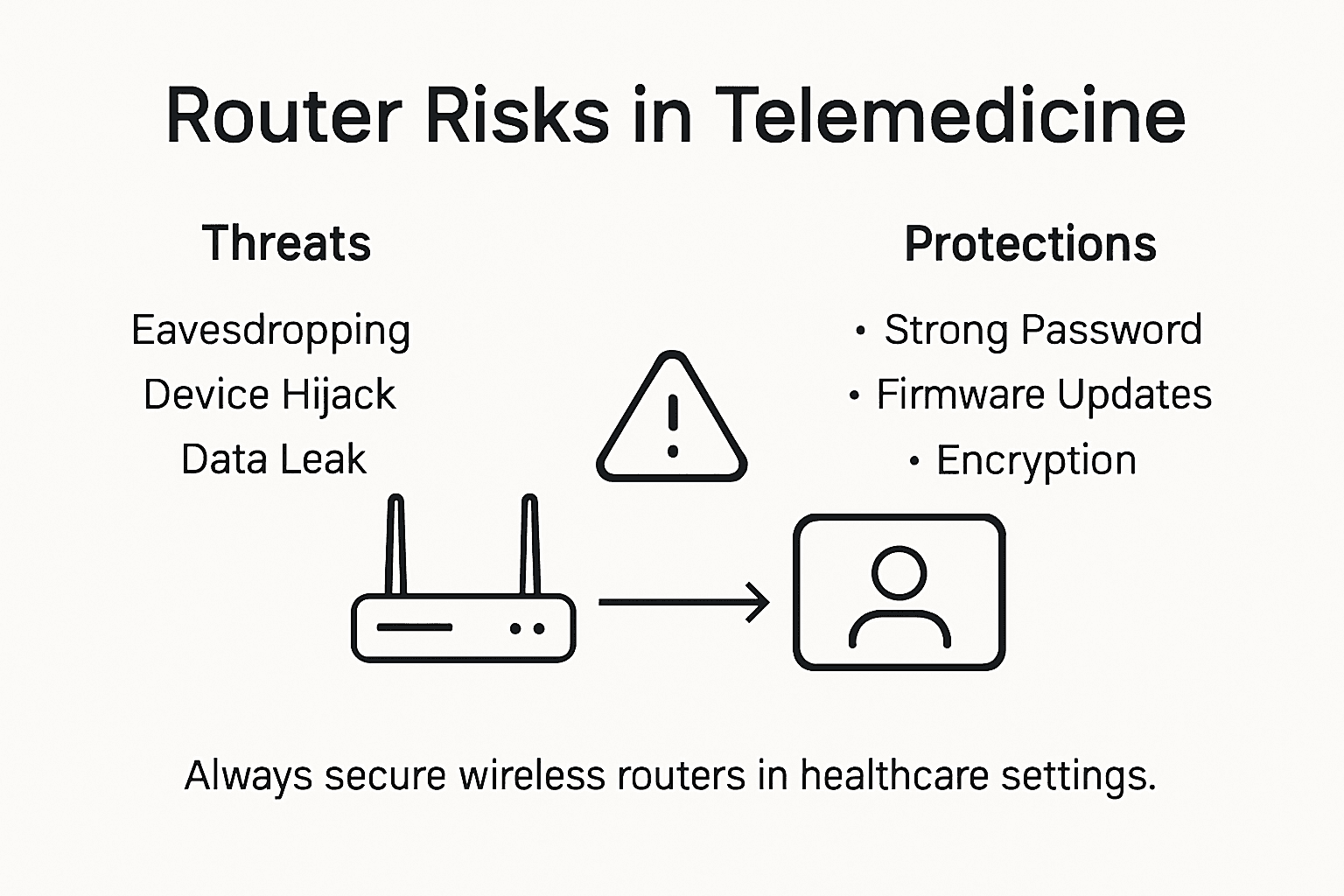
The most prevalent wireless router security risks in telemedicine encompass several critical domains. Unauthorized network access represents the primary threat, where malicious actors can potentially intercept patient data through unprotected wireless channels. Weak encryption protocols, misconfigured router settings, and outdated firmware can create substantial vulnerabilities that sophisticated cybercriminals can exploit to gain unauthorized system entry.
Key security risks include:
- Unencrypted data transmission
- Weak authentication mechanisms
- Inadequate network segmentation
- Outdated router firmware
- Unsecured guest network configurations
- Lack of robust intrusion detection systems
Additionally, the proliferation of Internet of Things (IoT) medical devices further complicates network security landscapes. Each connected device represents a potential security vulnerability, requiring comprehensive monitoring and advanced threat mitigation strategies. Healthcare organizations must implement rigorous security protocols that continuously assess and neutralize potential network intrusion points.
Pro Tip for Healthcare Cybersecurity Professionals: Conduct regular comprehensive network vulnerability assessments and implement multi-factor authentication protocols across all wireless router access points to minimize potential security breaches.
Below is a summary of best practices for wireless router security in telemedicine:
| Best Practice | Description | Results Achieved |
|---|---|---|
| Regular Firmware Updates | Keep router software current | Reduces vulnerability risk |
| Complex Authentication | Use strong, multi-factor logins | Prevents unauthorized access |
| Network Segmentation | Separate medical devices from guest traffic | Limits potential breach impact |
| Continuous Security Auditing | Perform routine network vulnerability tests | Identifies and resolves weaknesses |
Compliance and Device Selection Best Practices
Healthcare organizations must navigate complex requirements when selecting wireless routers for telemedicine infrastructure, balancing technological capabilities with stringent regulatory compliance standards. Specialized networking solutions designed for medical facility requirements provide critical insights into developing robust telemedicine connectivity strategies.
Compliance considerations encompass multiple critical domains, including HIPAA regulations, data privacy standards, and network security protocols. Medical institutions must evaluate wireless routers through a comprehensive lens that goes beyond traditional performance metrics, focusing instead on their ability to maintain patient data confidentiality, support secure communication channels, and provide granular access management capabilities.
Key selection criteria for telemedicine wireless routers include:
- Advanced encryption capabilities
- Multi-factor authentication support
- Comprehensive logging and audit trail features
- Scalable network segmentation
- Seamless firmware update mechanisms
- Robust intrusion detection systems
Beyond technical specifications, healthcare technology managers must consider long-term support, vendor credibility, and the router’s capacity to integrate with existing medical information systems. The selection process requires a holistic approach that evaluates not just immediate technological needs but also potential future expansion and evolving cybersecurity landscapes.
Pro Tip for Healthcare Technology Procurement Specialists: Conduct comprehensive vendor security assessments and request detailed compliance documentation before finalizing any wireless router infrastructure investment.
Strengthen Your Telemedicine Network with SabertoothPro Solutions
Healthcare providers face the challenge of maintaining highly secure and reliable wireless networks to support sensitive patient data and seamless telemedicine communications. The article highlights key pain points such as the need for advanced encryption, bandwidth management, and HIPAA compliance—crucial to protecting patient confidentiality while enabling efficient remote consultations. SabertoothPro specializes in delivering high-speed internet solutions and enterprise-grade wireless technology tailored to these exact needs.
Our Titan WiFi collection offers cutting-edge wireless routers with multi-layer encryption and scalable network segmentation, helping you safeguard patient data and optimize telemedicine workflows. Combined with our Titan WiFi hotspot plans, you can ensure consistent and secure connectivity even in challenging environments. Explore our range of WiFi extenders to eliminate dead zones in large medical campuses and maintain uninterrupted access for every device.

Take control of your telemedicine infrastructure security now by partnering with SabertoothPro. Visit https://sabertoothpro.com to find reliable, compliant wireless solutions designed for the healthcare sector. Protect your patients and empower your staff with trusted network technology that evolves with your needs.
Frequently Asked Questions
What are the core functions of wireless routers in telemedicine?
Wireless routers in telemedicine provide secure network connectivity for medical devices and communication platforms. Their core functions include Network Address Translation (NAT), dynamic IP address assignment, firewall protection, bandwidth management, and encryption support to maintain data privacy.
How do I ensure my wireless router is secure for telemedicine?
To ensure router security for telemedicine, regularly update firmware, implement strong authentication protocols, utilize network segmentation, and incorporate intrusion detection systems for real-time threat monitoring.
What types of wireless routers are best suited for healthcare environments?
The best types of wireless routers for healthcare include enterprise-grade routers, which offer advanced security features; mesh network routers, which provide extensive coverage in large facilities; and specialized medical routers, designed for HIPAA compliance and sensitive medical communication.
Why is encryption important for wireless routers in telemedicine?
Encryption is crucial for wireless routers in telemedicine as it protects patient data from unauthorized access during transmission, ensuring compliance with HIPAA regulations and maintaining the confidentiality of sensitive health information.