


Role of Network Security in Protecting Healthcare Data

Securing patient data in a Mid-Atlantic healthcare environment means facing a constantly shifting threat landscape where a single breach can disrupt care and erode trust. Modern healthcare requires network protection strategies that reach beyond basic IT fixes, demanding organization-wide readiness for ransomware and phishing threats. This guide breaks down the building blocks of network security in healthcare, showing how proper safeguards, compliance steps, and smart planning protect both sensitive information and your institution’s reputation.
Table of Contents
- Defining Network Security in Healthcare Environments
- Common Threats to Healthcare Networks Today
- Essential Tools and Security Frameworks Explained
- Compliance Requirements and Legal Responsibilities
- Strategies to Reduce Risk and Avoid Costly Breaches
Key Takeaways
| Point | Details |
|---|---|
| Comprehensive Security Framework | Organizations must adopt multi-layered security frameworks like HIPAA and Zero Trust Architecture to ensure effective data protection. |
| Continuous Training | Ongoing employee training is essential to cultivate a cybersecurity-aware culture and mitigate risks associated with human error. |
| Proactive Risk Management | Regular risk assessments and incident response planning are crucial for identifying vulnerabilities and responding swiftly to potential breaches. |
| Compliance and Governance | Staying updated with regulatory standards and integrating compliance into organizational strategies is necessary for protecting patient data and ensuring legal accountability. |
Defining Network Security in Healthcare Environments
Network security in healthcare represents a complex and critical framework designed to protect sensitive patient data from unauthorized access, breaches, and cyber threats. At its core, network security encompasses a comprehensive set of technological strategies and protocols specifically tailored to safeguarding electronic personal health information (ePHI) within medical environments.
The foundational elements of healthcare network security are defined by regulatory standards like the HIPAA Security Rule, which establishes national guidelines for protecting electronic health information. These standards require healthcare organizations to implement three primary categories of safeguards:
- Administrative Safeguards: Policies and procedures managing the selection, development, and implementation of security measures
- Physical Safeguards: Mechanisms protecting electronic information systems and related buildings and equipment
- Technical Safeguards: Technology and policies controlling access to protected health information
Healthcare network security goes beyond simple technological solutions. Modern approaches recognize cybersecurity as an enterprise-wide risk management strategy that integrates clinical care, financial systems, and operational infrastructure. This holistic perspective means that network security is no longer just an IT department responsibility but a critical organizational imperative that involves governance, workforce training, and continuous risk assessment.
Key components of effective healthcare network security include:
- Robust access control mechanisms
- Encryption of sensitive data
- Regular security vulnerability assessments
- Comprehensive staff cybersecurity training
- Advanced threat detection systems
Pro tip: Implement a continuous monitoring approach that treats network security as an ongoing process rather than a one-time implementation.
Common Threats to Healthcare Networks Today
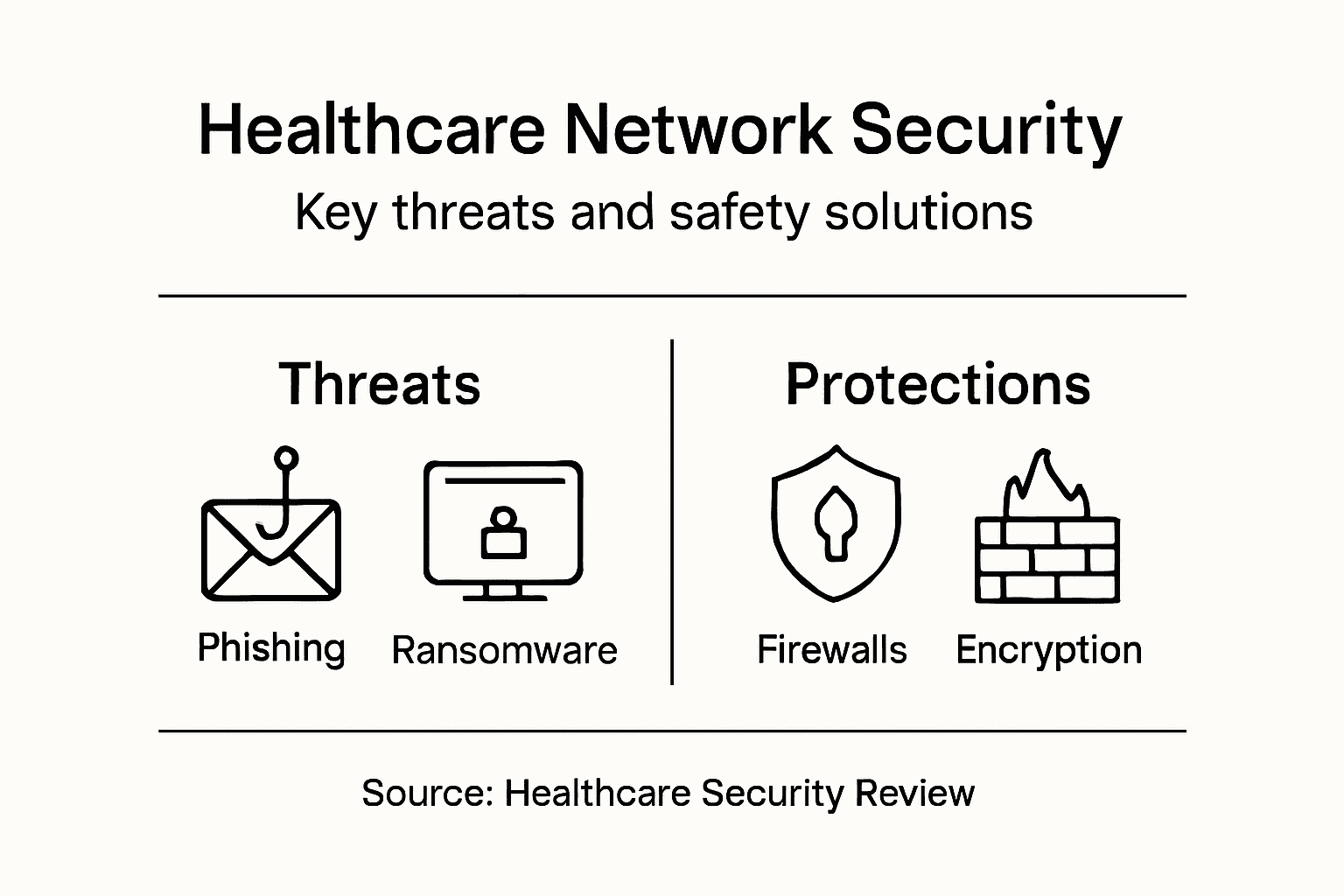
Healthcare networks face an increasingly complex and dangerous landscape of cybersecurity threats that can compromise patient data, disrupt critical medical services, and create significant financial and operational risks. Ransomware attacks targeting healthcare organizations have become particularly sophisticated, with cybercriminal groups like Ryuk and Conti developing advanced strategies to infiltrate sensitive medical systems.
The most prevalent cybersecurity threats in healthcare environments include:
- Phishing and Spear Phishing: Targeted email attacks designed to trick healthcare personnel into revealing sensitive credentials or system access
- Ransomware: Malicious software that encrypts critical data and demands payment for restoration
- Third-Party Network Vulnerabilities: Security gaps introduced through connected vendor and partner networks
- Social Engineering: Psychological manipulation techniques exploiting human behavior and trust
- Data Breaches: Unauthorized access and potential exposure of patient health information
Cybercriminals specifically target healthcare networks due to the high value of medical data and the critical nature of healthcare operations. Sensitive patient information can be sold on dark web markets, while ransomware attacks can potentially halt entire medical facilities’ ability to provide care. These attacks often exploit complex technological infrastructures and human vulnerabilities within healthcare organizations.

Healthcare institutions must adopt a multifaceted approach to cybersecurity, integrating technological solutions with comprehensive staff training and robust risk management strategies. This means developing sophisticated detection mechanisms, implementing strict access controls, and creating incident response protocols that can quickly mitigate potential breaches.
Compare how common cyber threats impact healthcare operations:
| Threat Type | Impact on Healthcare | Typical Consequence |
|---|---|---|
| Ransomware | Locks patient records | Disrupts care delivery |
| Phishing | Steals staff credentials | Data breaches, fraud |
| Social Engineering | Exploits human error | Unauthorized system access |
| Third-Party Risks | Compromises partner networks | Exposes sensitive information |
Pro tip: Conduct regular cybersecurity simulations and training exercises to help staff recognize and respond to potential threats before they become critical incidents.
Essential Tools and Security Frameworks Explained
Healthcare organizations require comprehensive security frameworks that provide structured approaches to protecting sensitive patient data and technological infrastructure. CIS Critical Security Controls represent a foundational strategy for developing robust cybersecurity defenses across complex medical networks.
Key security frameworks and essential tools for healthcare networks include:
- Zero Trust Architecture: Requires verification from everyone trying to access system resources
- Multi-Factor Authentication: Adds additional layers of credential verification
- Encryption Tools: Protect data at rest and during transmission
- Network Segmentation Solutions: Isolate critical systems and limit potential breach impacts
- Endpoint Detection and Response (EDR) Systems: Monitor and respond to potential security threats
Effective cybersecurity in healthcare demands more than technological solutions. Organizational preparedness involves cultivating a comprehensive approach that integrates technological tools with strategic planning, workforce training, and continuous risk assessment. This holistic method ensures that security is not just a technical challenge but an enterprise-wide commitment to protecting patient information.
Healthcare leaders must prioritize implementing adaptive security frameworks that can evolve with emerging technological landscapes and increasingly sophisticated cyber threats. This means investing in not just tools, but comprehensive strategies that address human, technological, and operational dimensions of cybersecurity.
Here’s a summary of how healthcare security frameworks address unique industry needs:
| Framework/Tool | Main Focus | Unique Healthcare Benefit |
|---|---|---|
| HIPAA Security Rule | Regulatory compliance | Mandates privacy and data security |
| CIS Critical Security Controls | Best practice controls | Stepwise risk reduction guidance |
| Zero Trust Architecture | Access verification everywhere | Limits insider and external threats |
| Network Segmentation | System isolation | Minimizes breach spread risk |
| Endpoint Detection & Response | Threat monitoring | Rapid detection of unusual activity |
Pro tip: Develop a comprehensive cybersecurity roadmap that includes regular risk assessments, staff training, and technology upgrades to maintain a proactive security posture.
Compliance Requirements and Legal Responsibilities
Healthcare organizations must navigate a complex landscape of legal and regulatory requirements designed to protect patient data and ensure privacy. HIPAA Privacy Rule establishes critical national standards that mandate comprehensive protections for medical records and personal health information across multiple sectors.
Key compliance requirements for healthcare networks include:
- Protected Health Information (PHI) Security: Safeguarding all individually identifiable health data
- Access Control Mechanisms: Restricting unauthorized data access and disclosure
- Patient Rights Management: Ensuring individuals can access and correct their health records
- Breach Notification Protocols: Implementing immediate reporting procedures for potential data compromises
- Business Associate Agreements: Establishing legal responsibilities for third-party vendors
The legal framework surrounding healthcare data protection extends beyond simple technological compliance. Organizations must develop comprehensive strategies that integrate administrative, physical, and technical safeguards to meet regulatory standards. This means creating robust policies that not only protect sensitive information but also demonstrate a systematic approach to maintaining patient privacy and data integrity.
Healthcare leaders must understand that compliance is an ongoing process requiring continuous evaluation and adaptation. Regulatory requirements evolve continuously, demanding proactive approaches to risk management, staff training, and technological infrastructure that can quickly respond to emerging security challenges and legal mandates.
Pro tip: Conduct quarterly comprehensive compliance audits to ensure your organization remains aligned with the latest HIPAA regulations and cybersecurity best practices.
Strategies to Reduce Risk and Avoid Costly Breaches
Healthcare organizations must proactively develop comprehensive strategies to mitigate cybersecurity risks and prevent potentially devastating breaches. Cybersecurity governance strategies have become critical for maintaining patient trust and organizational resilience in an increasingly complex digital landscape.
Key risk reduction strategies include:
- Comprehensive Risk Assessments: Regular, thorough evaluations of organizational vulnerabilities
- Incident Response Planning: Developing detailed protocols for rapid breach containment
- Third-Party Vendor Management: Rigorous screening and monitoring of external partners
- Continuous Employee Training: Building a cybersecurity-aware organizational culture
- Advanced Threat Detection Systems: Implementing cutting-edge monitoring technologies
Proactive cybersecurity requires more than technological solutions. Healthcare leaders must integrate security considerations into every aspect of organizational planning, transforming cybersecurity from a technical challenge to a strategic business imperative. This holistic approach demands ongoing commitment, resources, and a culture that prioritizes data protection and patient privacy.
Successful risk mitigation demands a multifaceted approach that combines technological infrastructure, human expertise, and adaptive organizational strategies. Healthcare organizations must develop flexible frameworks that can quickly respond to emerging threats, maintain regulatory compliance, and protect the sensitive information entrusted to their care.
Pro tip: Implement a continuous learning and adaptation model for your cybersecurity strategy, treating it as an evolving process rather than a static solution.
Strengthen Healthcare Network Security with SabertoothPro Solutions
Protecting sensitive healthcare data demands more than basic measures. The article highlights challenges like ransomware, phishing, and insider threats that put patient information at risk every day. Sophisticated security frameworks such as Zero Trust Architecture and continuous threat monitoring are vital to safeguard electronic personal health information and meet strict regulatory requirements.
SabertoothPro.com offers cutting-edge network security solutions tailored for healthcare environments including next-generation firewalls, SOC-as-a-Service, and zero-trust frameworks. Our integrated approach ensures your organization stays ahead of evolving cyber threats while maintaining compliance with laws like HIPAA. With our reliable high-speed internet and secure connectivity options, you can empower your healthcare network with the resilience and protection it needs.

Explore how SabertoothPro’s advanced security and connectivity services can transform your healthcare data protection strategy. Visit SabertoothPro now to learn more about our Security solutions and discover tailored options for your organization’s unique needs. Don’t wait until a breach impacts patient trust and operations unlock robust defense today.
Frequently Asked Questions
What are the main components of network security in healthcare?
The main components of network security in healthcare include robust access control mechanisms, encryption of sensitive data, regular security vulnerability assessments, comprehensive staff cybersecurity training, and advanced threat detection systems.
Why is network security essential in protecting healthcare data?
Network security is essential in protecting healthcare data because it safeguards electronic personal health information (ePHI) from unauthorized access, breaches, and cyber threats, ensuring patient privacy and maintaining the integrity of medical services.
How do healthcare organizations comply with data protection regulations?
Healthcare organizations comply with data protection regulations by implementing administrative, physical, and technical safeguards as outlined in regulations like HIPAA. This includes securing protected health information (PHI) and following breach notification protocols.
What strategies can be employed to reduce cybersecurity risks in healthcare?
To reduce cybersecurity risks in healthcare, organizations can conduct comprehensive risk assessments, develop incident response plans, effectively manage third-party vendor relationships, provide continuous employee training, and utilize advanced threat detection systems.
Recommended
- Complete Guide to Website Security for Businesses - ResponsiveWebsiteDesign
- Website Security: Safeguarding Brands and Customer Trust