


What Is Mobile Broadband? Complete Overview for 2025

Nearly 90 percent of american adults own a smartphone, showing just how central mobile broadband has become in daily life. With so many people working, learning, and connecting while on the go, understanding this technology matters more than ever. Here you will find clear insight into what mobile broadband is, how it works, and the real benefits it brings to modern american life.
Table of Contents
- Mobile Broadband Defined and How It Works
- Types of Mobile Broadband Connections
- Devices and Technologies for Mobile Broadband
- Key Use Cases and Real-World Benefits
- Comparing Mobile Broadband to Alternatives
- Costs, Limitations, and Buying Considerations
Key Takeaways
| Point | Details |
|---|---|
| Mobile Broadband Evolution | Mobile broadband technology has progressed from 2G to 5G, significantly enhancing data speeds and connectivity reliability. |
| Types of Connections | Various mobile broadband connection types, such as USB modems and mobile hotspots, offer users versatile options for internet access based on specific needs. |
| Use in Diverse Sectors | The adoption of mobile broadband is crucial for remote work, telemedicine, and online education, facilitating modern communication and operational efficiency across industries. |
| Considerations for Users | Consumers should evaluate data limits, network coverage, and device compatibility when selecting mobile broadband plans to ensure they meet their connectivity requirements. |
Mobile Broadband Defined and How It Works
Mobile broadband is a wireless internet access technology that enables users to connect to the internet through cellular networks without requiring traditional fixed-line connections. According to Pew Research Center, 90% of U.S. adults now own a smartphone, reflecting the widespread adoption and critical importance of mobile broadband technologies.
At its core, mobile broadband operates across multiple network generations - from 2G to the latest 5G networks - each offering progressively faster data transfer speeds and more reliable connectivity. Wikipedia explains that these wireless networks allow devices like smartphones, tablets, and laptops to access the internet seamlessly through cellular infrastructure. The technology transforms how people work, communicate, and consume digital content.
Key characteristics of mobile broadband include:
- Wireless connectivity through cellular networks
- Compatibility with multiple devices
- Variable speeds depending on network generation
- Flexibility to access internet from virtually anywhere
The evolution of mobile broadband has been remarkable. Where 2G networks once provided basic text messaging and minimal data transfer, modern 4G and 5G networks now support high-definition video streaming, complex web applications, and real-time communication with minimal latency. This technological progression has fundamentally reshaped how individuals and businesses interact with digital technologies, making constant connectivity not just a convenience, but an essential part of contemporary life.
Types of Mobile Broadband Connections
Mobile broadband connections come in several distinct device types and network configurations, offering users flexible options for wireless internet access. Wikipedia highlights that these connections can be established through various devices like USB modems, PC cards, and integrated modules in laptops and tablets, each providing unique connectivity solutions without relying on traditional fixed-line infrastructure.
The primary types of mobile broadband connections include:
- USB Modems: Compact dongles that plug directly into computer USB ports
- Mobile Hotspots: Portable devices creating wireless networks for multiple devices
- Embedded Modules: Built-in cellular connectivity in laptops and tablets
- Smartphone Tethering: Using mobile phones as internet access points
Users can choose their mobile broadband connection based on specific needs, with each type offering distinct advantages. For those seeking portable internet solutions, mobile hotspot benefits provide an excellent alternative to traditional home internet, especially for remote workers, travelers, and individuals in areas with limited broadband infrastructure.
Network technologies also play a crucial role in mobile broadband connections. From 3G to the latest 5G networks, each generation delivers progressively faster data speeds and more reliable connections. The choice between these connection types depends on factors like device compatibility, coverage area, data requirements, and budget constraints. Modern mobile broadband has transformed how people access the internet, providing unprecedented flexibility and connectivity across diverse environments and use cases.
Devices and Technologies for Mobile Broadband
Mobile broadband devices represent a diverse ecosystem of technologies designed to provide wireless internet access across various platforms and use cases. Wikipedia highlights key devices including USB modems, PC cards, and integrated modules in laptops and tablets, each offering unique connectivity solutions that eliminate dependence on traditional fixed-line infrastructure.
Wikipedia outlines the technological evolution of mobile broadband through multiple network generations:
- 2G: Introduced basic data services
- 3G: Enabled faster data transmission
- 4G: Provided high-speed internet access
- 5G: Offers significantly increased speeds and reduced latency
Understanding the right device for your needs is crucial. When searching for the perfect mobile broadband solution, insights on selecting 5G internet devices can help you make an informed decision. Modern mobile broadband technologies support advanced applications like Internet of Things (IoT), real-time communications, and seamless multimedia streaming.
The diversity of mobile broadband devices reflects the technology’s adaptability. From compact USB modems that plug directly into computers to sophisticated mobile hotspots creating wireless networks for multiple devices, users can choose solutions tailored to their specific connectivity requirements. These technologies continue to push the boundaries of mobile communication, transforming how we work, communicate, and access information in an increasingly connected world.
Key Use Cases and Real-World Benefits
Mobile broadband has revolutionized how individuals and businesses interact with digital technologies, creating unprecedented opportunities across multiple sectors. According to Brookings, this technology has transformed critical areas like remote work, telemedicine, and online education, enabling economic development by providing businesses with powerful tools to operate efficiently and expand their market reach.
Pew Research reveals the profound impact of mobile connectivity, with 41% of adults reporting they are online almost constantly. The key use cases span various domains:
- Remote Work: Enabling professionals to work from anywhere
- Telemedicine: Connecting patients with healthcare providers
- Online Education: Supporting distance learning and skill development
- Business Communication: Facilitating real-time global interactions
For professionals seeking flexible connectivity solutions, understanding mobile hotspot benefits can unlock new productivity potentials. Mobile broadband’s real-world applications extend beyond individual convenience, driving innovation in industries ranging from healthcare and education to logistics and entertainment.
The technology’s transformative power lies in its ability to break geographical barriers. Whether it’s a rural entrepreneur accessing global markets, a student participating in online classes, or a healthcare professional conducting remote consultations, mobile broadband has become an essential infrastructure for modern digital life. Its continuous evolution promises even more sophisticated, seamless, and intelligent connectivity solutions in the coming years.
Comparing Mobile Broadband to Alternatives
Internet connectivity has evolved beyond traditional fixed-line solutions, with mobile broadband emerging as a powerful alternative for modern users. Pew Research reveals a fascinating landscape, showing that while 80% of U.S. adults subscribe to home broadband, 15% are ‘smartphone dependent,’ relying exclusively on mobile broadband for internet access.
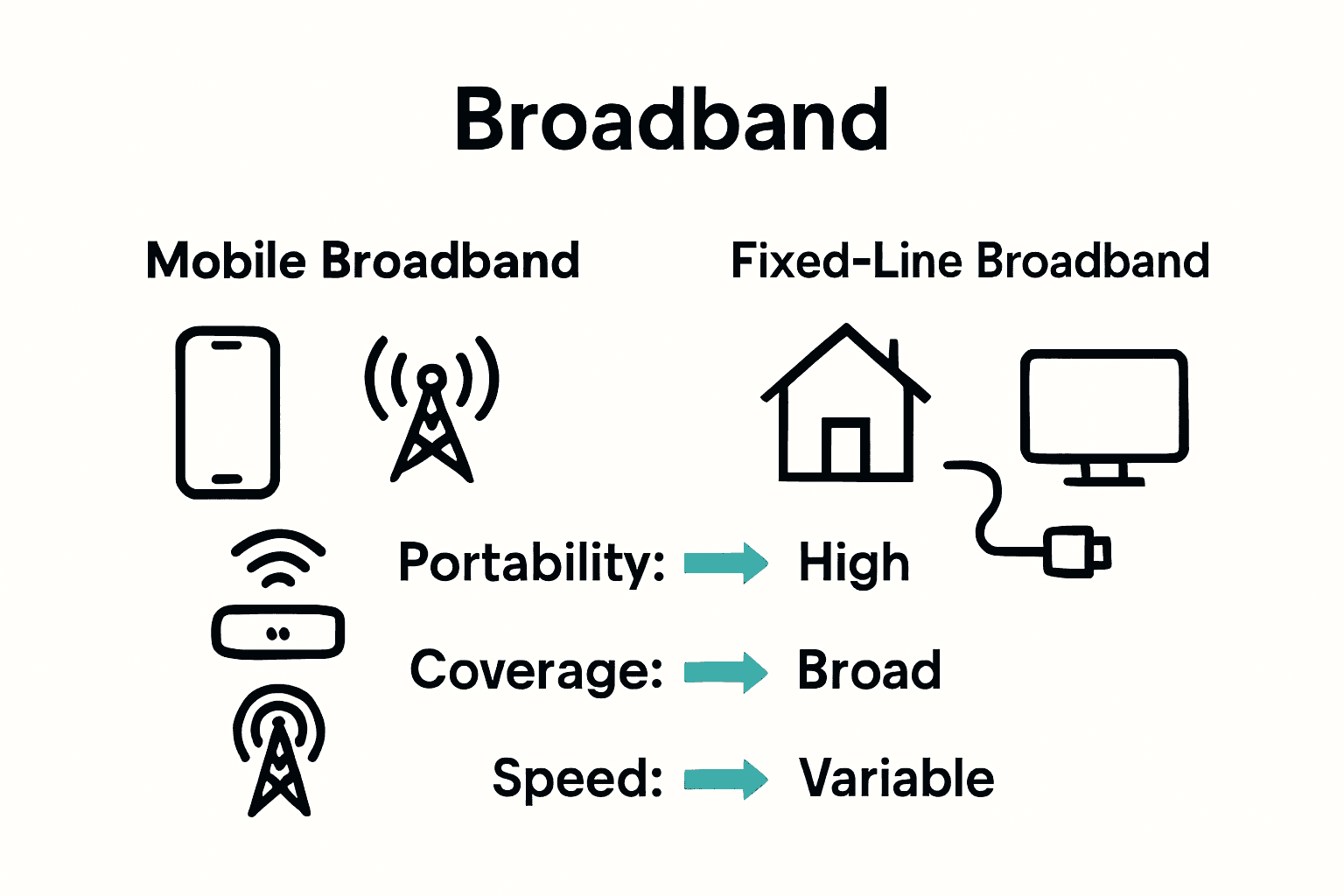
Key differences between mobile broadband and traditional alternatives include:
- Portability: Mobile broadband offers unparalleled flexibility
- Cost: Fixed broadband often provides lower per-unit data costs
- Accessibility: Mobile networks reach areas traditional infrastructure cannot

- Speed: Varies significantly between 4G and 5G technologies
Understanding the nuances between broadband options can help users make informed connectivity choices. According to Pew, fixed broadband provides stable, high-speed internet to stationary locations, while mobile broadband excels in providing internet access across multiple locations.
The choice between mobile and fixed broadband increasingly depends on individual lifestyle and work requirements. For remote workers, travelers, and those in areas with limited infrastructure, mobile broadband represents not just an alternative, but often the primary means of staying connected. Its ability to bridge connectivity gaps, especially in lower-income and rural communities, positions mobile broadband as a crucial technological equalizer in the digital age.
Costs, Limitations, and Buying Considerations
Mobile broadband purchasing decisions require careful evaluation of multiple factors beyond simple pricing. Pew Research highlights that mobile broadband plans often come with complex pricing structures, data caps, and higher costs per gigabyte compared to traditional fixed broadband services.
Key considerations when evaluating mobile broadband include:
- Data Limits: Understanding monthly data allocations
- Network Coverage: Assessing local service quality
- Speed Variations: Comparing 4G and 5G performance
- Device Compatibility: Ensuring hardware supports network technologies
Before purchasing a mobile hotspot, understanding key selection criteria can prevent costly mistakes. According to Pew, geographic location significantly impacts mobile broadband availability, with rural areas frequently experiencing limited coverage and slower connection speeds.
Prospective mobile broadband users must conduct thorough local network performance assessments. This involves checking signal strength, understanding potential dead zones, and evaluating realistic speed expectations based on specific geographic and infrastructure limitations. While mobile broadband offers unprecedented flexibility, making an informed decision requires comprehensive research into local network capabilities, personal connectivity needs, and long-term cost-effectiveness.
Experience Reliable Mobile Broadband with SabertoothPro
Understanding mobile broadband technology reveals its true challenge for many users: finding fast, secure, and flexible internet access that adapts to changing environments. Whether it is the need for consistent 4G LTE or 5G speeds, coverage in remote or rural areas, or support for multiple devices via mobile hotspots, you deserve solutions that meet these demands without compromise. The article emphasizes key pain points like network coverage, data limits, device compatibility, and cost, all critical factors that SabertoothPro solves daily.
Explore our Titan WiFi collection to discover cutting-edge hotspots and routers engineered for performance and portability.

Take control of your connectivity today by choosing from our flexible Titan WiFi Hotspot Plans designed to keep you connected wherever you are. Visit SabertoothPro.com to browse our full range of wireless internet solutions crafted for your lifestyle and business needs. Don’t wait for slow or unreliable internet. Act now and unlock seamless mobile broadband powered by trusted technology.
Frequently Asked Questions
What is mobile broadband?
Mobile broadband is a wireless internet access technology that allows users to connect to the internet through cellular networks without the need for fixed-line connections.
What are the different types of mobile broadband connections?
Types of mobile broadband connections include USB modems, mobile hotspots, embedded modules in devices, and smartphone tethering, each offering unique benefits for users.
How has mobile broadband evolved over the years?
Mobile broadband has progressed from 2G networks, which provided basic services, to modern 5G networks that support high-definition streaming, real-time communication, and advanced applications with minimal latency.
What should I consider when choosing a mobile broadband plan?
When selecting a mobile broadband plan, consider factors such as data limits, network coverage, speed variations between 4G and 5G, and device compatibility to ensure it meets your connectivity needs.