


Internet Options for RV Travelers – Secure, Reliable Choices

Most American RV travelers discover that internet coverage on the open road is anything but predictable. With streaming, remote work, and trip planning now essential for many, staying online matters more than ever. Nearly 60 percent of American RV owners report patchy or unreliable internet on their journeys. This guide breaks down the real options for road warriors, comparing cellular, satellite, and campground Wi-Fi for those determined to stay connected wherever their travels lead.
Table of Contents
- What Internet Options Exist For RV Travelers
- Comparing Satellite, Cellular, And Campground Wi-Fi
- Key Features Of RV Internet Solutions
- Costs, Speeds, And Data Limits Explained
- Security Risks And Protecting Your Connection
Key Takeaways
| Point | Details |
|---|---|
| Multiple Internet Options | RV travelers can choose from mobile hotspots, cellular routers, satellite internet, and campground Wi-Fi based on their needs. |
| Balancing Connectivity | Combining strategies like using cellular data as a primary source with satellite as backup offers consistent internet access. |
| Cost and Data Considerations | Internet costs and speeds vary significantly; carefully assessing budget and data needs is essential to optimize connectivity. |
| Security Measures | Implementing VPNs, strong authentication, and network security protocols is crucial for protecting connections in varied environments. |
What Internet Options Exist for RV Travelers
RV travelers have multiple internet connectivity options that balance mobility, reliability, and performance. Mobile internet solutions range from cellular hotspots to satellite systems, each designed to keep travelers connected while exploring remote destinations.
The primary internet options for RV travelers include:
- Mobile Hotspots: Portable devices using cellular networks to create wireless internet access
- Cellular LTE Routers: Dedicated routers with stronger signal reception than standard mobile devices
- Satellite Internet: Reliable connectivity in extremely remote areas with minimal cellular coverage
- Campground Wi-Fi: Free but often unreliable public network access
Choosing the right internet solution depends on several critical factors. Travelers must consider their specific data requirements, budget constraints, and typical travel routes. Some RV enthusiasts combine multiple strategies - like using a mobile hotspot as primary connection and satellite internet as backup - to ensure consistent connectivity.
Most contemporary RV internet strategies prioritize cellular data solutions. Modern LTE networks provide significant bandwidth capable of supporting video streaming, video conferencing, and remote work. Dedicated RV internet equipment often includes signal boosters and omnidirectional antennas that dramatically improve reception in challenging terrain, transforming even marginally covered areas into functional workspaces.
Comparing Satellite, Cellular, and Campground Wi-Fi
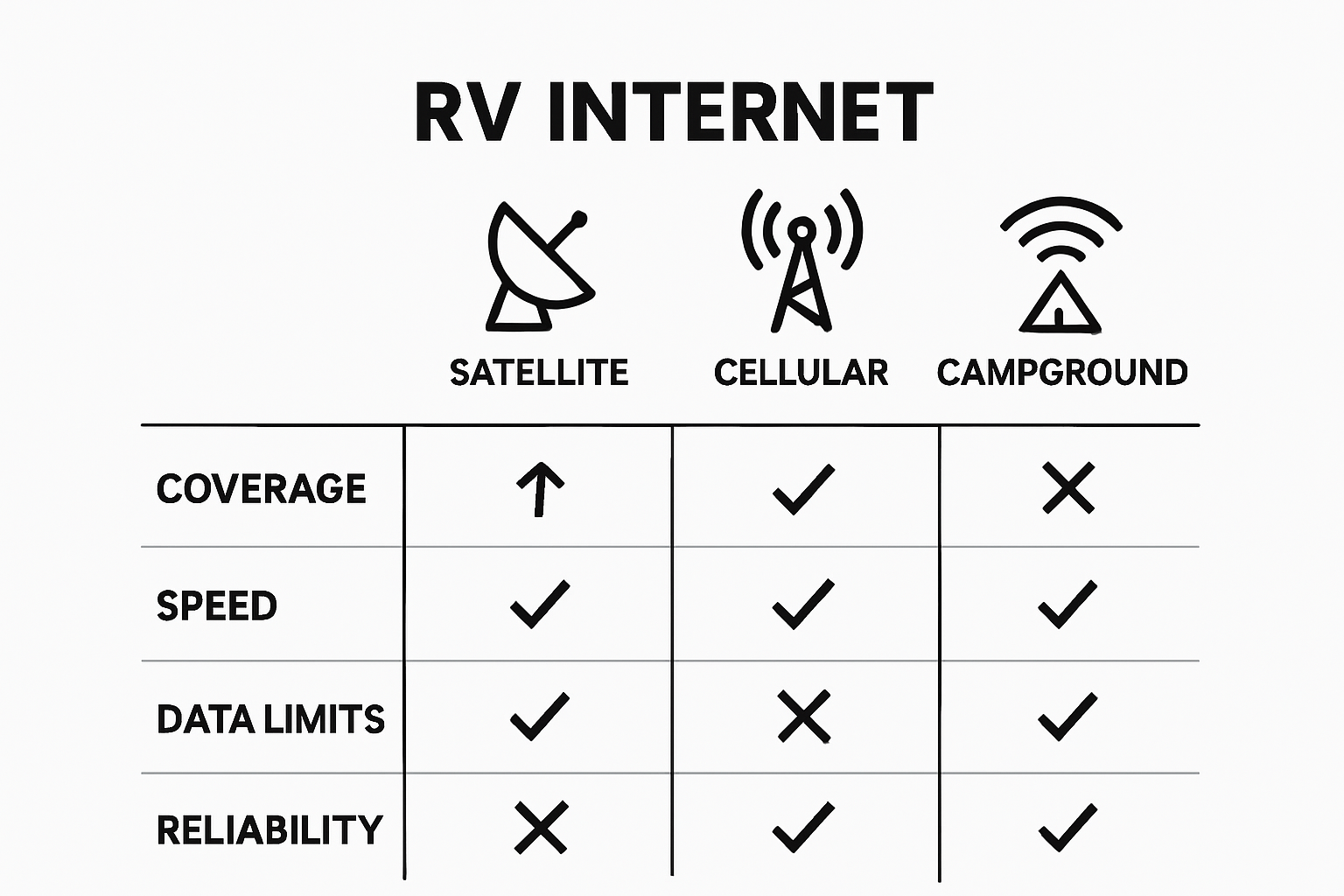
RV travelers face complex choices when selecting internet connectivity, with each option presenting unique advantages and limitations. Wi-Fi options for travelers range across three primary technologies: satellite, cellular, and campground networks, each serving different connectivity needs.
Satellite Internet:
- Provides coverage in extremely remote locations
- Highest geographic reach of all options
- Generally more expensive
- Higher latency compared to cellular networks
- Reliable in areas without cellular infrastructure
Cellular Data:
- Fastest speeds in urban and populated regions
- Typically more affordable than satellite
- Signal strength varies by geographic location
- Subject to data caps and network congestion
- Works best with robust cellular infrastructure
Campground Wi-Fi:
- Often free with campground registration
- Highly variable in performance and reliability
- Typically slower and less secure
- Bandwidth shared among multiple users
- Best for basic browsing and light internet usage
Comparing rural connectivity solutions reveals that most RV travelers ultimately combine multiple strategies. Sophisticated users often employ cellular hotspots as primary connection, supplemented by satellite internet for backup in remote areas, ensuring consistent internet access across diverse travel environments.

Understanding these technologies’ strengths and weaknesses allows RV travelers to design personalized connectivity strategies. Performance depends on travel routes, budget constraints, and individual data requirements. Strategic selection and potential technology combination can transform internet access from a potential challenge into a seamless travel experience.
Key Features of RV Internet Solutions
RV internet solutions require sophisticated technologies that balance mobility, performance, and reliability. Choosing the right internet service provider becomes crucial for travelers seeking consistent connectivity across diverse environments.
Core Features of RV Internet Solutions:
- Portability: Lightweight, compact devices easily transported
- Flexibility: Multiple connection methods
- Rapid Setup: Quick configuration in different locations
- Performance Consistency: Stable internet across varying terrains
- Signal Amplification: Enhanced reception capabilities
Technical Considerations: Modern RV internet solutions integrate advanced technologies to overcome traditional connectivity challenges. Signal boosters and omnidirectional antennas dramatically improve reception, transforming marginally covered areas into functional workspaces. Advanced devices now offer:
- Multi-network compatibility
- Automatic network switching
- Enhanced security protocols
- Real-time signal strength monitoring
- Adaptive bandwidth management
Sophisticated RV travelers understand that internet connectivity requires strategic planning. Performance depends on sophisticated hardware that can seamlessly transition between cellular, satellite, and localized Wi-Fi networks, ensuring uninterrupted internet access during travel.
Ultimately, the ideal RV internet solution combines robust hardware, flexible connectivity options, and intelligent network management. Travelers must evaluate their specific needs, considering factors like travel routes, data requirements, budget constraints, and anticipated network environments to design a personalized connectivity strategy that transforms potential communication challenges into seamless digital experiences.
Costs, Speeds, and Data Limits Explained
RV internet solutions require careful financial and technical planning, with connectivity costs varying significantly across different technologies and providers. Understanding mobile broadband options helps travelers make informed decisions about their internet investments.
Cost Breakdown by Internet Technology:
-
Cellular Hotspots: $50-$150/month
- Typically most affordable option
- Flexible monthly plans
- Pay-as-you-go alternatives available
-
Satellite Internet: $100-$250/month
- Highest cost option
- Comprehensive coverage in remote areas
- Often includes equipment fees
-
Campground Wi-Fi: Free-$20/day
- Lowest direct cost
- Unreliable performance
- Limited bandwidth
Speed and Data Considerations: Internet speeds for RV travelers typically range from 10-100 Mbps, depending on connection type and location. Data limits are critical for budget-conscious travelers:
- Cellular plans: 50-100 GB/month
- Satellite plans: 200-500 GB/month
- Unlimited plans often have “throttling” after specific data thresholds
Broadband technology continues evolving, offering RV travelers increasingly flexible and powerful connectivity solutions. Smart travelers combine multiple internet sources - using cellular data as primary connection, supplemented by satellite or campground Wi-Fi as backup strategies.
Ultimately, selecting the right internet solution requires balancing cost, speed, reliability, and individual usage patterns. Travelers must carefully assess their specific connectivity needs, budget constraints, and anticipated travel routes to design a personalized internet strategy that provides seamless digital access without breaking the bank.
Security Risks and Protecting Your Connection
RV travelers face unique cybersecurity challenges when connecting to diverse internet networks in constantly changing environments. Protecting mobile hotspot connections becomes crucial for maintaining digital safety during travel.
Primary Security Risks:
- Public Wi-Fi network vulnerabilities
- Unsecured cellular hotspots
- Potential data interception
- Device tracking
- Unauthorized network access
Essential Protection Strategies:
-
Use a Virtual Private Network (VPN)
- Encrypts all internet traffic
- Masks true IP address
- Prevents data monitoring
-
Implement Strong Authentication
- Complex passwords
- Two-factor authentication
- Regular password rotation
-
Network Security Protocols
- Enable firewall protections
- Use WPA3 encryption
- Disable automatic network connections
USB data security represents another critical protection strategy, especially when charging devices in public locations. Travelers should invest in data blockers that prevent potential malicious data transfers during charging.
Ultimately, digital security requires continuous awareness and proactive management. RV travelers must treat their mobile connections like valuable assets, implementing multiple layers of protection to safeguard personal information, financial data, and digital identity across unpredictable network environments.
Discover Reliable Internet Solutions Designed for RV Travelers
Finding dependable internet on the road can be challenging when you face fluctuating signal strength, limited data options, and concerns about security. This article highlights key issues such as balancing cellular hotspots, satellite backup, and campground Wi-Fi to stay connected during your travels. SabertoothPro understands these unique hurdles and offers tailored solutions including powerful 4G LTE and 5G devices that enhance your connection no matter where you roam.
If you are ready to experience seamless, secure internet with portable devices engineered for RV lifestyles explore our selection of Titan WiFi Hotspot Plans and advanced Titan WiFi products.

Take control of your digital journey today by choosing fast, flexible connectivity options from SabertoothPro. Visit SabertoothPro.com now to browse solutions and start your hassle-free internet adventure on the road.
Frequently Asked Questions
What are the primary internet options for RV travelers?
RV travelers primarily use mobile hotspots, cellular LTE routers, satellite internet, and campground Wi-Fi to stay connected while on the road. Each option offers different advantages based on location, cost, and performance.
How do satellite internet and cellular data differ for RV use?
Satellite internet provides coverage in very remote areas and is generally more expensive with higher latency. In contrast, cellular data offers faster speeds in urban areas, is typically more affordable, but can experience signal strength variability based on location.
What are some tips for securing my RV internet connection?
To secure your RV internet connection, consider using a Virtual Private Network (VPN) to encrypt your traffic, implementing strong authentication methods, and ensuring network security protocols like WPA3 encryption are in place.
What factors should I consider when choosing an internet solution for my RV?
When selecting an internet solution for your RV, consider your data requirements, typical travel routes, budget constraints, and the reliability of the service in areas you plan to visit. Combining different solutions can also enhance connectivity and reliability.